American Mahjong Strategy: Intermediate Tips That Work
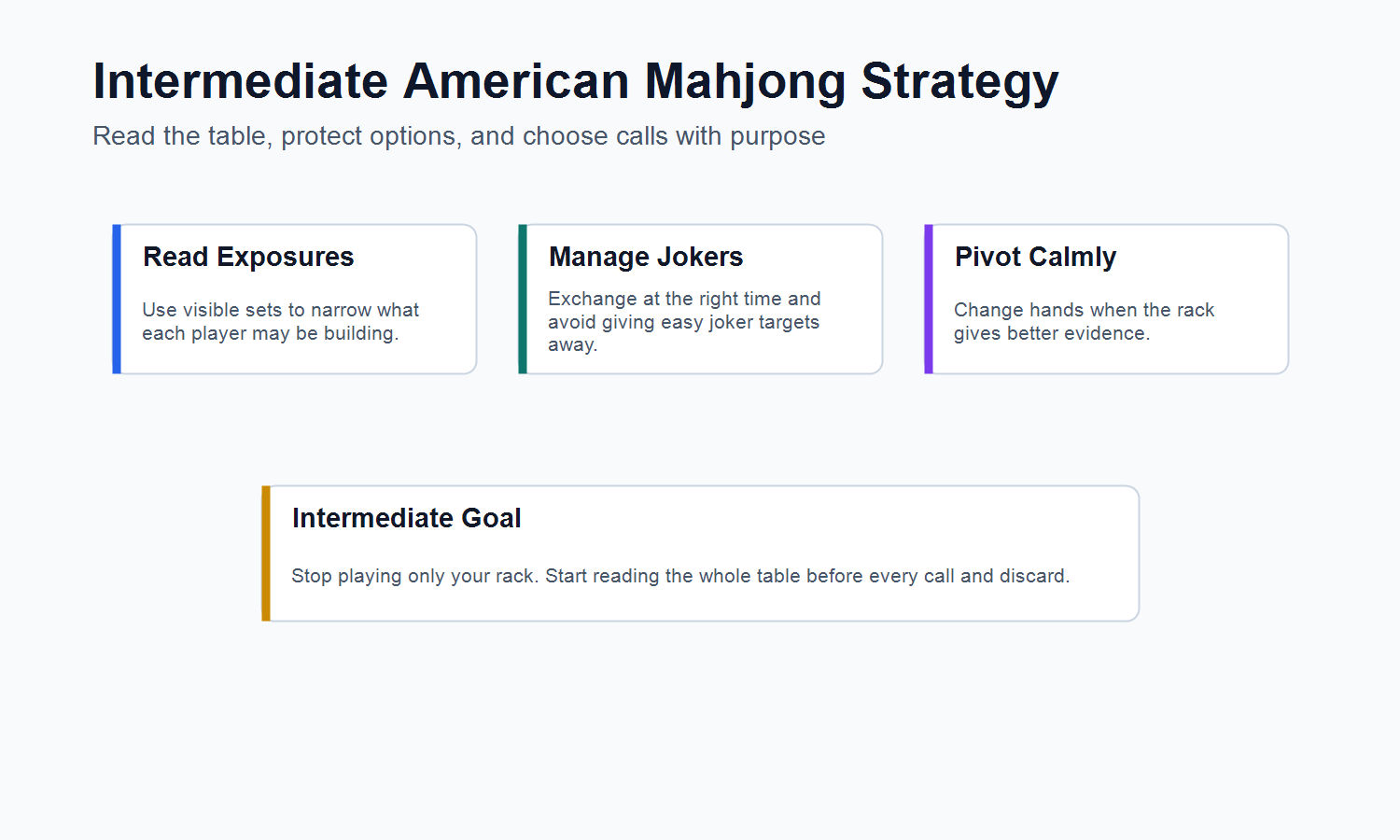
American Mahjong strategy changes once you know the rules well enough to play without checking every turn. At the intermediate level, the goal is not just building your own hand. You also start reading exposures, protecting flexible tiles, timing joker exchanges, and making safer discards.
This guide is written for U.S. players who already understand the card, Charleston, jokers, and basic calls. House rules and table habits can vary, so use these ideas as practical decision habits rather than rigid laws.
What Changes at the Intermediate Level?
Beginners often focus on one question: “What hand am I trying to make?” Intermediate players ask two more questions: “What are the other players showing?” and “What does this discard give away?”
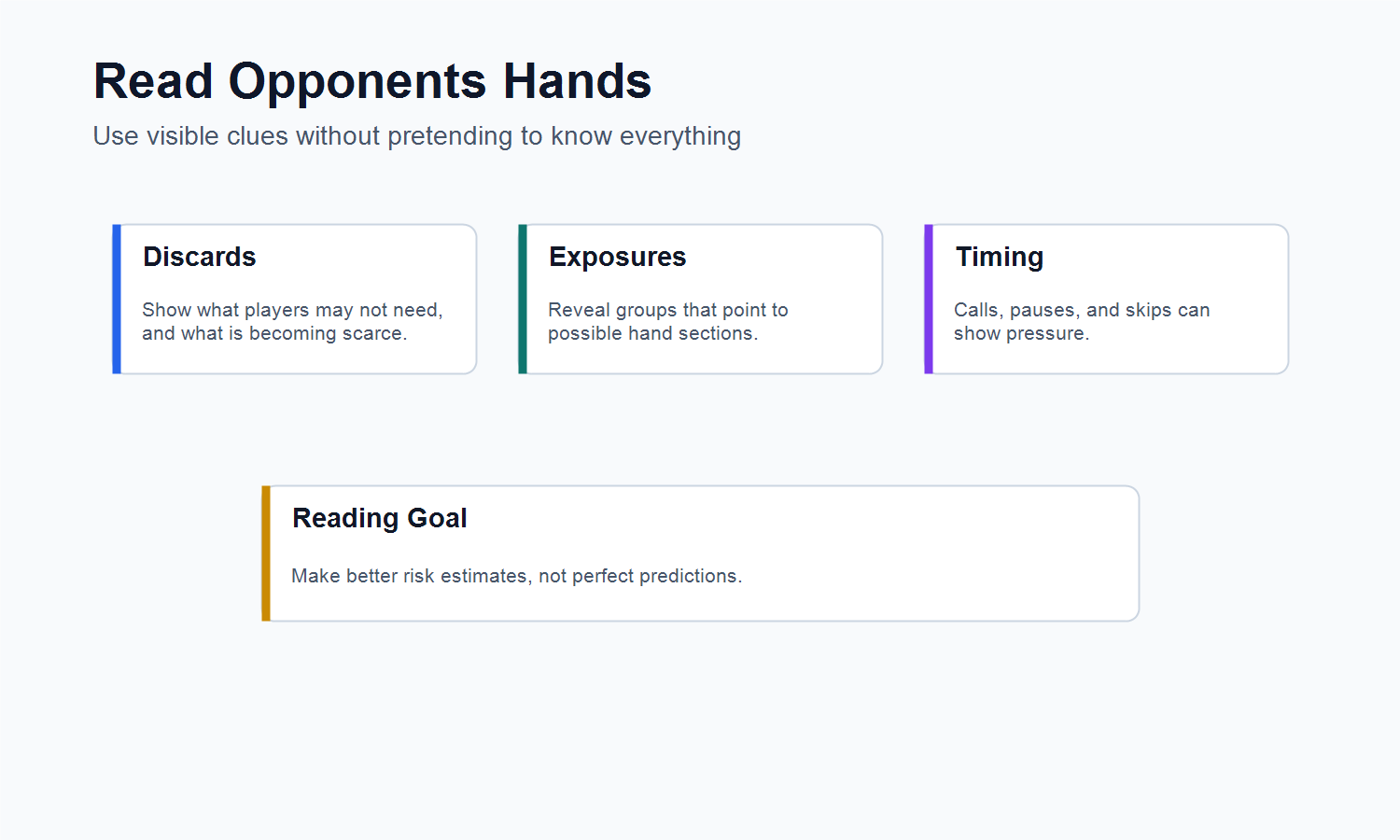
You do not need to become a mind reader. You only need to notice patterns: exposed sets, repeated discards, missing tiles, joker opportunities, and which card sections still look alive.
If choosing a hand still feels shaky, review how to choose a hand in American Mahjong before using the strategy tips below.
Read Exposures Before Every Discard
An exposure is public information. If a player exposes a kong of 8 Bams, you should immediately think about which card sections could use that group. You may not know the exact hand, but you can narrow the risk.
This is especially important late in the hand. A tile that was harmless early may become dangerous after an exposure appears.
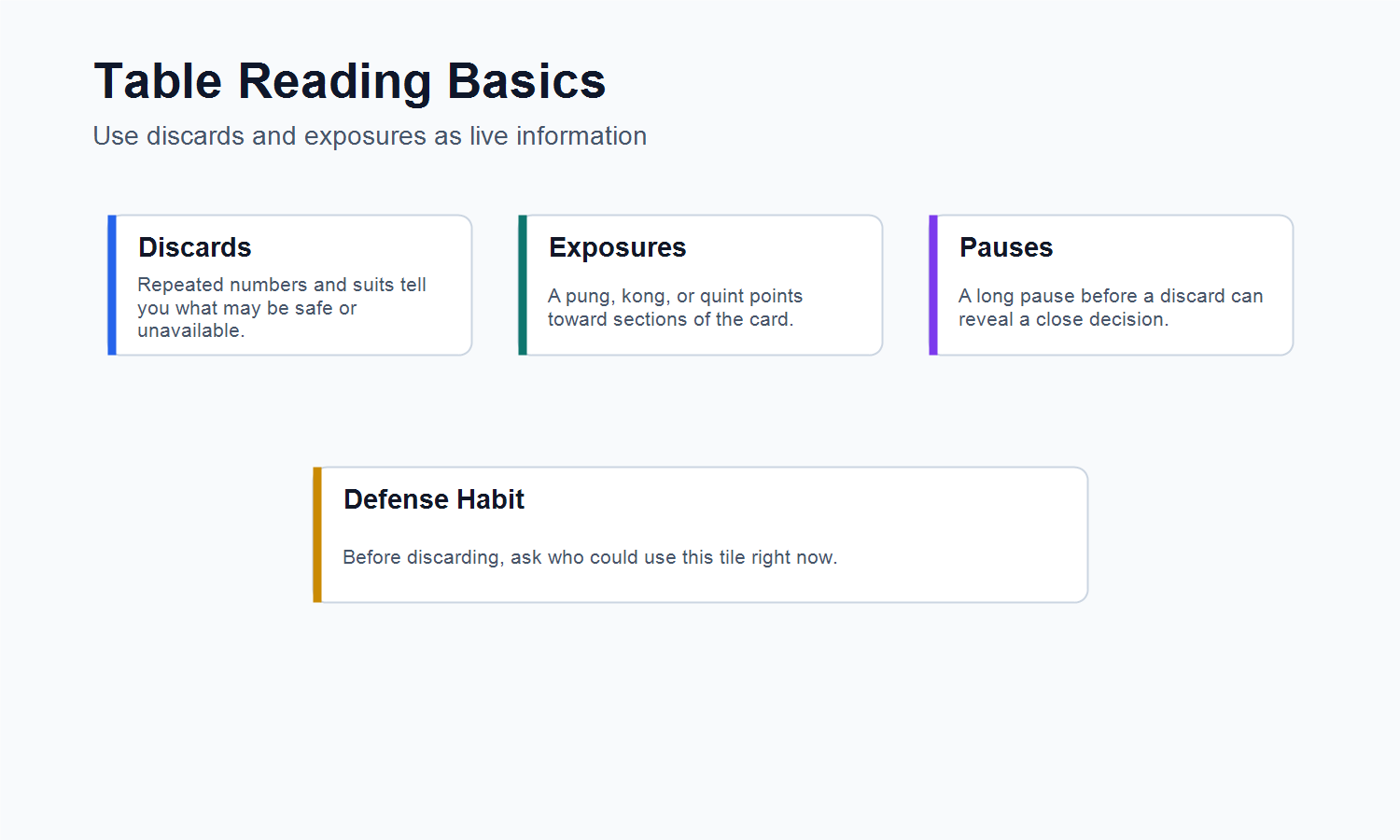
| Visible Clue | What It May Mean | Better Intermediate Habit |
|---|---|---|
| Exposed pung or kong | The player has narrowed their hand direction. | Check which card sections use that tile group. |
| Exposed jokers | The player may be building a larger group. | Look for legal joker exchange chances. |
| Repeated suit discards | A suit may be weak for that player. | Do not assume it is safe for everyone else. |
| Late hesitation | A player may be close or deciding between risks. | Slow down and reassess your next discard. |
Keep a Main Hand and One Backup
Intermediate players do not cling to the first line they notice. They usually keep one main hand and one related backup until the rack gives a clearer answer.
The best backup shares tiles with the main hand. If your backup requires an entirely different rack, it is not really a backup; it is a reset.
Good Backup Example
If your main hand uses 6 Dots, flowers, and a joker, a backup that also uses flowers and the 6 family keeps you flexible. A backup that needs winds and no flowers may pull your rack apart.
Time Your Joker Exchanges
A joker exchange is not automatically good just because it is legal. It is good when the joker clearly improves your hand or gives your rack a stronger backup.
Do not expose a weak group only because it contains a joker. That exposure may reveal your direction and give another player a chance to exchange later.
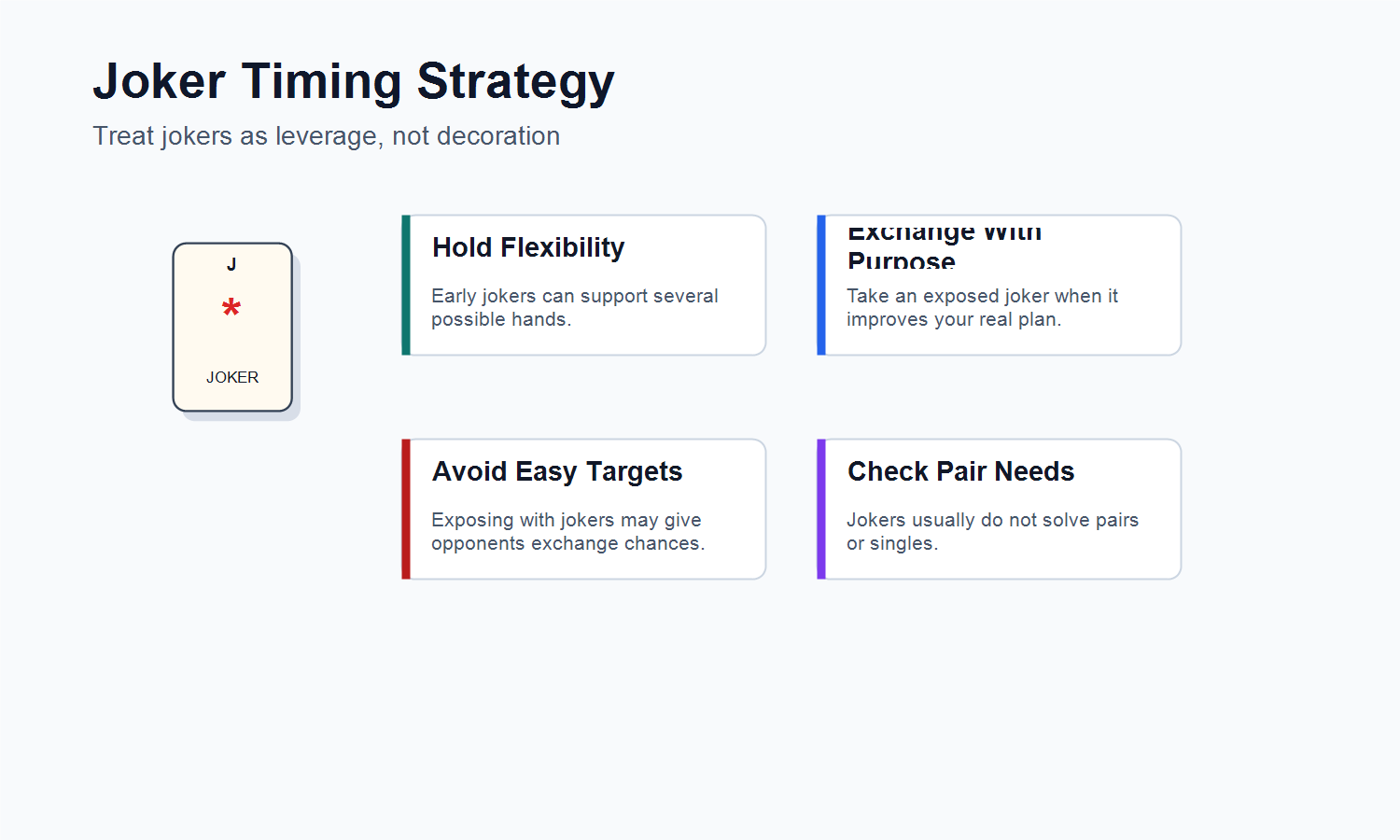
For the rule side of exchanges, pairs, and singles, use the separate guide to Mahjong joker rules.
Call With a Purpose
Every call has a cost. It may move you closer to Mahjong, but it also reveals information, may limit your backup hand, and can make your discards more predictable.
Before calling, ask three quick questions: Does this complete a group I truly need? Does the hand allow exposure? What am I giving away by showing this set?
| Call Situation | Usually Worth Considering | Be Careful When |
|---|---|---|
| Completes a key kong | The hand line clearly needs it. | The hand is concealed or your backup is better. |
| Uses a joker | The joker supports your strongest plan. | The exposure gives easy exchange opportunities. |
| Late-game win tile | You are declaring Mahjong. | You have not checked the exact card line. |
| Early uncertain call | Rarely, if it locks a very strong direction. | You are calling only because you can. |
Know When to Pivot
Pivoting is changing your target hand when new evidence makes another line stronger. It is not panic. It is an honest update.
Good pivot signals include a stalled main hand, a stronger backup after the Charleston, visible dead tiles, or a joker that no longer helps the line you wanted.
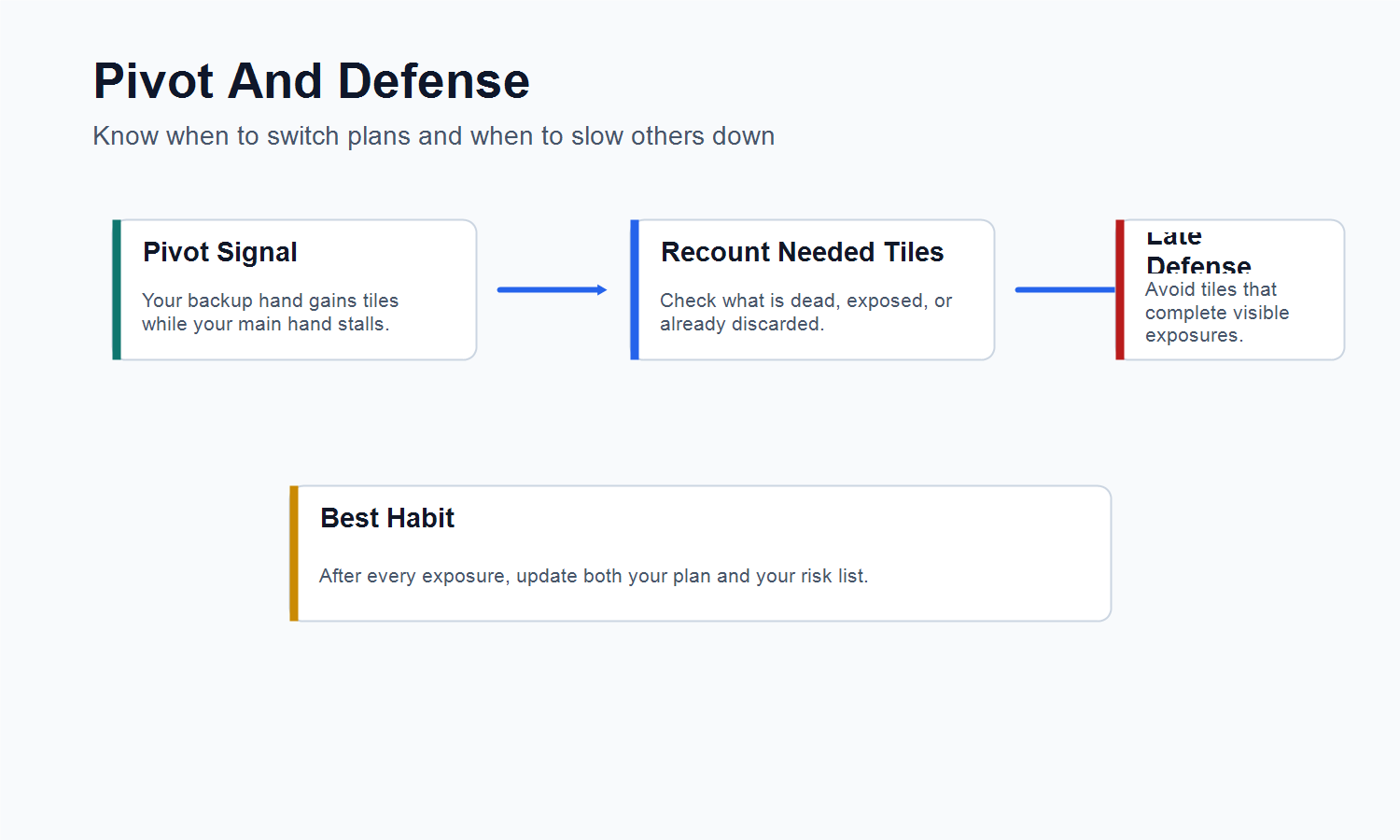
Pivoting connects closely to Charleston decisions. The article on what to pass in the Charleston explains how early passing can preserve better options.
Play Defense Without Freezing
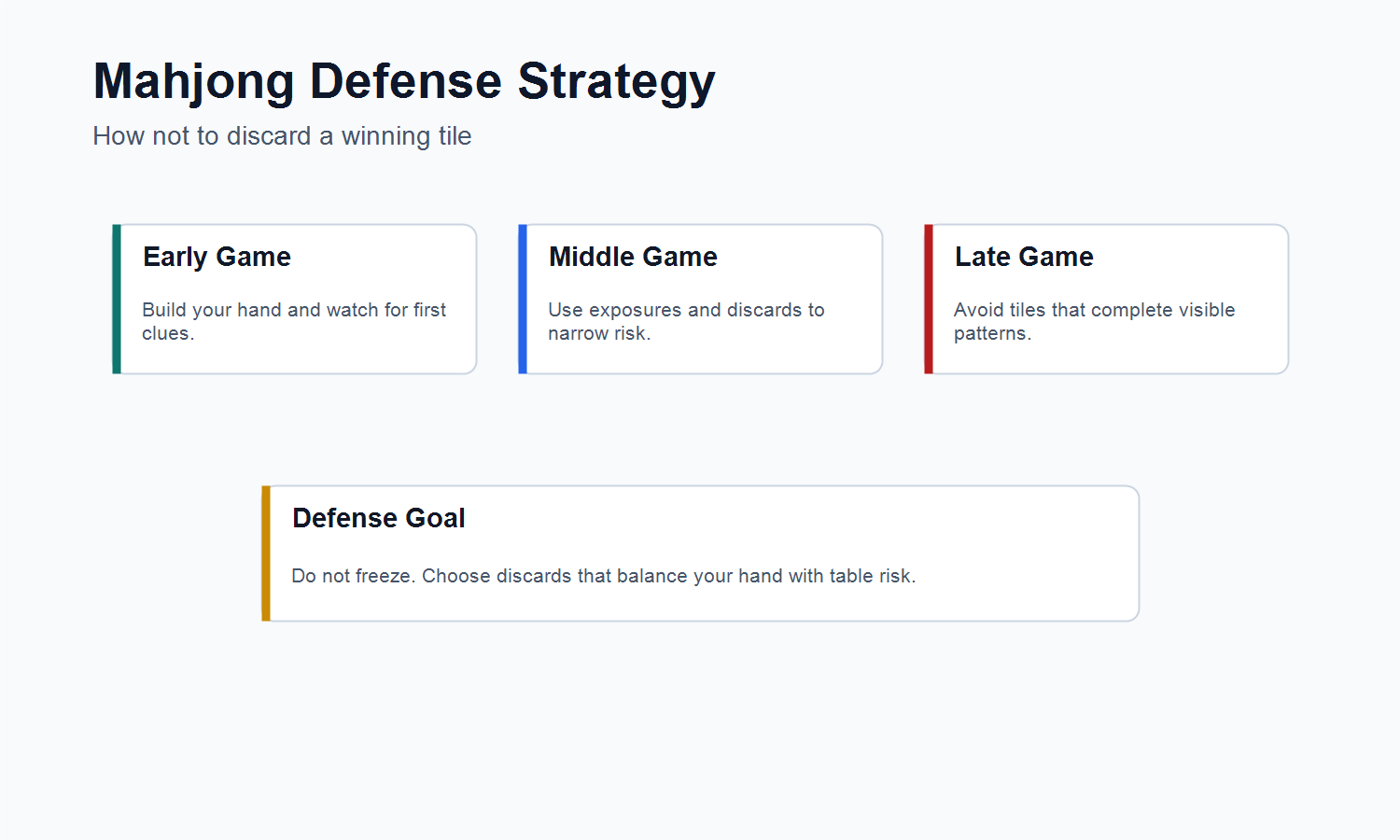
Defense does not mean giving up on your hand. It means choosing discards with the table state in mind. Early in the hand, speed matters more. Late in the hand, risk matters more.
If a player has two exposures and the table is near the end, do not throw a tile that obviously completes the visible pattern unless you are also very close and understand the risk.
Simple Late-Game Defense Check
- Who has exposed groups?
- Which numbers, suits, or honors do those exposures suggest?
- Has this tile already passed safely more than once?
- Could this discard give someone Mahjong right now?
- Does keeping the risky tile damage my own hand too much?
Use Scoring as a Tiebreaker, Not a Trap
Intermediate players still get tempted by high-value hands. The point value matters, but a realistic lower-value hand is often stronger than a beautiful high-value hand your rack cannot finish.
When two hands are equally realistic, scoring can help you choose. When one hand is much easier, let practicality lead. For payout basics, see American Mahjong scoring.
Common Intermediate Mistakes
The hardest stage is often the middle: you know enough to see more options, but not enough to filter them quickly. These mistakes show up at many casual American Mahjong tables.
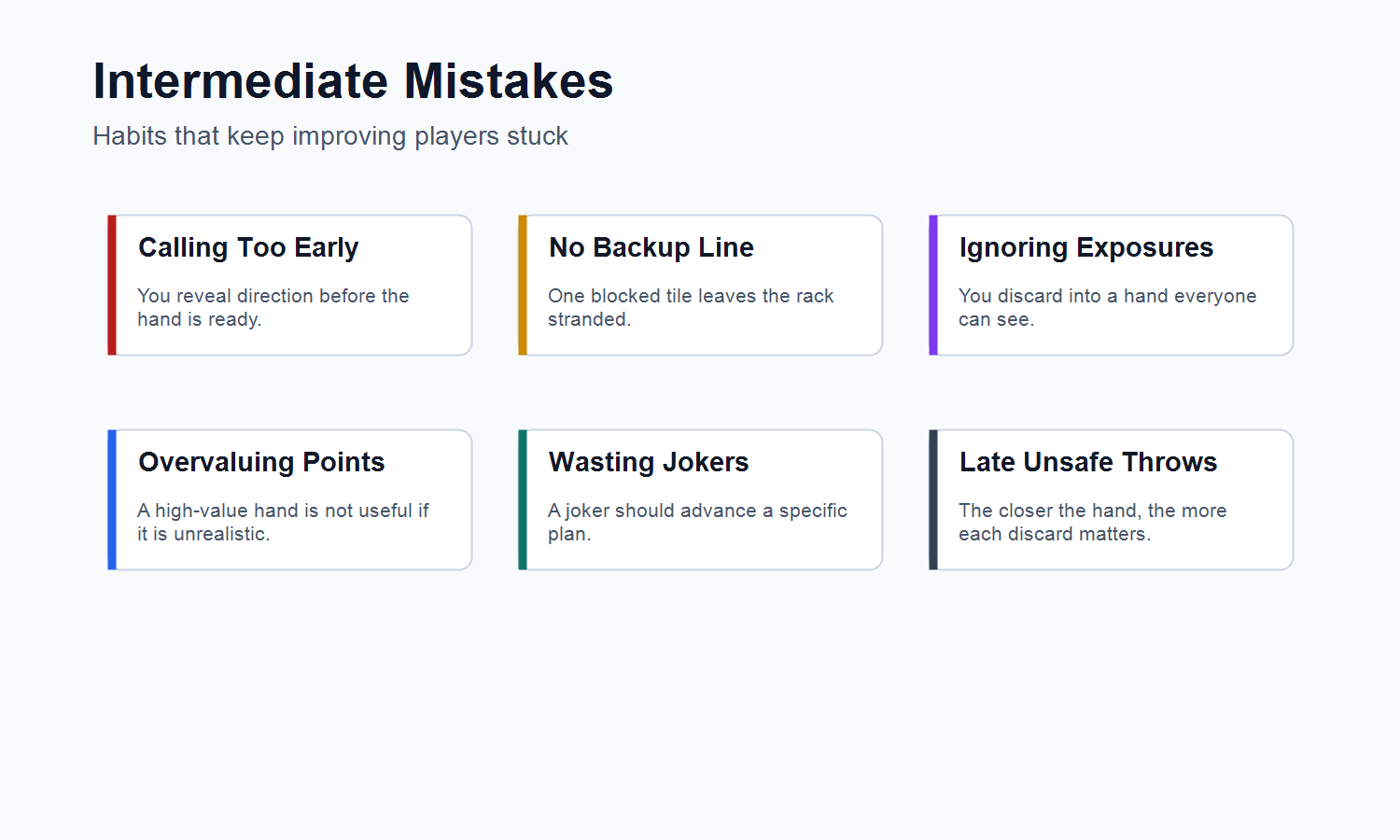
| Mistake | Why It Hurts | Better Habit |
|---|---|---|
| Calling too early | You reveal your direction before the hand is strong. | Call only when it advances a specific plan. |
| Ignoring exposures | You discard into visible danger. | Pause after every exposure and reassess risk. |
| Keeping no backup | One missing tile can strand the rack. | Keep one related backup line early. |
| Overtrusting jokers | Jokers may not help pairs, singles, or concealed restrictions. | Check the card line before relying on them. |
| Chasing points | The hand may be unrealistic for your tiles. | Use scoring after checking feasibility. |
Practice Drill for Intermediate Players
After each hand, choose one decision to review. Do not review everything. Pick one call, one discard, or one pivot point and ask what information was visible at the time.
This small habit is more useful than trying to memorize every card line. It trains table awareness, and table awareness is what moves a player from beginner to intermediate.
FAQ
What is the biggest difference between beginner and intermediate American Mahjong strategy?
Beginners mostly manage their own rack. Intermediate players also read exposures, discards, joker exchanges, and late-game risk.
Should intermediate players call more often?
Not necessarily. They should call more intentionally. A call should support a clear hand, respect exposure rules, and not destroy useful backup options.
When should I switch hands?
Switch when your backup hand becomes clearly stronger than your original plan. Good reasons include new Charleston tiles, dead needed tiles, or a stalled hand.
Is defense important in American Mahjong?
Yes, especially late. You still need to build your hand, but visible exposures should affect what you discard.
How can I practice strategy without a full table?
Deal a rack, choose a main hand and backup, then reveal mock discards or exposures. Practice updating your plan after each new clue.
Final Takeaway
Intermediate American Mahjong strategy is about better filters. Read the table, protect useful flexibility, exchange jokers with purpose, call carefully, and pivot when the evidence changes. You will not make perfect decisions every hand, but you will stop making the same avoidable mistakes.
For quick reminders during practice, keep the Mahjong cheat sheet open nearby.