What to Pass in the Charleston
Knowing what to pass in the Charleston is one of the first American Mahjong strategy skills that makes the game feel less random. Good passing protects the tiles that could become your hand, removes tiles that do not fit, and avoids feeding obvious help to another player.
This guide assumes you are playing American Mahjong in the United States. The Charleston order is common, but blind-pass rules, courtesy-pass habits, and teaching-table shortcuts can vary, so confirm the house rule before tiles move.
Quick Answer: What Should You Pass?
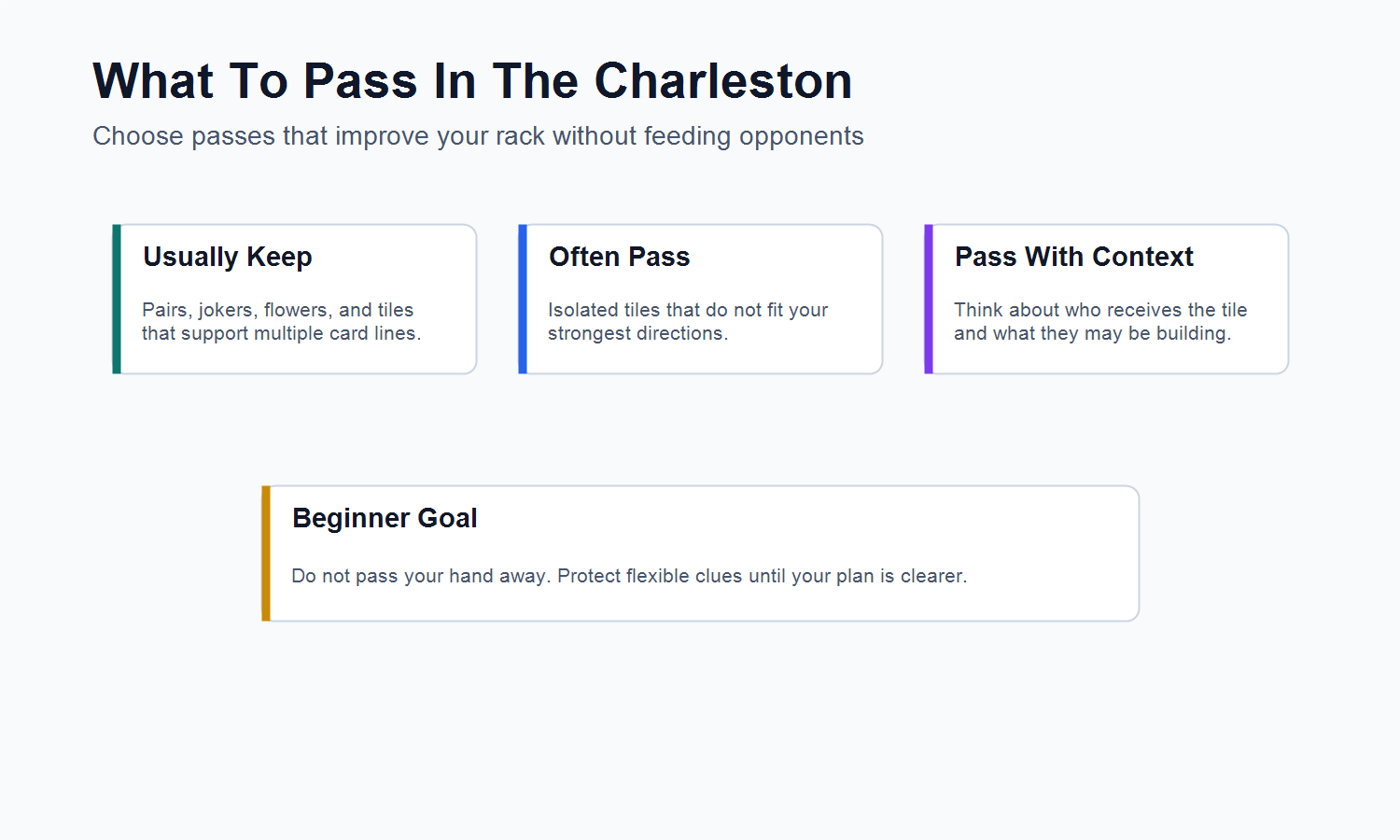
In general, pass isolated tiles that do not support your likely hands. Keep natural pairs, jokers, flowers, strong suit clusters, and tiles that fit more than one card line.
Do not pass automatically from the end of your rack. Sort first, scan the card, then choose the three tiles that hurt your options the least.
If you need the basic passing order first, read the Charleston in Mahjong before using this strategy guide.
Sort Before Every Pass
Your rack changes after each pass, so your passing choice should change too. A tile that looked useless before the first pass may become useful after you receive a matching pair or a flower.
Before selecting tiles, group suits, honors, flowers, jokers, pairs, and same-number clues. This takes only a few seconds and prevents the classic mistake of passing away your future hand.
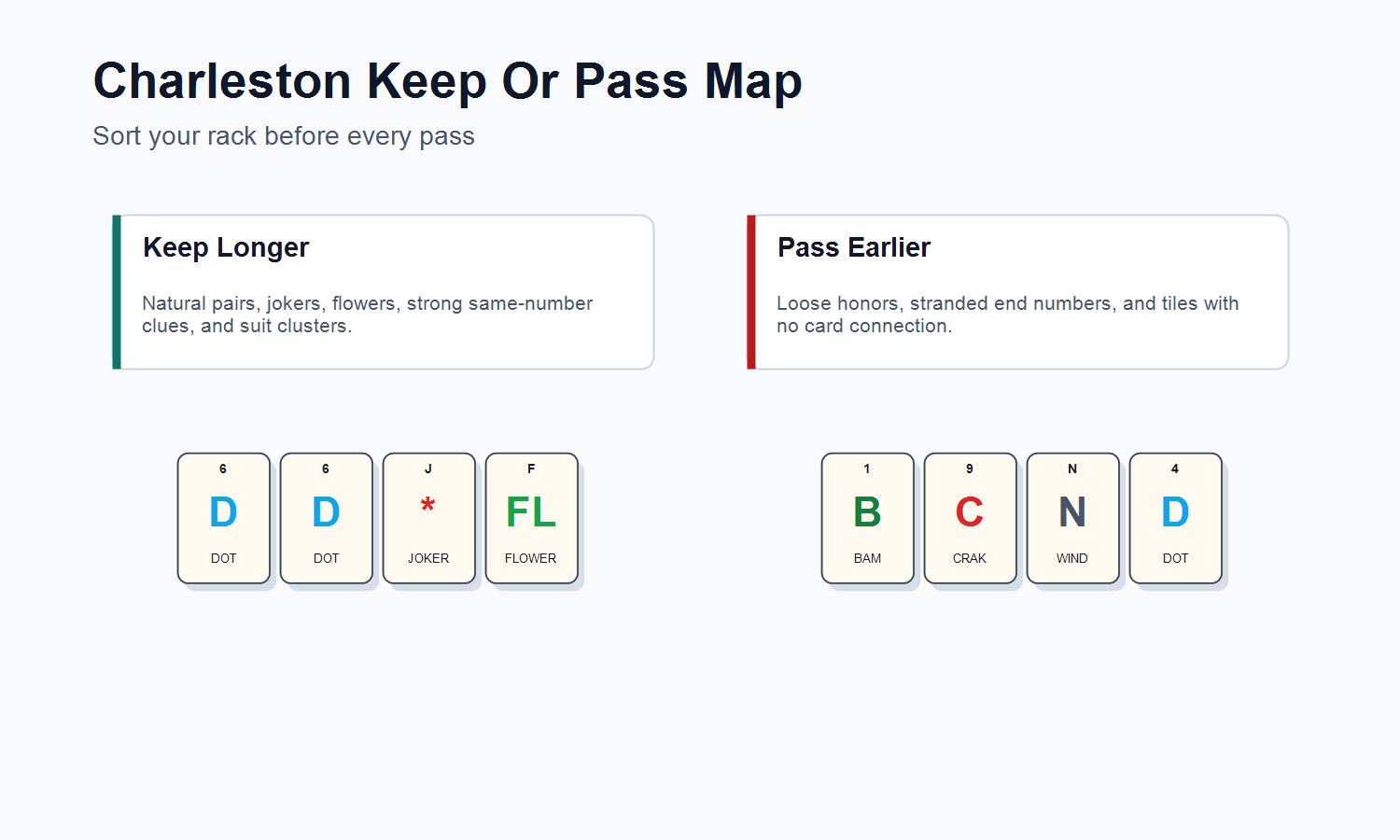
| Usually Keep | Often Pass | Why |
|---|---|---|
| Natural pairs | Unrelated single tiles | Pairs are hard to rebuild, especially because jokers usually cannot fill them. |
| Jokers | Loose honors that do not fit | Known jokers should not be intentionally passed under standard American rules. |
| Flowers | Stranded edge numbers | Flowers appear in many American Mahjong card lines. |
| Same-number clues | Tiles that split your focus | Like-number sections can become realistic quickly. |
| Strong suit clusters | Tiles with no card connection | Clusters can point toward a clear hand direction. |
What Not to Pass Too Quickly
Beginners often pass useful tiles because they do not yet know what the rack wants. Protecting a few flexible clues is usually better than clearing every awkward-looking tile immediately.
- Pairs: Natural pairs may become the hardest part of a hand.
- Jokers: Do not intentionally pass known jokers under standard American Mahjong rules.
- Flowers: Flowers can fit many lines, especially early.
- Same numbers: Two or three tiles with the same number across suits can point to a section.
- Flexible dragons or winds: Keep them briefly if the rest of the rack suggests that direction.
For joker limits and why pairs matter, use the Mahjong joker rules guide.
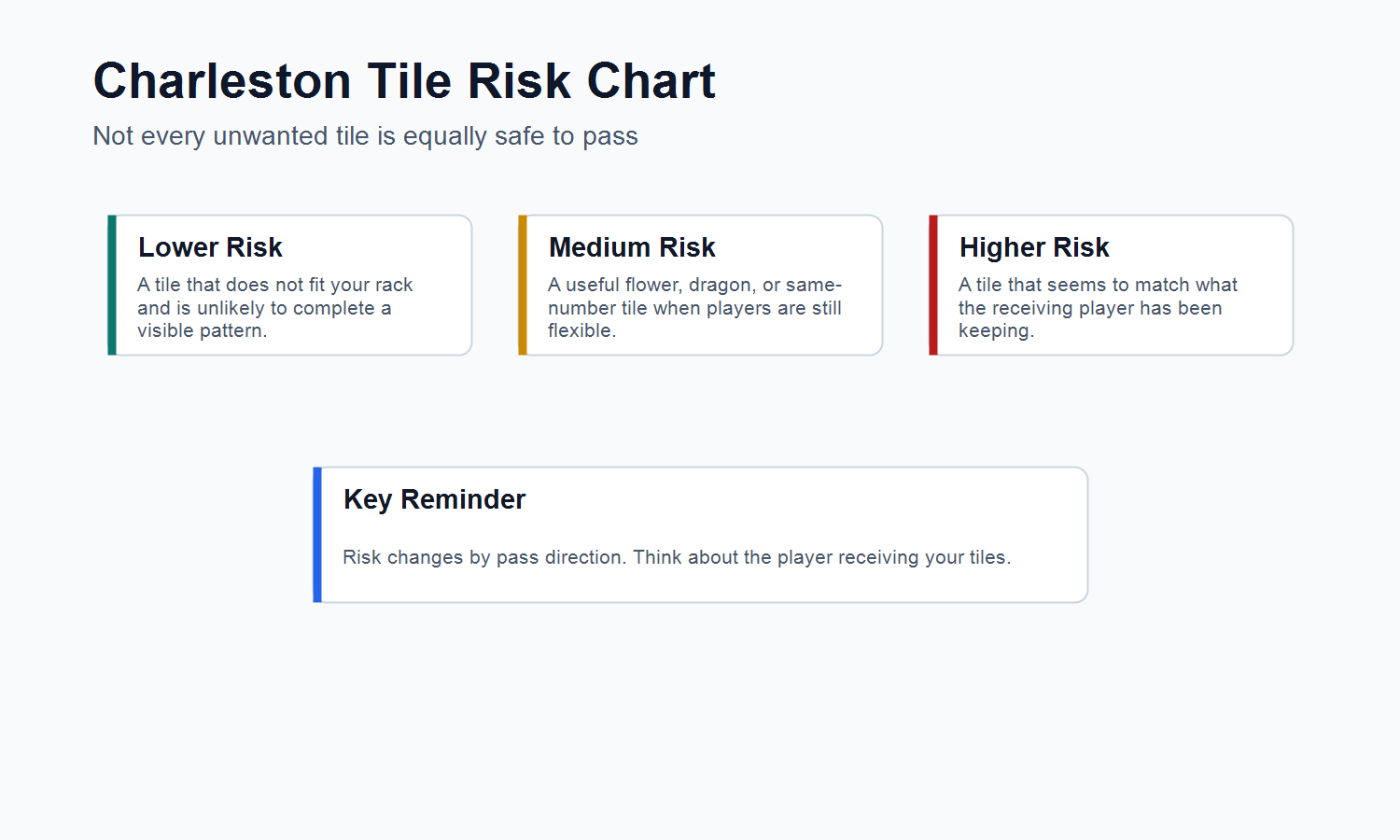
Think About Who Receives the Tile
Charleston passing is not only about your rack. Direction matters. A tile passed right, across, or left reaches a specific player, and that player may already be showing clues through their pace, received tiles, or later exposures.
Early in the Charleston, you may not know much. Later, you can be more careful. If a player seems to be collecting flowers or a number family, passing that exact tile type may carry more risk.
How to Use a Blind Pass
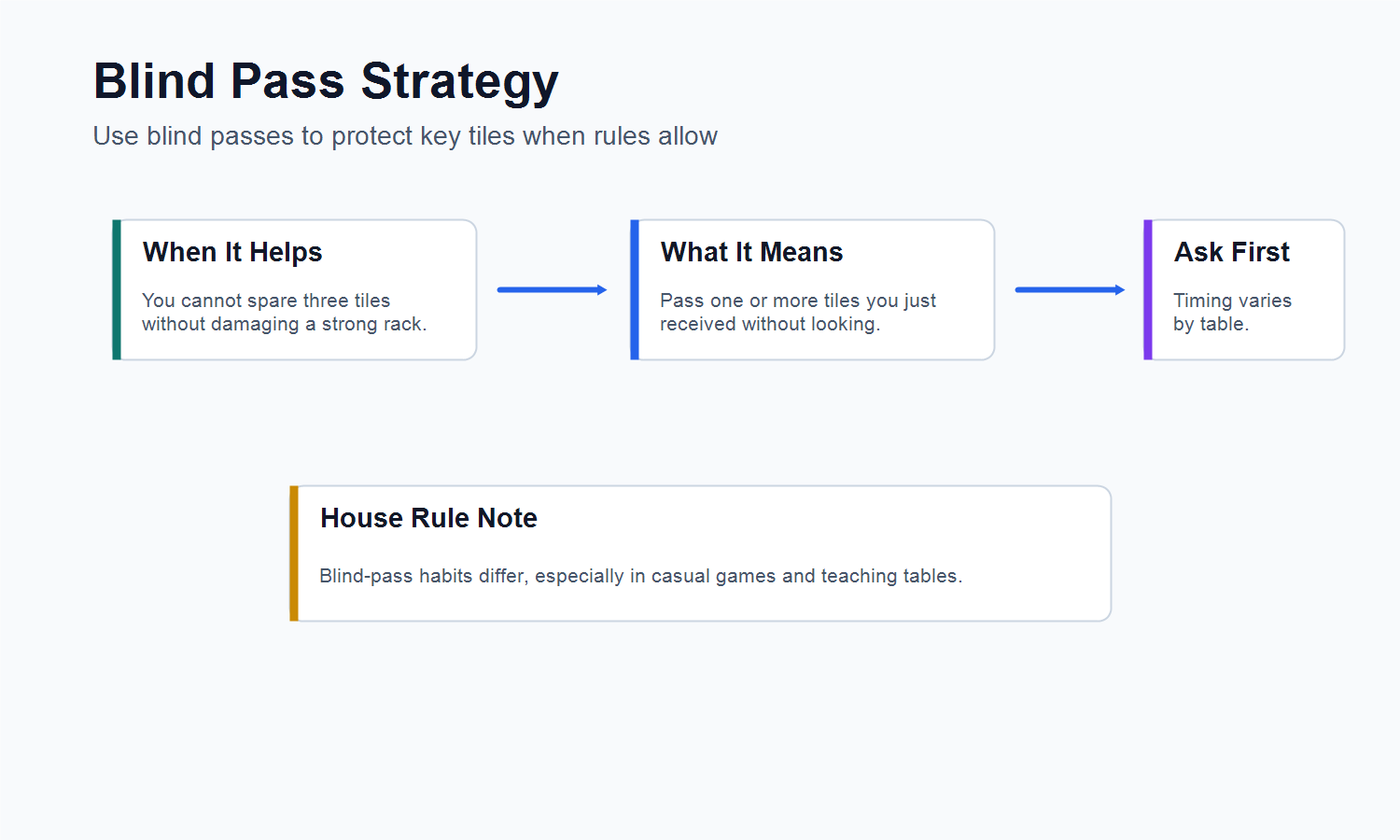
A blind pass means passing along one or more tiles you just received without looking at them. Players use it when they cannot spare three tiles from their own rack without damaging a promising hand.
Blind-pass timing differs by table, so ask before the Charleston starts. Some groups teach it early; others prefer beginners to avoid it until the passing order feels natural.
After Each Pass, Recheck Your Plan
The Charleston gives information. After each pass, ask whether your main hand got stronger, weaker, or stayed unclear. Also ask whether a backup hand has become more realistic.
This is where passing connects to hand selection. If you receive two tiles that fit a backup line, do not ignore them just because you liked your first idea. The rack is allowed to change its mind.
For a full decision process, read how to choose a hand in American Mahjong.
Example: Choosing Three Tiles to Pass
Imagine your rack has a pair of 6 Dots, one joker, one flower, several scattered honors, and two unrelated edge-number suit tiles. A beginner might pass the flower because it does not seem connected yet. A better choice is usually to keep the flower and pass the isolated edge tiles or honors that do not match any likely section.
The reason is flexibility. The pair, joker, and flower can support more than one card line. The isolated tiles may not support any realistic plan.
Common Charleston Passing Mistakes
Most bad passes happen because the player moves too quickly. The fix is simple: pause, sort, and ask what the tile does for your possible hands.
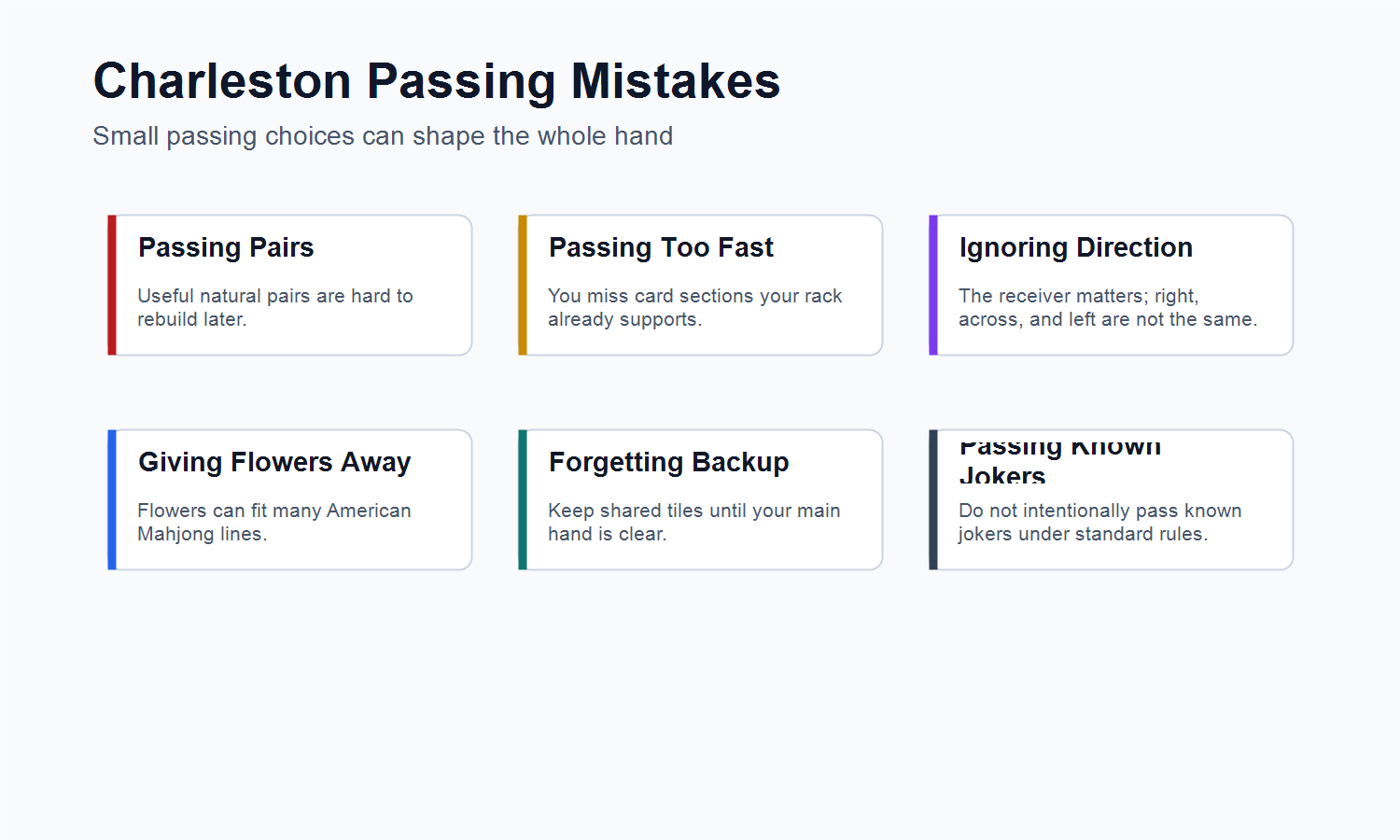
| Mistake | Why It Hurts | Better Habit |
|---|---|---|
| Passing useful pairs | Pairs can be hard to rebuild later. | Keep natural pairs until your direction is clearer. |
| Passing too fast | You miss card sections your rack already supports. | Sort before every pass, not only the first one. |
| Ignoring pass direction | The receiver may benefit from that exact tile type. | Think about who gets the tile. |
| Giving away flowers early | Flowers are flexible in American Mahjong. | Keep flowers unless they clearly do not fit. |
| No backup plan | You pass away tiles that could support a second line. | Keep shared tiles until one plan is clearly stronger. |
What to Pass in the Courtesy Pass
The courtesy pass is different because it is optional and usually across the table. Depending on the table, players may pass zero, one, two, or three tiles if both sides agree.
Do not feel pressured to pass three. If your rack is strong and every tile matters, passing zero may be the right choice. If you still have one or two obvious loose tiles, the courtesy pass can clean them up.
How Passing Affects Intermediate Strategy
Better Charleston passing makes the rest of the hand easier. You begin with more realistic options, fewer forced discards, and a clearer sense of whether to play fast or stay flexible.
If you already understand the basics and want the next layer, read American Mahjong strategy for intermediate players.
FAQ
Should I pass flowers in the Charleston?
Not automatically. Flowers are useful in many American Mahjong hands. Keep them if they support several possible lines.
Should I pass pairs?
Be careful. Natural pairs can be hard to rebuild because jokers usually cannot complete them. Keep useful pairs until your plan is clearer.
Can I pass a joker in the Charleston?
Under standard American Mahjong practice, you should not intentionally pass a known joker. Ask about blind-pass situations if your table uses them.
What if I have more than three bad tiles?
Pass the three that support your rack the least. After receiving new tiles, reassess. You do not need to fix the whole rack in one pass.
Is it better to pass safe tiles or useless tiles?
Ideally both. When you must choose, protect the tiles your hand needs most and avoid passing obvious help to the receiving player.
Final Takeaway
The best Charleston passes are not random leftovers. Keep flexible clues, protect natural pairs and jokers, sort after every pass, and think about who receives the tile. A calm Charleston gives you a better hand before regular play even starts.
For short reminders during practice, use the updated Mahjong cheat sheet.