There is no single “best” American Mahjong hand for every beginner. The annual card changes, and the tiles in your rack change every game. What beginners can learn is how to recognize beginner-friendly structures: hands that use existing pairs, flexible numbers, manageable suit requirements, and exposure rules you can follow confidently.
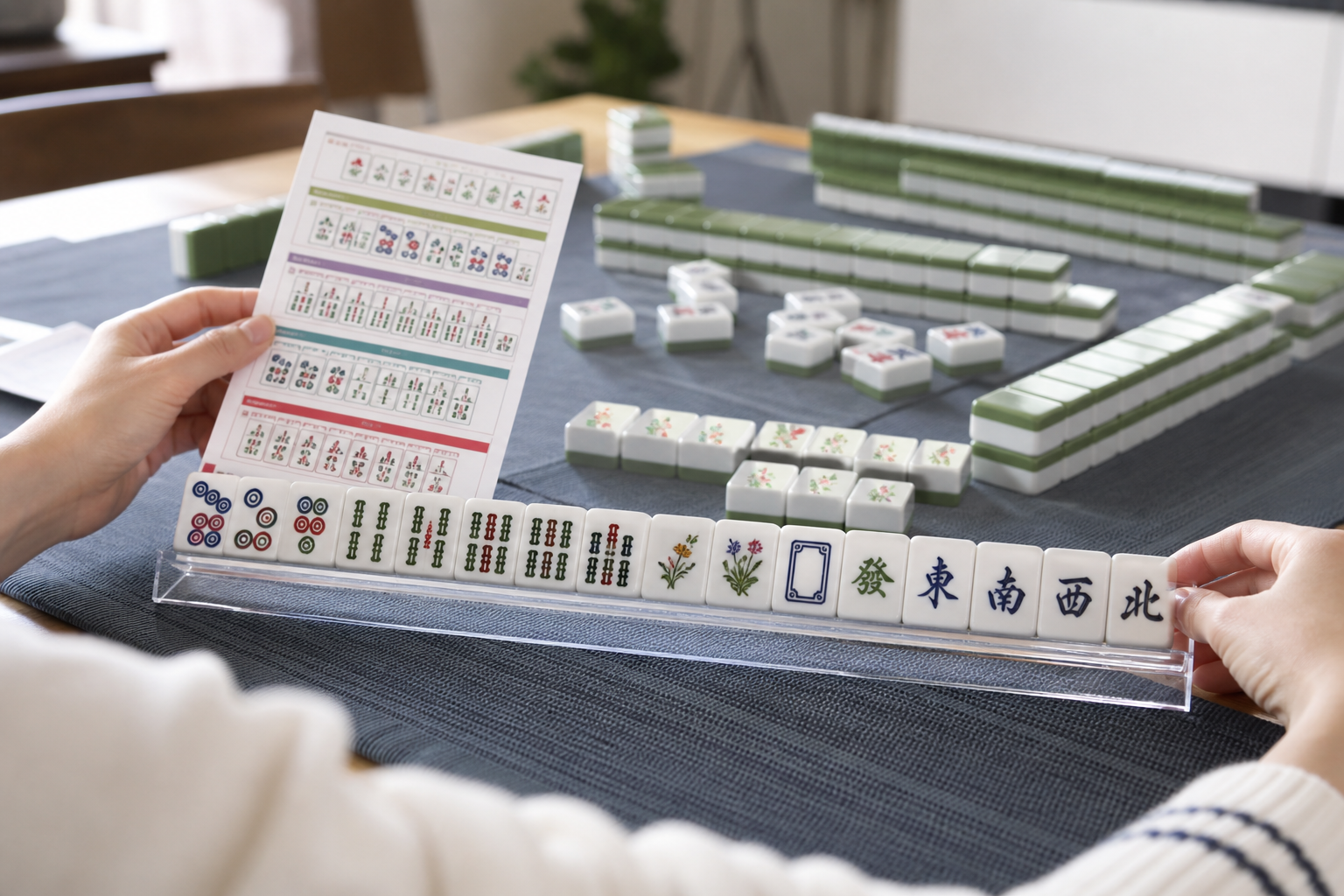
This guide does not reproduce hands from the current NMJL card. Keep your official card beside you and use the method below to compare its lines. If the notation still feels unfamiliar, first read how to read the NMJL card.
What Makes a Hand Beginner-Friendly?
A beginner-friendly hand is not necessarily the lowest-scoring line. It is a line whose requirements are easy to see and realistically match your starting rack. Look for four qualities.
- Useful tiles already in your rack: especially natural pairs and repeated tiles.
- Flexible number choices: “any number” or movable consecutive patterns give you more ways to fit your tiles.
- One or two clear suits: fewer suit relationships are easier to track than a complicated three-suit pattern.
- Exposure allowed: exposed hands let you call useful discards and make progress visible.
Start With Structure, Not the Section Name
Section headings help you search the card, but the actual line matters more. Break a possible hand into singles, pairs, pungs, kongs, and larger groups. A line with several required singles or pairs can be difficult because Jokers cannot normally fill those positions. A line dominated by groups of three or more may offer more flexibility when Jokers are available.
Before choosing, review the basic groups in our American Mahjong terms glossary.
Five Structures Beginners Can Evaluate Quickly
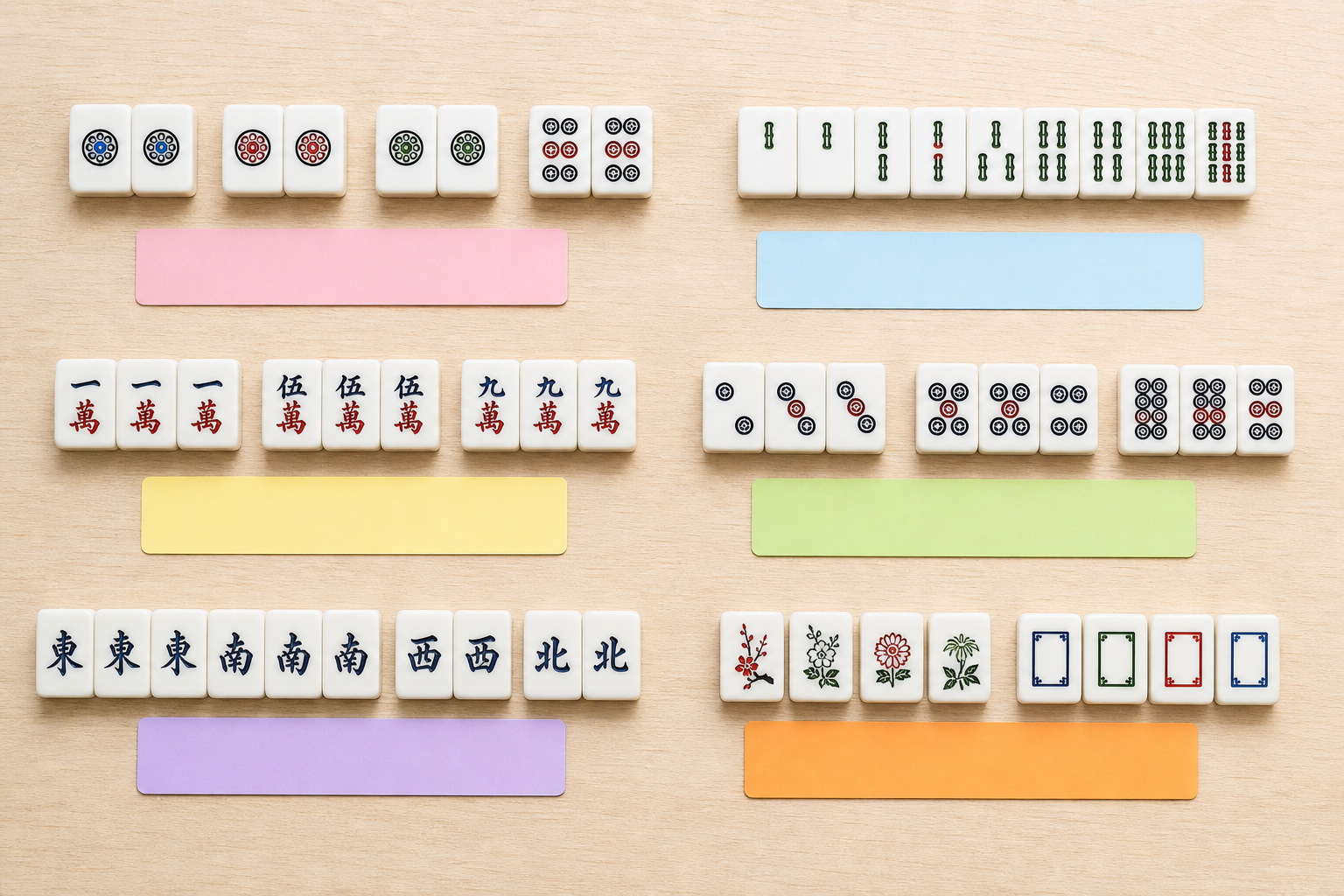
1. Hands that use your natural pairs
Pairs are valuable clues. Because they cannot usually be completed with Jokers, holding two or three useful natural pairs can make a matching card line more realistic. Do not break every pair during the Charleston merely because another tile looks flexible.
2. Consecutive-number structures
Consecutive patterns can be approachable when the card lets you choose the starting number. A rack containing clusters such as 3-4-5 or 6-7-8 may fit several possible lines. The flexibility disappears if you force a specific run too early, so keep neighboring numbers until the direction becomes clearer.
3. Like-number structures
Like-number hands use the same number across different suits. They are easy to visualize when your rack already contains several copies of one value. Count the available suit relationships carefully and check whether dragons or flowers are also required.
4. Simple one- or two-suit exposed hands
A clear suit plan reduces mental load. If one suit is noticeably stronger, a one-suit option may be worth considering. A two-suit line can be more forgiving because it preserves more starting tiles. Always confirm the card’s color rules before assigning actual suits.
5. Hands supported by flowers and Jokers
Flowers are interchangeable, and Jokers can help complete many groups of three or more. That makes some lines more forgiving—but only if the required pairs and singles are already attainable. Review the American Mahjong Joker rules before counting a Joker as universal help.
A 60-Second Hand Selection Method
- Sort the rack. Place suits in order, then separate winds, dragons, flowers, and Jokers.
- Mark your assets. Notice pairs, triples, nearby numbers, and one unusually strong suit.
- Find three candidate lines. Choose lines from one or two relevant sections, not the entire card.
- Count changes needed. Estimate how many tiles must be replaced for each line.
- Check the hard positions. Give extra weight to required singles and pairs.
- Keep a backup. Prefer candidates that share several tiles so you can pivot.
For a broader decision framework, see how to choose a hand in American Mahjong.
How the Charleston Changes Your Choice
Your opening rack suggests a direction; it does not make a promise. During the Charleston, pass tiles that help none of your leading candidates. Preserve flexible connectors and scarce natural pairs until you have better information. Our guide to what to pass in the Charleston explains how to avoid giving away your best options.
Signs You Should Switch Hands
- You repeatedly draw tiles supporting your backup line.
- Your required pair has already appeared several times in exposures or discards.
- Your main line needs too many unrelated changes after the Charleston.
- You discover that the line is concealed after making an exposure.
- Your suit assignment conflicts with the card’s color pattern.
Switching early is good decision-making, not failure. Strong players continually compare the rack they have with the hand they hoped to build.
Common Beginner Traps
- Choosing the highest-value line instead of the closest line.
- Counting Jokers as replacements for singles or pairs.
- Keeping every wind or dragon without a matching card plan.
- Committing to a one-suit hand when the rack is evenly mixed.
- Making an exposure before checking whether the hand must remain concealed.
- Following one target long after the draws support a better option.
Frequently Asked Questions
Which NMJL section is easiest for beginners?
No section is always easiest because the card and your rack vary. Flexible consecutive, like-number, or exposed structures often give beginners clear choices, but the best option is the one closest to the tiles held.
Should beginners avoid concealed hands?
Usually, yes, unless the opening rack is already unusually close. Concealed hands limit calling and require more patience.
How many possible hands should I keep?
Two or three candidates are enough early in the game. They should share useful tiles so you can change direction without rebuilding the entire rack.
Final Takeaway
Beginner-friendly American Mahjong hands are recognizable, flexible, and supported by your actual rack. Focus on natural pairs, repeated groups, useful number clusters, sensible suit requirements, and exposure rules. With this structure-first approach, you can use every new annual card without memorizing a list of supposedly easy hands.