Hong Kong Mahjong Rules for Beginners
Hong Kong Mahjong rules feel familiar if you already know basic Chinese Mahjong, but the fan scoring system changes how you choose a hand. A hand usually needs the right shape and enough fan before it can win.
This guide is written for U.S. beginners who want a practical table-ready explanation. Hong Kong groups often use house variations, especially for minimum fan, flowers, payout tables, and special hands, so confirm the exact rules before the first wall is built.
Quick Answer: How Hong Kong Mahjong Works
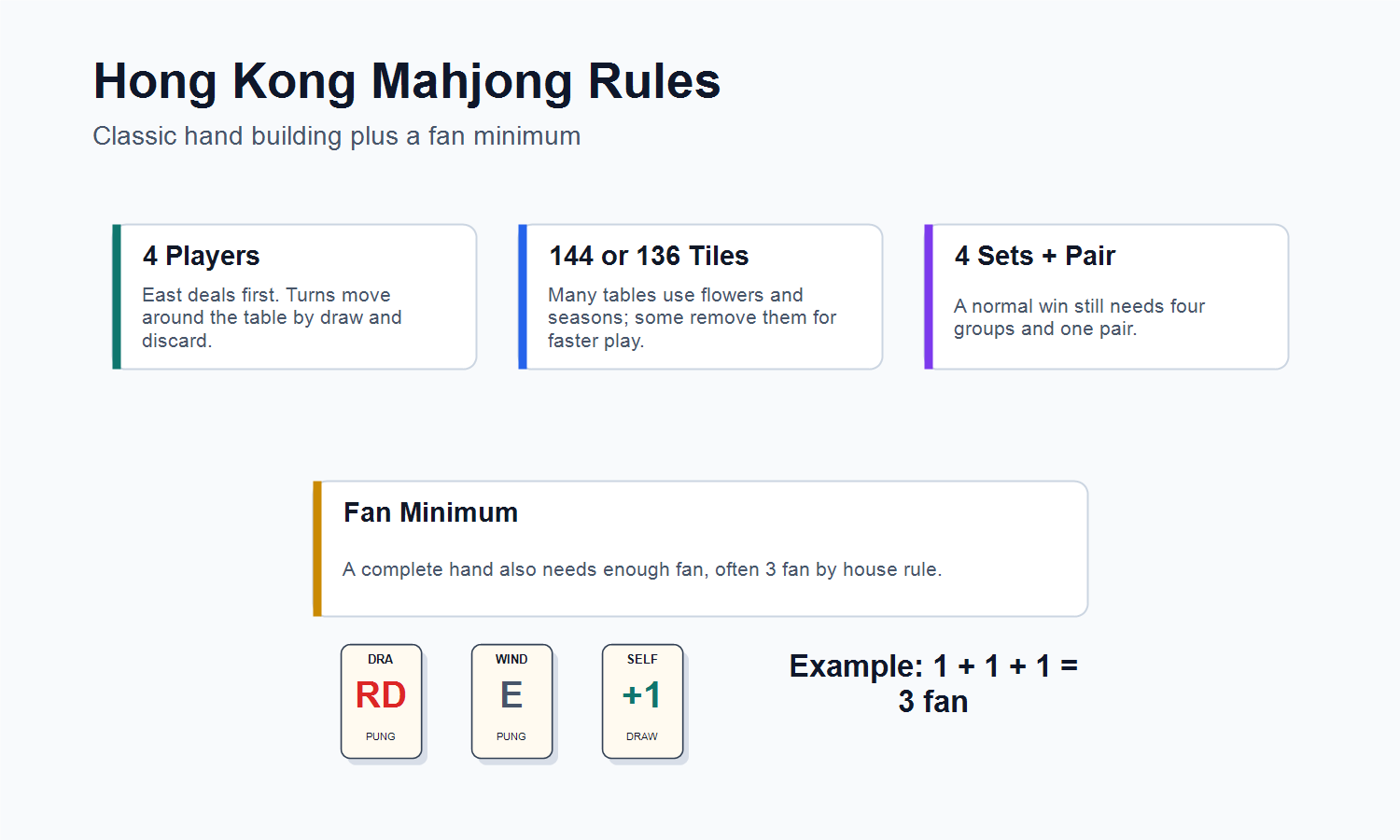
Hong Kong Mahjong is usually played by four players with a Chinese Mahjong tile set. Players draw and discard tiles, claim useful discards, and try to complete a winning hand.
The beginner hand shape is usually four sets plus one pair. The important Hong Kong twist is fan, sometimes spelled faan. Fan are scoring units from patterns such as dragon pungs, seat winds, all pungs, half flush, full flush, or self-draw.
| Rule Area | Beginner Version | Table Reminder |
|---|---|---|
| Players | Four players | East is the dealer and dealer rules affect payment. |
| Tiles | Often 144 with flowers and seasons | Some groups play without flowers, so ask first. |
| Common win | Four sets plus one pair | Special hands may exist by house rule. |
| Minimum value | Often 3 fan | Minimum fan can be 1, 2, 3, or another table rule. |
| Scoring | Fan converts to payment | Use one payout table for the whole game. |
What Makes Hong Kong Mahjong Different?
Hong Kong Mahjong belongs to the broader Chinese Mahjong family. It does not use a yearly card, jokers, or the Charleston the way American Mahjong does.
The main difference for beginners is that a completed hand may still be too low to win. If your table requires 3 fan and your hand only has 1 fan, you may have the right shape but not enough value.
If you need the broader foundation first, start with Chinese Mahjong rules. If you are comparing styles, see American Mahjong vs Chinese Mahjong.
Tiles and Setup
Many Hong Kong Mahjong tables use 144 tiles: the three suits, four winds, three dragons, flowers, and seasons. Some groups remove flowers and seasons for a simpler game.
Players shuffle the tiles face down, build walls, choose East, and deal starting hands. East starts with 14 tiles and normally makes the first discard. The other players start with 13 tiles.
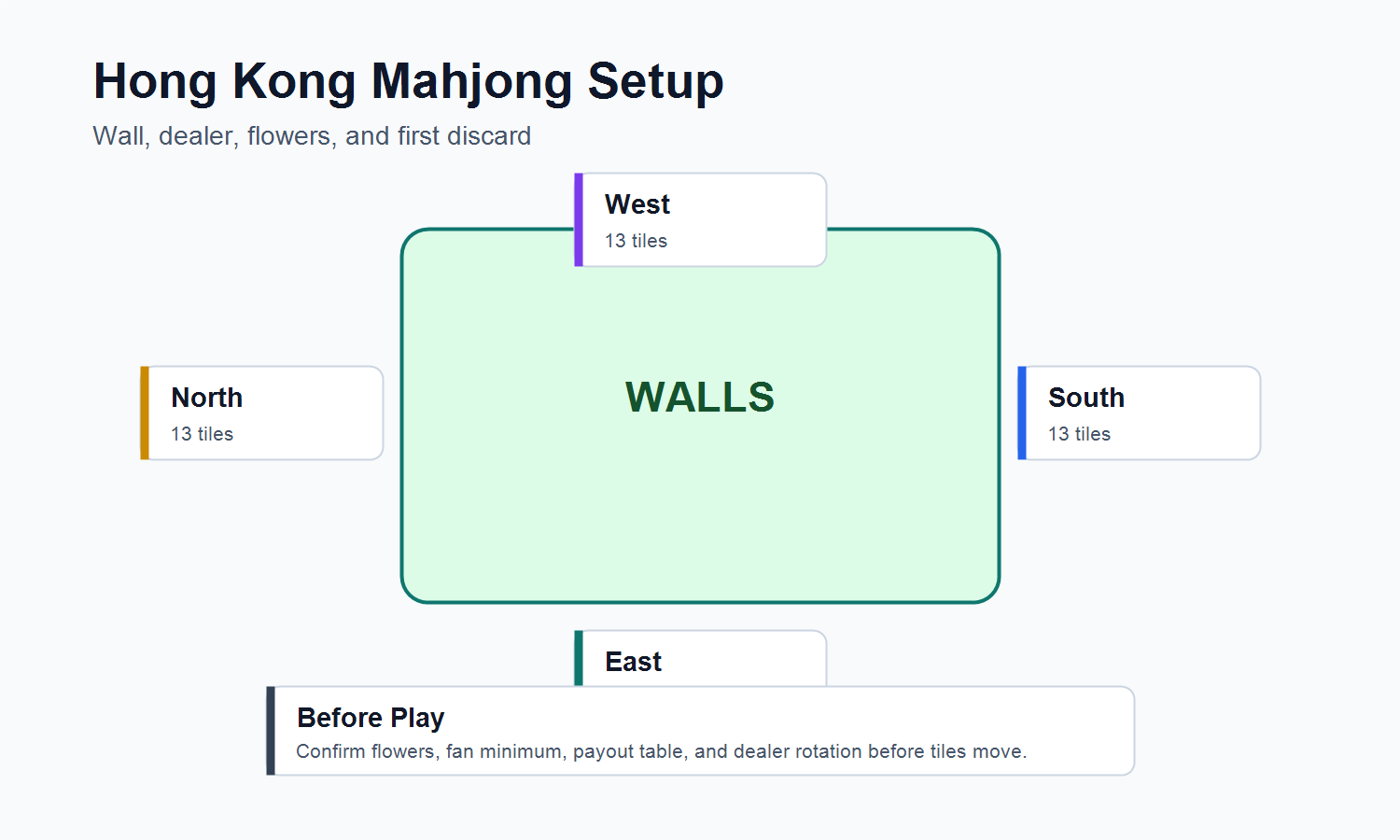
Setup Checklist
- Confirm whether flowers and seasons are used.
- Confirm the minimum fan needed to win.
- Choose one payout table and one limit rule.
- Decide how dealer repeats work after wins and draws.
- Clarify whether special hands such as seven pairs are allowed.
For tile names and suit vocabulary, this Mahjong tiles guide is a helpful warm-up, even though Hong Kong Mahjong handles some tiles differently from American Mahjong.
Turn Order and Calls
On a normal turn, a player draws one tile from the wall and discards one tile face up. Other players may claim a discard if it completes a legal call or wins the hand.
Claiming tiles opens part of your hand, which makes your plan easier to read. New players often call too aggressively because the tile looks useful in the moment. A call is only good if it moves you toward a legal and valuable hand.
Chow
A chow is a suited sequence such as 4-5-6 Dots. In most Hong Kong-style play, you can only chow from the player before you in turn order. You cannot chow winds or dragons.
Pung
A pung is three identical tiles. You may usually pung a discard from any player if you have the matching pair in your hand. Pungs matter because several Hong Kong scoring patterns reward triplets.
Kong
A kong is four identical tiles. After declaring a kong, you normally draw a replacement tile. The exact replacement process and bonus scoring should be explained by the host before play begins.
Winning Hand Basics
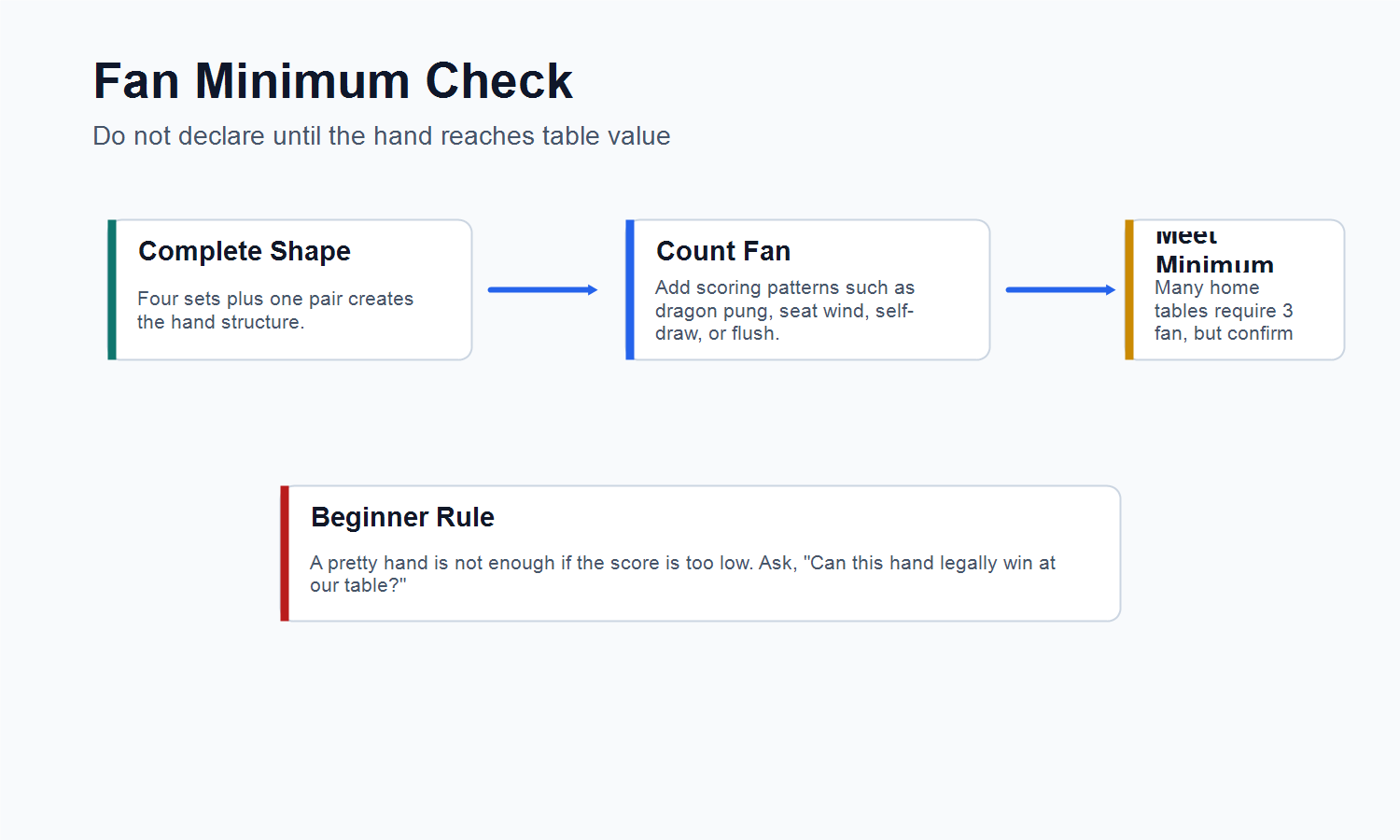
The most common beginner win is four sets plus one pair. Sets can be chows, pungs, or kongs. The pair is two matching tiles.
A legal shape alone may not be enough. You also need enough fan under the table rules. This is the point that surprises many beginners coming from simpler Mahjong lessons.
For more examples of hand structure, read Mahjong winning hands. The structure carries over, but Hong Kong scoring decides whether the completed hand is valuable enough.
Fan Scoring Basics
Fan are the scoring units used to value a hand. A table might require 3 fan to win, but that number is not universal. Some casual groups use a lower minimum, while other groups use stricter house rules.
The safest beginner habit is to count fan before you declare. Ask yourself, “What patterns does this hand actually have?” If you cannot name the fan, pause before calling Mahjong.
| Pattern | Common Beginner Idea | Why It Matters |
|---|---|---|
| Dragon pung | A pung of Red, Green, or White Dragons | Often worth fan and easy to recognize. |
| Seat wind or round wind pung | A pung of the relevant wind | Wind value depends on your seat and the round. |
| All pungs | Four triplet-style groups and a pair | Often reaches a common minimum by itself. |
| Half flush | One suit plus honors | Strong but visible when your discards reveal the suit. |
| Full flush | One suit only | Usually high value, but difficult and easy to read. |
| Self-draw | Winning from the wall | Often adds value or changes payment. |
Simple Fan Examples
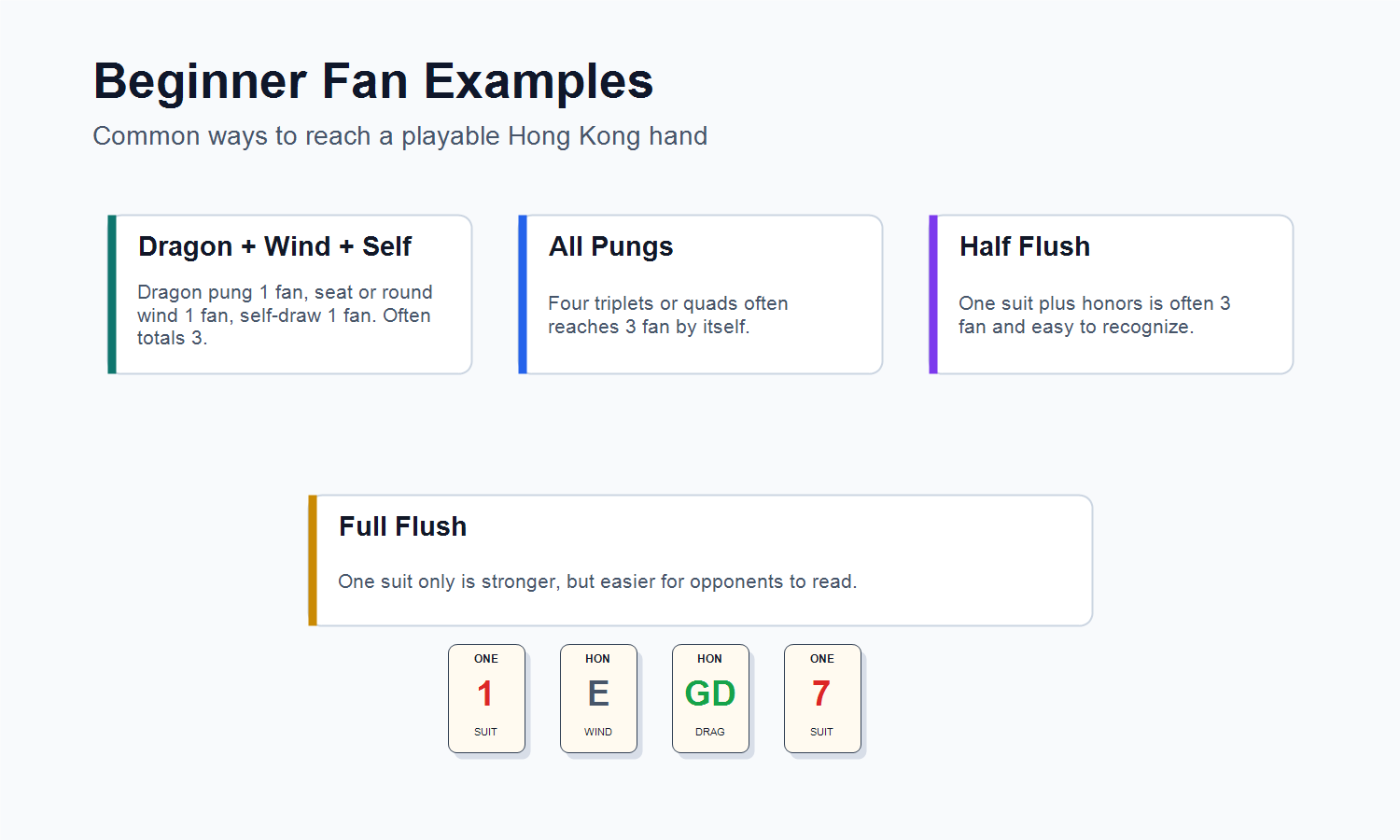
Suppose your table uses a 3 fan minimum. A hand with a dragon pung, your seat wind pung, and self-draw may reach the table minimum, depending on the house chart. Another hand with all pungs may also be enough.
A half flush is another common beginner target: one numbered suit plus honor tiles. It is easier to recognize than many rare hands, but it can make your plan obvious if you discard every other suit too early.
Scoring and Payment
After a player wins, the table counts fan and converts the result into payment or points. Some Hong Kong tables cap hands at a limit. Some double payments for dealer, self-draw, or the player who discarded the winning tile.
Because payout tables vary, this article should not replace your host’s scoring sheet. For a home game, print one chart or agree on a simplified point system before anyone starts keeping score.
Hong Kong Mahjong vs Riichi Mahjong
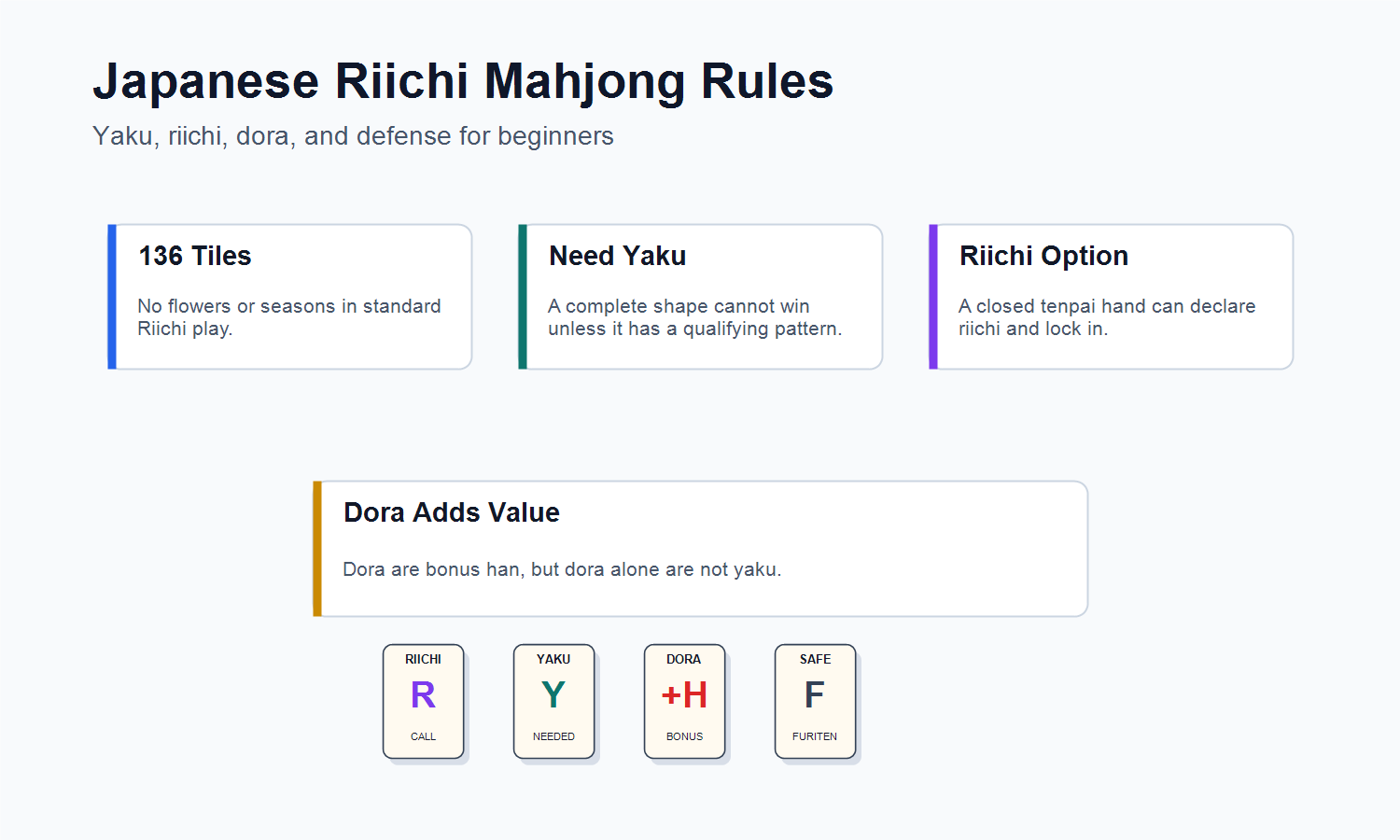
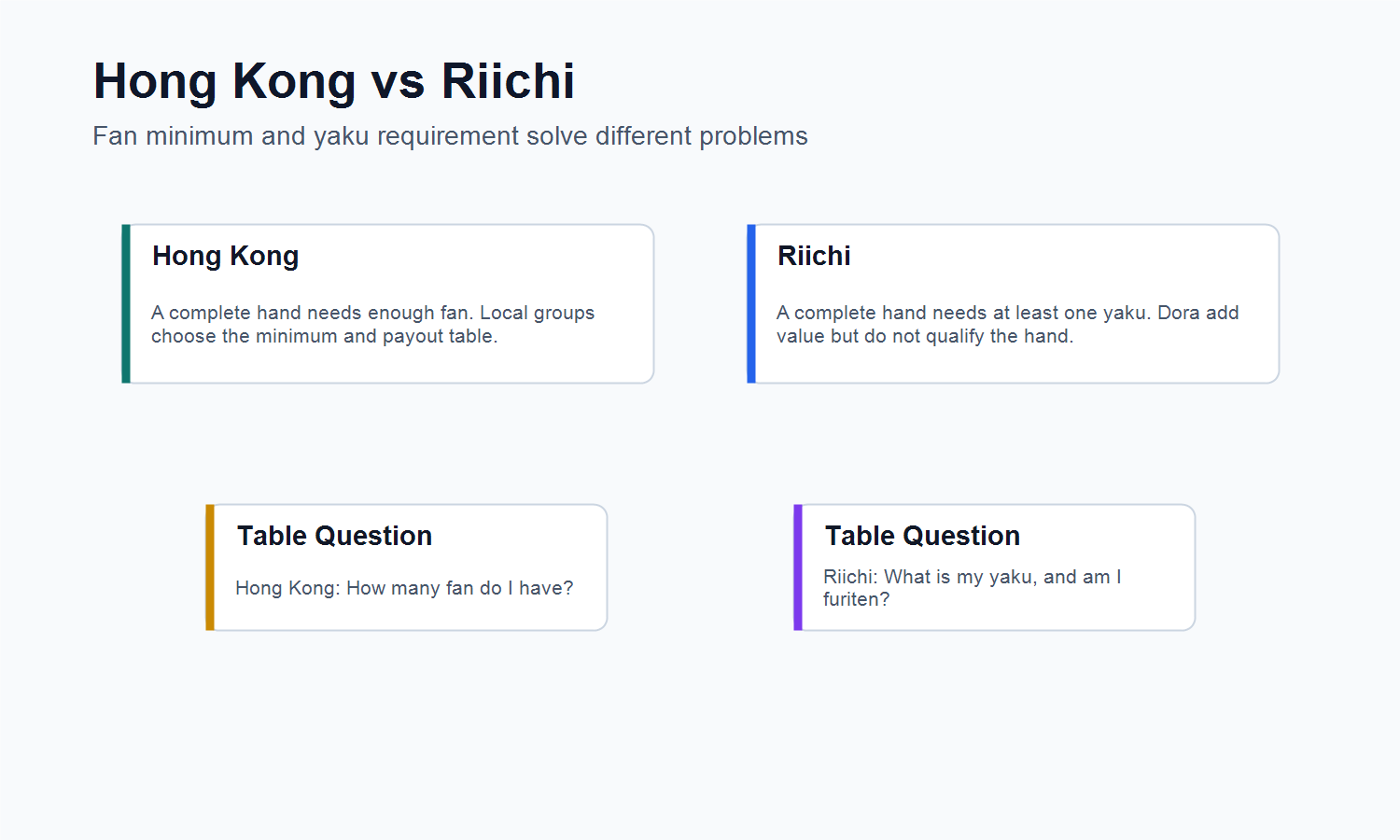
Hong Kong Mahjong and Japanese Riichi Mahjong both require more than a random complete shape. Hong Kong play often asks whether your hand meets the fan minimum. Riichi asks whether your hand has at least one yaku and whether furiten blocks a discard win.
If you want to compare the Japanese version next, read Japanese Riichi Mahjong rules.
Common Beginner Mistakes
- Declaring too low: A complete shape may not meet the fan minimum.
- Forgetting wind value: Seat wind and round wind are not the same thing.
- Calling every pung: Open triplets can help, but they also reveal your plan.
- Mixing payout tables: Fan count and payment conversion are separate steps.
- Ignoring flowers: Flower and season rules can change scoring and replacement draws.
For more habits that save new players from avoidable table errors, read common Mahjong mistakes new players make.
FAQ
Is Hong Kong Mahjong the same as Chinese Mahjong?
It is one Chinese Mahjong style, but not the only one. The hand shape may feel familiar, while the fan minimum and payout habits make it distinct.
How many fan do you need to win?
Many Hong Kong-style tables use a 3 fan minimum, but this varies. Some groups use 1 or 2 fan, and some house games adjust the minimum for teaching.
Does Hong Kong Mahjong use jokers?
Standard Hong Kong Mahjong does not use American-style jokers. If a local set has special tiles, ask whether they are actually part of the rules.
Are flowers and seasons required?
They are common in Hong Kong Mahjong, but not universal. Confirm whether they are included and how replacement draws and flower scoring work.
Can you win with all chows?
It depends on the table’s fan rules. An all-chow hand may be too low under some minimums unless it includes other scoring features.
What should beginners learn first?
Learn the tiles, the four-sets-plus-one-pair shape, and a few reliable fan patterns such as dragon pungs, wind pungs, all pungs, half flush, and full flush.
Final Takeaway
Hong Kong Mahjong is not just about completing any hand. You need a legal shape, enough fan, and a shared scoring chart everyone understands.
Once that clicks, the game becomes much friendlier. Instead of asking only, “Can I win?” you start asking the better Hong Kong question: “Is this hand worth enough to win at this table?”