Ready to practice? Play our free guided American Mahjong game against three computer players, or use the focused Charleston trainer below.
Playing American Mahjong online is one of the easiest ways to practice between in-person games. A digital table builds the wall, deals the tiles, tracks turns, and prevents many illegal moves. That leaves you free to work on the skills that matter most: reading your card, comparing hands, passing strategically, and recognizing safe discards.
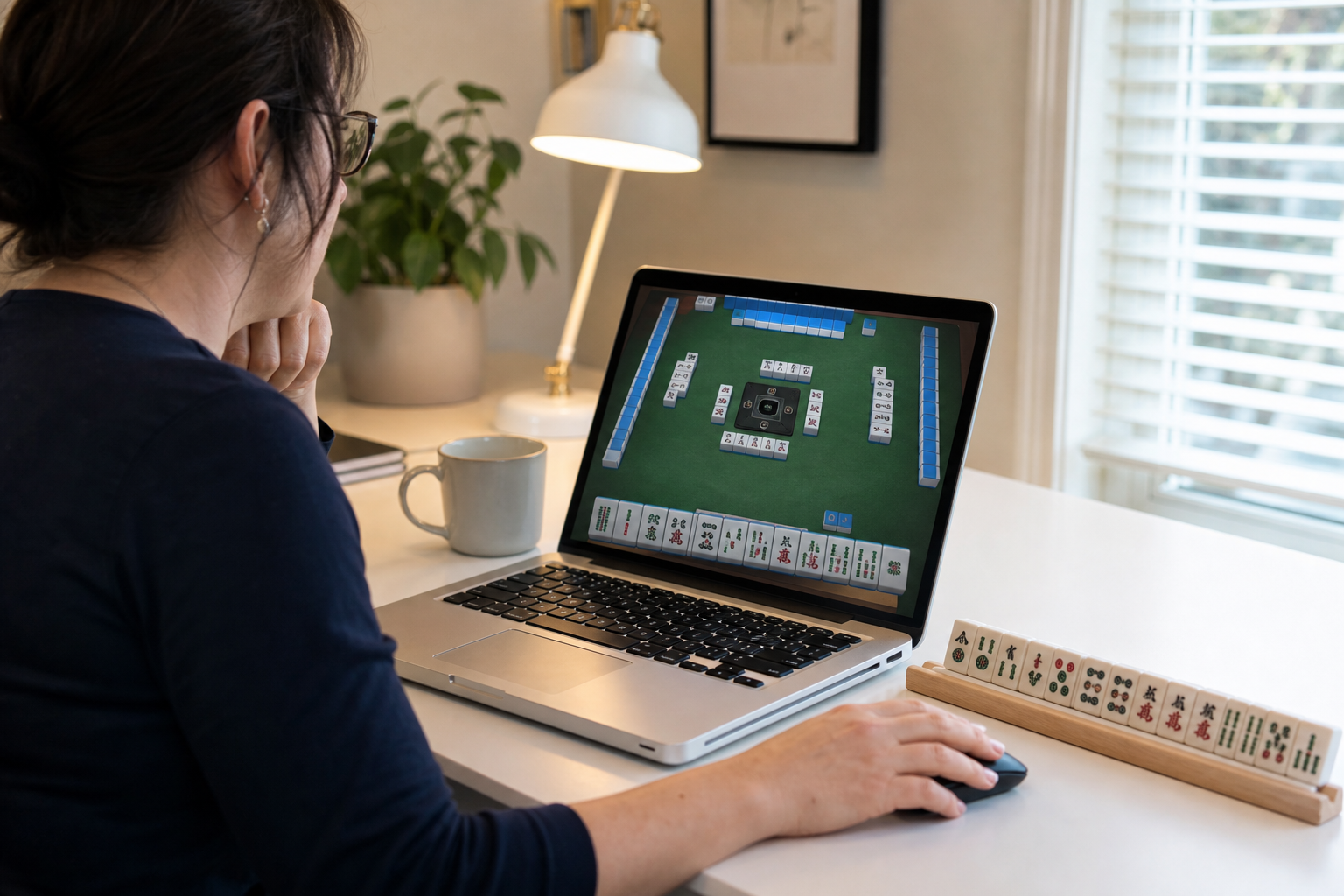
This guide explains how online American Mahjong usually works and what to look for before choosing a service. It does not endorse a specific platform; features and prices change, so verify current terms directly with any provider.
What You Need to Play Online
Most platforms work in a web browser or a mobile app. You typically need a reliable internet connection, an email account, and access to the current American Mahjong card used by your table. Some services include guided practice, while others assume you already understand the rules.
If you are completely new, review American Mahjong rules for beginners before entering a timed live game.
Practice Mode vs. Live Multiplayer
Practice against computer players
Bot or solo practice is ideal for learning controls. You can take time to sort your rack, locate a card line, and understand when the system allows a call. Look for adjustable speed, hints you can turn off, and a way to replay or review decisions.
Private games with friends
A private room recreates a familiar weekly table without travel. One person creates the room and shares an invitation. Confirm that everyone uses the same card year and agrees on optional table rules before starting.
Public live games
Public tables are convenient but usually move faster. Learn the interface first, then choose a beginner or casual room if available. Read conduct, timer, and disconnection policies so you know what happens if your internet drops.
How an Online Turn Works
- The platform deals and displays your private rack.
- During the Charleston, you select three tiles and confirm each pass.
- On your turn, the system draws a tile automatically or prompts you to draw.
- You select and confirm one discard.
- When another player discards, eligible call buttons may appear for a short time.
- If your rack matches a valid card line, you use the platform’s Mah Jongg control.
The sequence is the same game you would play at a physical table. Keep our Mahjong cheat sheet nearby until the flow becomes automatic.
Features Beginners Should Look For
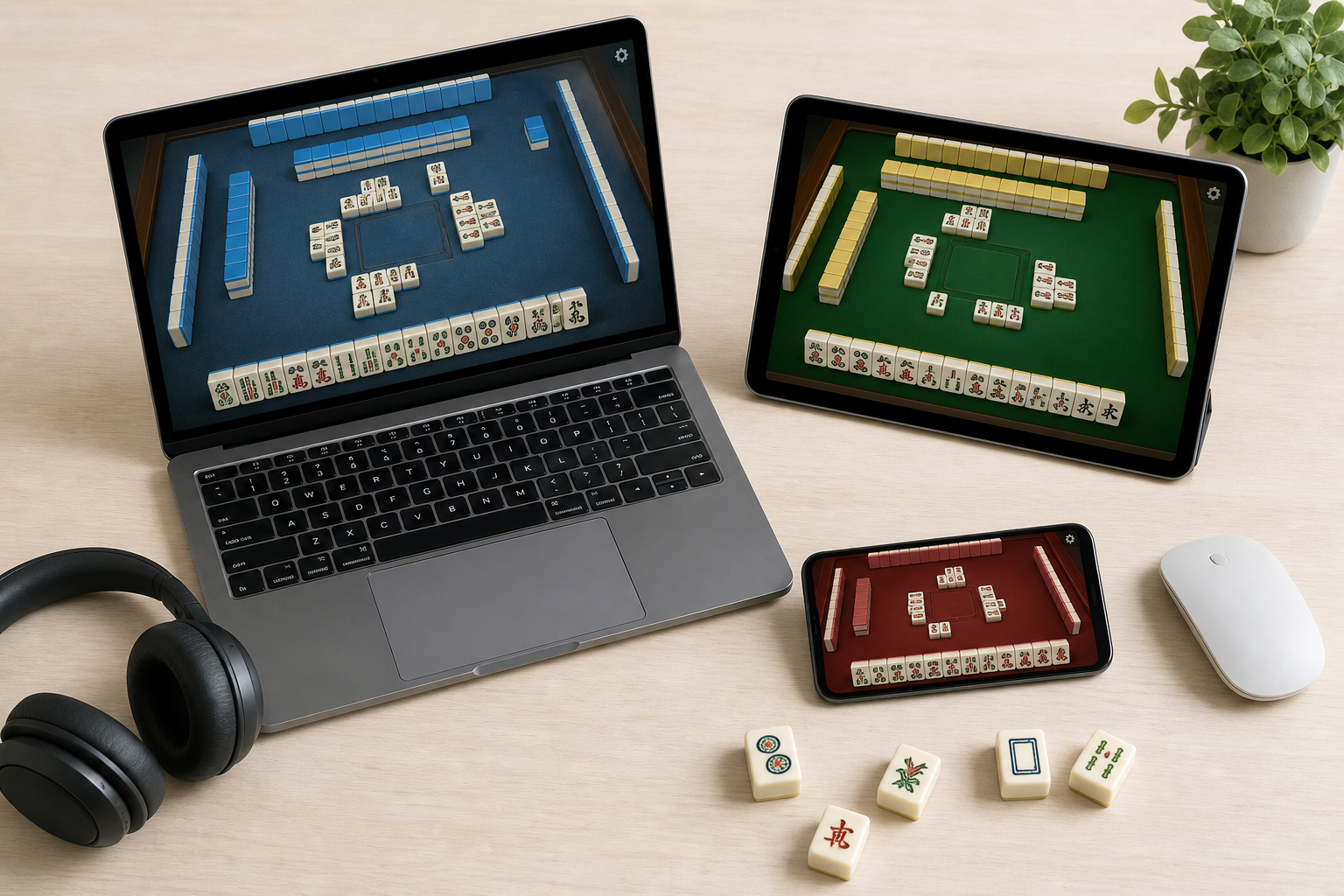
- True American Mahjong rules: many apps offer Chinese or Japanese Mahjong instead, so verify the exact variant.
- Current-card support: confirm which card year and ruleset the game supports.
- Solo practice: bots let you learn without holding up other players.
- Readable tiles: large symbols, color contrast, and zoom controls reduce mistakes.
- Clear call buttons: the interface should distinguish draw, discard, call, exchange, and Mah Jongg actions.
- Private rooms: useful for playing with your regular group.
- Reasonable timers: beginners need enough time to consult the card.
- Transparent pricing: understand trials, subscriptions, renewals, and cancellation before paying.
How to Practice Productively
Playing more games helps only when you practice a specific skill. In one session, focus on identifying two candidate hands quickly. In another, focus on safer Charleston passes. Later, study discards and defensive decisions.
Use the platform’s slower setting if possible. After every game, ask three questions: Did I choose a realistic line? Did I pivot soon enough? Which discard removed the most flexibility? Our guide to choosing an American Mahjong hand provides a useful review checklist.
Online Charleston Tips
Digital passing can feel deceptively fast. Select tiles deliberately and check them before confirming. Keep pairs, useful neighboring numbers, and tiles shared by multiple candidate hands. Avoid using the automatic sort as a substitute for thinking about flexibility. For detailed passing decisions, read what to pass in the Charleston.
Jokers and Calls on a Digital Table
Online software often prevents an illegal Joker placement, but it cannot teach the reason behind every rule. Learn when Jokers may be used and how exposed Joker exchanges work. See our American Mahjong Joker rules before relying on prompts.
Safety, Privacy, and Fair Play
- Use a unique password and enable stronger account security when offered.
- Do not share payment details or personal contact information in public chat.
- Check whether voice or video is optional before joining a room.
- Review subscription renewal and refund terms.
- Use respectful table chat and avoid revealing another player’s private information.
- Leave and report rooms where players are abusive or pressure you to move communication elsewhere.
Common Online Beginner Mistakes
- Joining a fast public table before learning the controls.
- Choosing an app for the wrong Mahjong variant.
- Assuming every platform uses identical house rules.
- Clicking a discard before checking the card.
- Following hints without understanding the decision.
- Forgetting that online convenience does not replace learning exposure and Joker rules.
Frequently Asked Questions
Can I learn American Mahjong entirely online?
Yes, a good platform can teach turn flow and provide extensive practice. A patient teacher or beginner guide still helps explain strategy and card notation that software may not fully teach.
Do I need a physical Mahjong set?
No. The platform supplies the digital tiles and table. A physical rack or a few tiles can be useful for off-screen practice but is optional.
Can I use the same NMJL card online?
Many American Mahjong platforms are designed around an annual card, but support varies. Confirm the platform’s current rules and use a legally obtained card.
Is free online American Mahjong available?
Some services offer free practice, limited games, or trials, while others require a subscription. Check current pricing and renewal terms before registering.
Final Takeaway
To play American Mahjong online, begin with a slow practice mode, verify that the platform supports the correct American rules, and learn the controls before joining live tables. Use digital convenience to strengthen real skills—not merely to finish games faster. With focused practice, online play can make your next in-person game calmer, quicker, and more enjoyable.