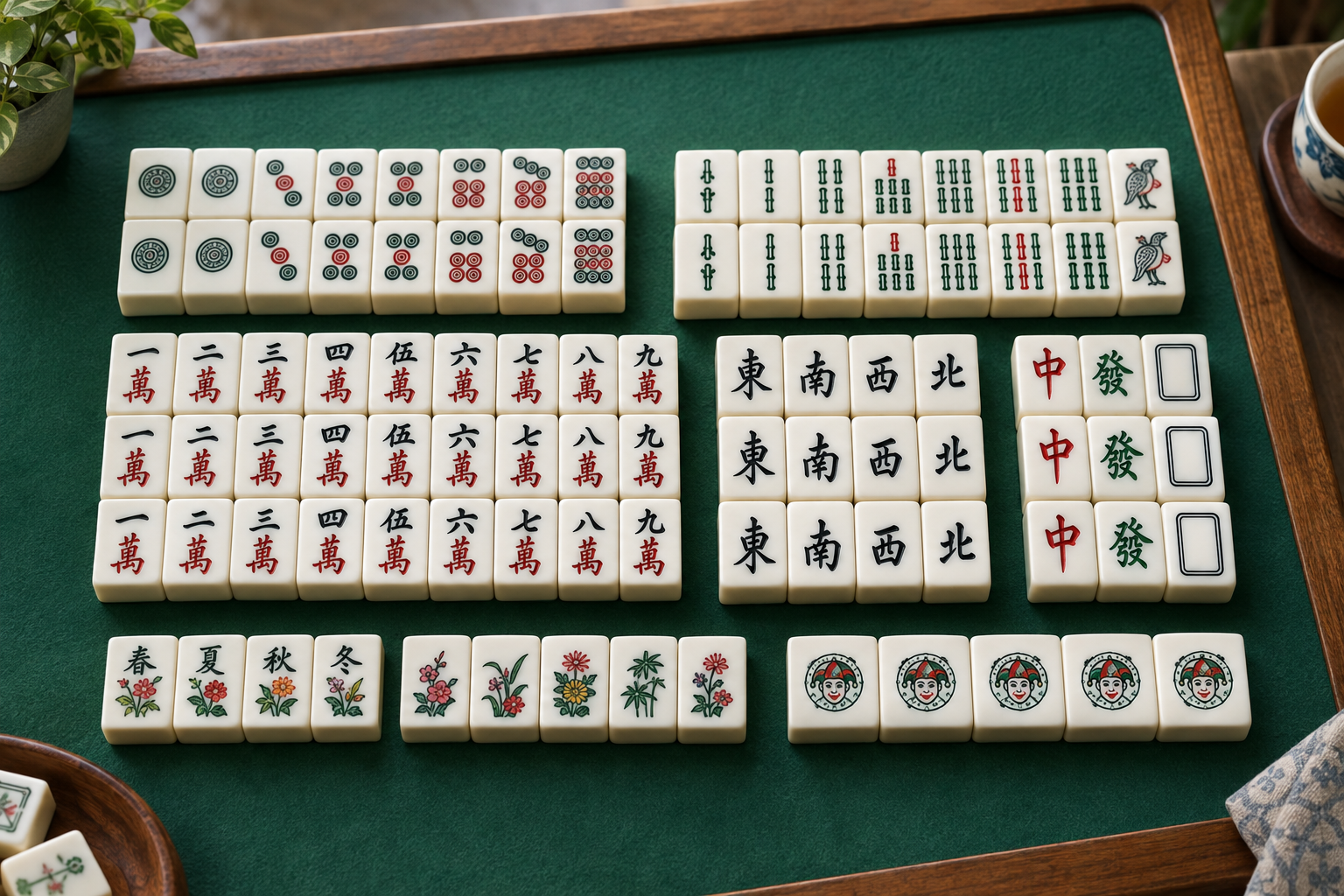
The Charleston in Mahjong: Beginner Guide
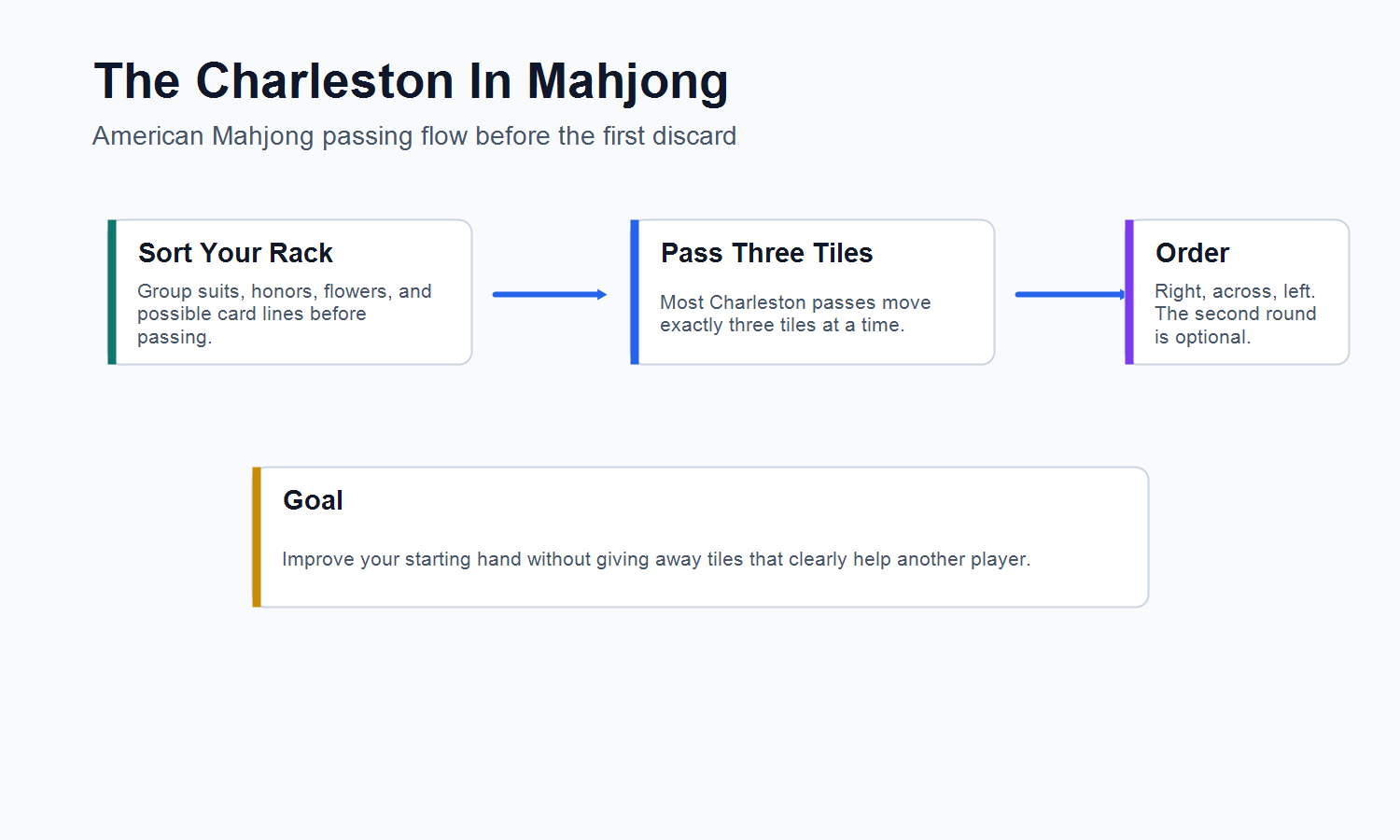
The Charleston in Mahjong is the opening tile-passing step used in American Mahjong. Before the first discard, players pass tiles around the table to improve their starting hands, explore possible card lines, and reduce awkward tiles from the rack.
This guide is written for U.S. beginners learning American Mahjong. The basic order is widely used, but timing details, blind-pass habits, and courtesy-pass etiquette can vary by group, teacher, or tournament.
Quick Answer: What Is the Charleston?
The Charleston is a series of passes at the beginning of an American Mahjong hand. Players usually pass three tiles at a time, first to the right, then across, then to the left. After that first round, a second Charleston may be optional, depending on the table.
The goal is not to make a complete hand immediately. The goal is to improve your direction. You want to keep useful tiles, remove tiles that do not fit, and avoid giving away tiles that obviously help another player.
If you are still learning the full flow of American play, start with the American Mahjong rules guide, then come back to this Charleston page.
Before the Charleston Starts
Do not rush your first pass. Take a moment to sort your rack and look for possible patterns. Beginners often pass too quickly, then realize the tile they gave away was part of their best line.
Group your tiles by suit, honors, flowers, jokers, pairs, and near-groups. Then scan the card for two or three possible directions. You do not need to choose the final hand yet, but you should know which tiles are clearly useful.
| Look For | Why It Matters | Beginner Move |
|---|---|---|
| Pairs | Pairs are often hard to rebuild. | Keep them unless they clearly do not fit. |
| Jokers | Jokers are powerful in American Mahjong. | Do not intentionally pass known jokers under standard rules. |
| Flowers | Many card lines need them. | Keep if they match several possible hands. |
| Isolated tiles | They may not support your direction. | Consider passing them first. |
| Suit clusters | They can point to a real hand. | Protect strong clusters until your plan is clearer. |
The First Charleston: Right, Across, Left
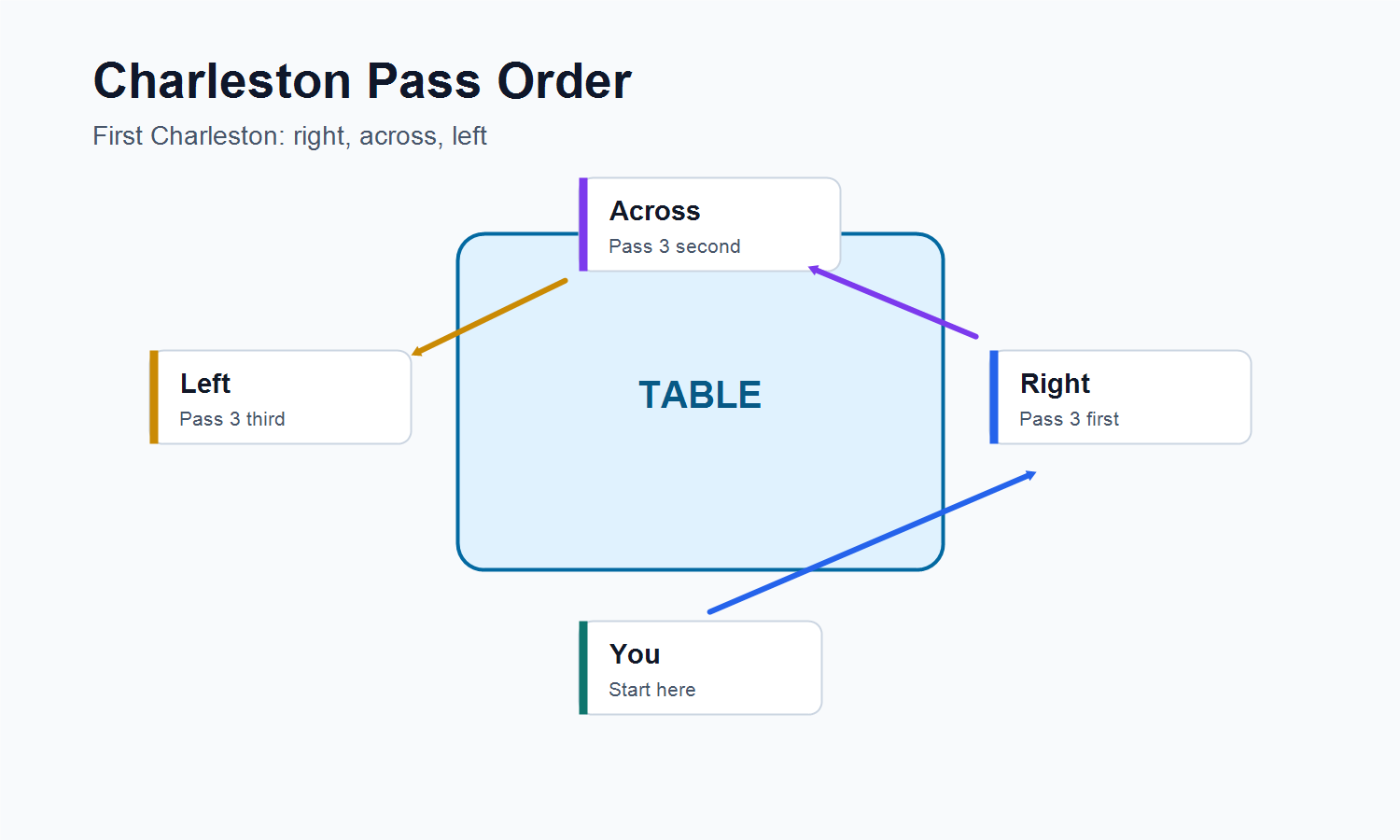
The first Charleston is the core passing sequence. In many American Mahjong games, every player passes three tiles to the right, then three tiles across the table, then three tiles to the left.
Some players remember it as “right, across, left.” Say it out loud before the first practice round if your table has new players. Clear table language prevents most early confusion.
| Pass | Direction | Number of Tiles | Beginner Note |
|---|---|---|---|
| First pass | Right | Usually 3 | Start with tiles that do not support your likely lines. |
| Second pass | Across | Usually 3 | Recheck your rack after receiving new tiles. |
| Third pass | Left | Usually 3 | This is where blind-pass rules may come up in some groups. |
The Optional Second Charleston
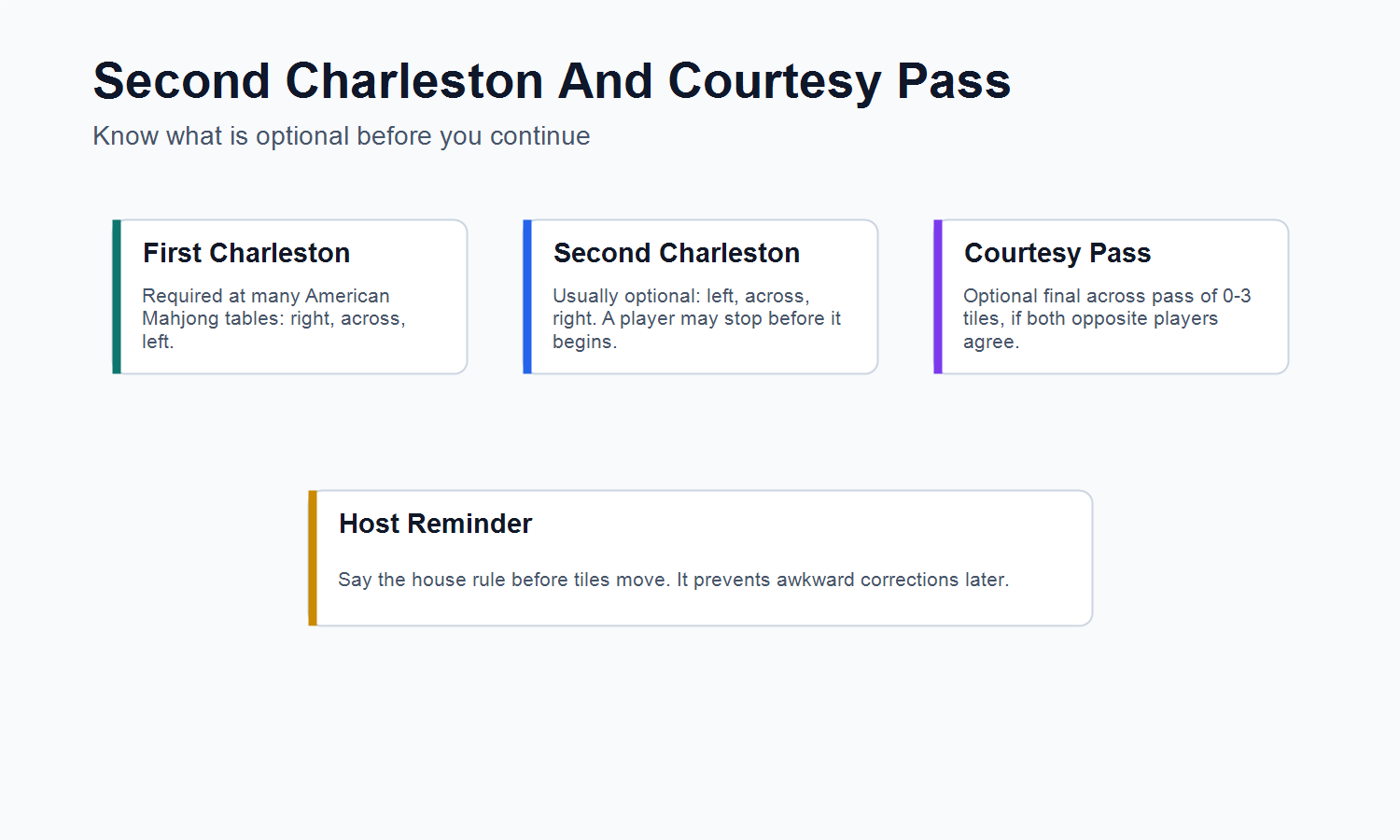
After the first Charleston, many tables allow a second Charleston if the group agrees to continue. The second sequence usually reverses the direction: left, across, right.
The second Charleston is optional in many American Mahjong groups. If a player wants to stop, the table may stop before beginning the second sequence. Ask your host or teacher how the group handles this decision.
What Is the Courtesy Pass?
After the second Charleston, many tables allow a final optional pass across the table. This is often called the courtesy pass. Opposite players may exchange zero, one, two, or three tiles if both agree.
The courtesy pass should feel polite and quick. Do not pressure the player across from you to pass more tiles than they want. If they say zero, that is a valid answer at many tables.
What Is a Blind Pass?
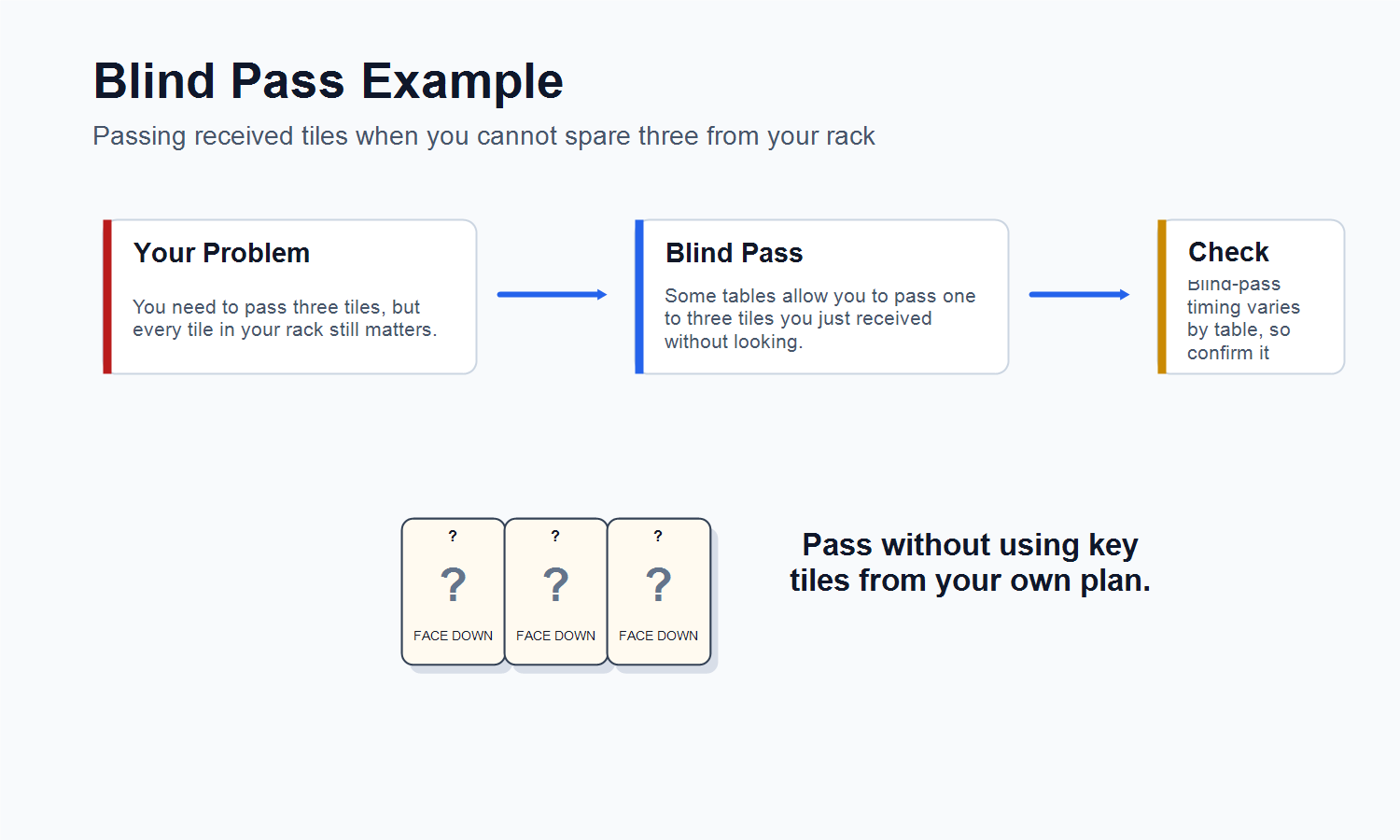
A blind pass means passing along one or more tiles you just received without looking at them. Players use it when they cannot spare three tiles from their own rack without damaging a strong hand.
Blind-pass rules are one of the places where house rules matter. Some groups allow them in specific Charleston moments, while others teach beginners to avoid them until they understand the table flow. Ask before the hand starts.
What Should You Pass?
Pass tiles that do not support your most likely hand directions. Early in the Charleston, that often means isolated suit tiles, unmatched honors, or tiles that do not connect to any line you are considering.
Do not pass a tile only because you dislike it. Ask whether it helps an opponent. For example, if the player on your right has been receiving and keeping flowers, passing a flower later may be risky if you can avoid it.
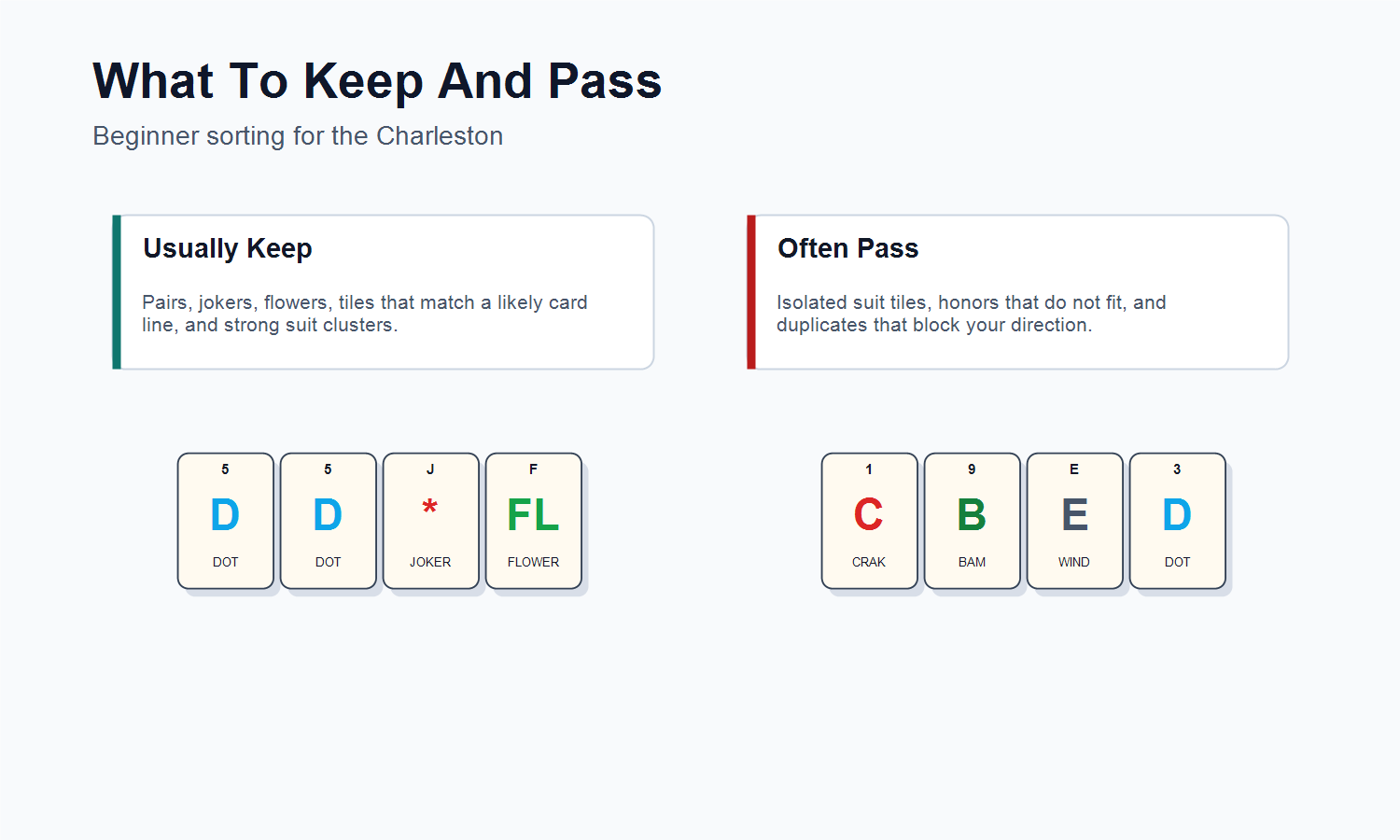
| Usually Keep | Often Pass | Reason |
|---|---|---|
| Pairs | Single unrelated suit tiles | Pairs can be hard to replace later. |
| Jokers | Known tiles that do not fit your card lines | Jokers are flexible and usually should not be passed. |
| Flowers | Extra honors that do not fit | Flowers appear in many American Mahjong lines. |
| Strong suit clusters | Tiles that split your focus | Clusters help you choose a clearer hand direction. |
What Should You Keep?
Keep tiles that connect to more than one possible hand. A tile that fits three lines is usually better than a tile that fits only one uncertain line. This is especially true before you know what the Charleston will give you.
Jokers are almost always worth protecting. For details on where they work and where they do not, read Mahjong joker rules.
Beginner Charleston Strategy
The best Charleston strategy for new players is calm sorting. You do not need a clever trick. You need to avoid giving away your best tiles before you understand your own hand.
- Sort before every pass instead of passing from the end of your rack.
- Keep pairs until you are sure they do not fit.
- Do not intentionally pass known jokers under standard American Mahjong rules.
- Watch which tiles come to you more than once; repeats can be clues.
- Do not chase a hand just because one pass looked promising.
- Use a Mahjong cheat sheet during practice if your group allows references.
Common Charleston Mistakes
New players often think the Charleston is just a way to get rid of bad tiles. It is more than that. It is the first strategy decision of the hand.
| Mistake | Why It Happens | Better Habit |
|---|---|---|
| Passing too fast | The player has not checked the card yet. | Take a short sorting pause before each pass. |
| Breaking useful pairs | Pairs look small but may be important. | Keep pairs until your hand direction is clearer. |
| Passing a known joker | The player treats it like any other tile. | Keep known jokers under standard American rules. |
| Ignoring the player receiving the pass | The player thinks only about their own rack. | Avoid passing obvious helpful tiles when possible. |
| Forcing one hand too early | One tile group looks exciting. | Keep two or three possible lines alive at first. |
How the Charleston Connects to Winning Hands
The Charleston is not separate from your winning hand. Every pass should help you move toward a line on the card or keep your rack flexible enough to choose one soon.
If American Mahjong hand structure still feels vague, read Mahjong winning hands. It explains how beginners can look at groups, pairs, exposures, and card patterns without getting lost.
Hosting Tip for New Groups
If you are hosting beginners, walk through one open Charleston before regular play. Let everyone sort, say which direction the pass goes, and ask questions. A slow teaching pass at the beginning saves confusion later.
The hosting checklist in how to host a Mahjong game night pairs well with this page if your group is planning a casual home game.
FAQ
Is the Charleston used in every type of Mahjong?
No. The Charleston is associated with American Mahjong. Many Chinese-style, Hong Kong, and Riichi games do not use this opening pass.
How many tiles do you pass in the Charleston?
Most Charleston passes involve three tiles. The final courtesy pass, when used, may allow zero to three tiles if both opposite players agree.
What is the first Charleston order?
The common beginner phrase is right, across, left. Each player passes three tiles in each of those directions.
Is the second Charleston required?
Often no. Many American Mahjong groups treat the second Charleston as optional. Confirm your group’s rule before continuing past the first Charleston.
Can you pass a joker in the Charleston?
Under standard American Mahjong practice, you should not intentionally pass a known joker. Blind-pass situations can be handled differently by house rules, so ask before play begins.
Final Takeaway
The Charleston is your first chance to shape the hand. Sort carefully, protect flexible tiles, avoid passing known jokers, and keep more than one card line alive until the rack gives you a clearer signal. Once the passing order feels automatic, the rest of American Mahjong becomes easier to follow.
For tile names and suit basics, keep the Mahjong tiles guide nearby during practice.