How to Claim Discarded Tiles in American Mahjong Correctly
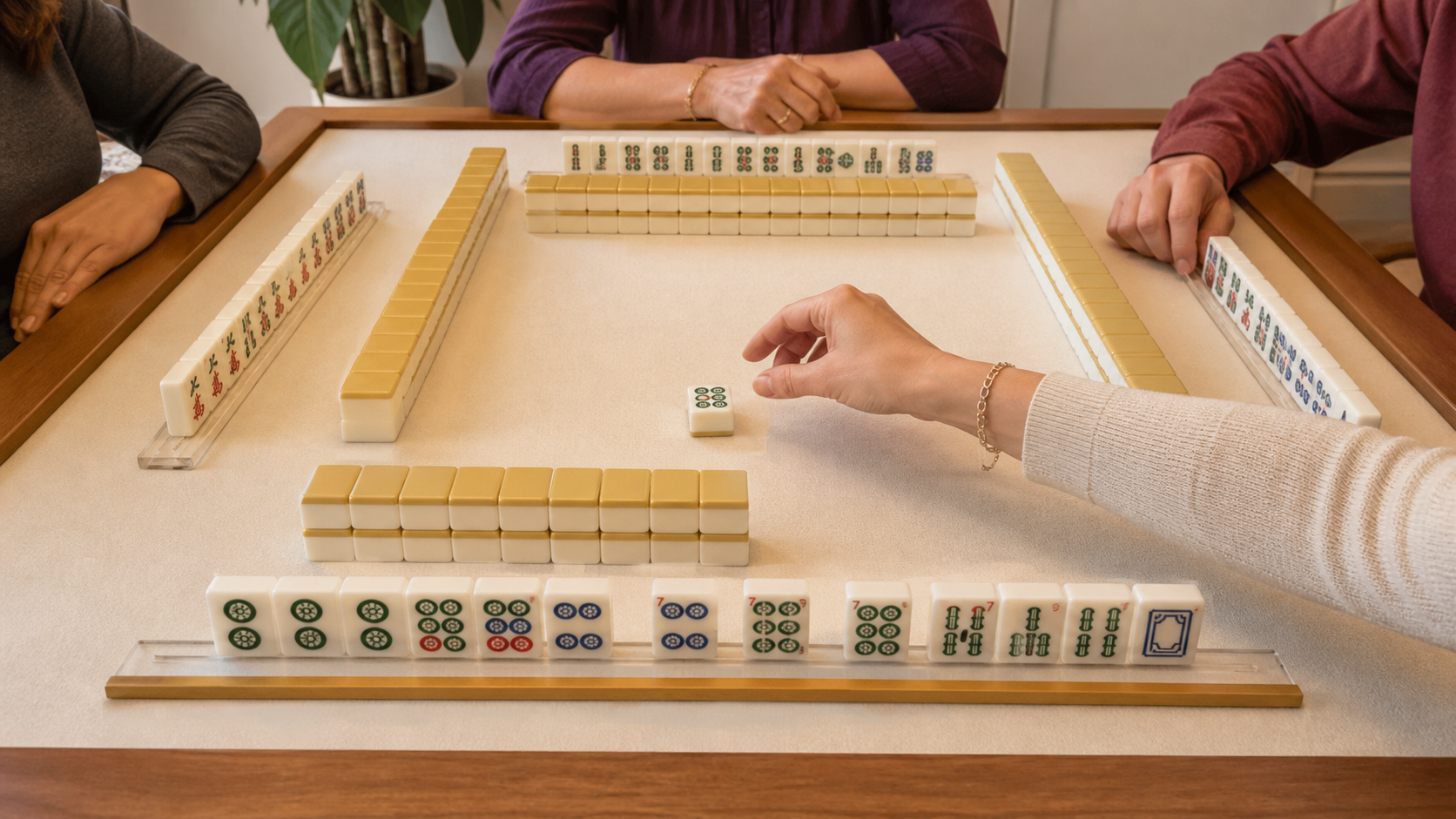
A tile lands in the center and it is exactly what you need. Should you call for it? In American Mahjong, the answer depends on what the tile completes, whether your chosen hand may be exposed, and whether the table has already moved on.
This guide walks through the decision in plain English. It is designed for beginners who understand the basic draw-and-discard rhythm but still hesitate when a useful tile appears.
The short rule
During ordinary play, you may claim the most recent discard when it completes a legal exposed group for the hand you are building. That usually means a Pung, Kong, Quint, or Sextet shown on the current card. You may also claim a natural tile to complete Mahjong, including when the final tile fills a single or pair.
You may not call a discard simply because it improves your rack. If you need one tile now and another tile later before the group is complete, the call is premature.
If this vocabulary is still new, keep the American Mahjong glossary nearby while you play.
Three questions to ask before calling
- Does this tile complete a group right now? You need the other matching natural tiles or permitted Jokers already in your rack.
- Does that group fit a real line on the card? A technically complete Pung is not useful if it makes your intended hand impossible.
- May this hand be exposed? A line marked concealed should normally stay hidden until you declare Mahjong.
The distinction between exposed and concealed play matters more than speed. Review exposed and concealed American Mahjong hands before calling from a line marked with a C.
What to do when you want the discard
Say something clear enough for the whole table to hear, such as “Call” or “I’ll take that.” Do not rely on a small gesture. Then collect the discarded tile and place the completed grouping face-up on the top of your rack.
The claimed tile belongs in the exposure with the tiles that support it. Keep the group tidy and readable. After making the exposure, discard one unwanted tile so your hand returns to the correct count and play can continue.
Example: calling for a Pung
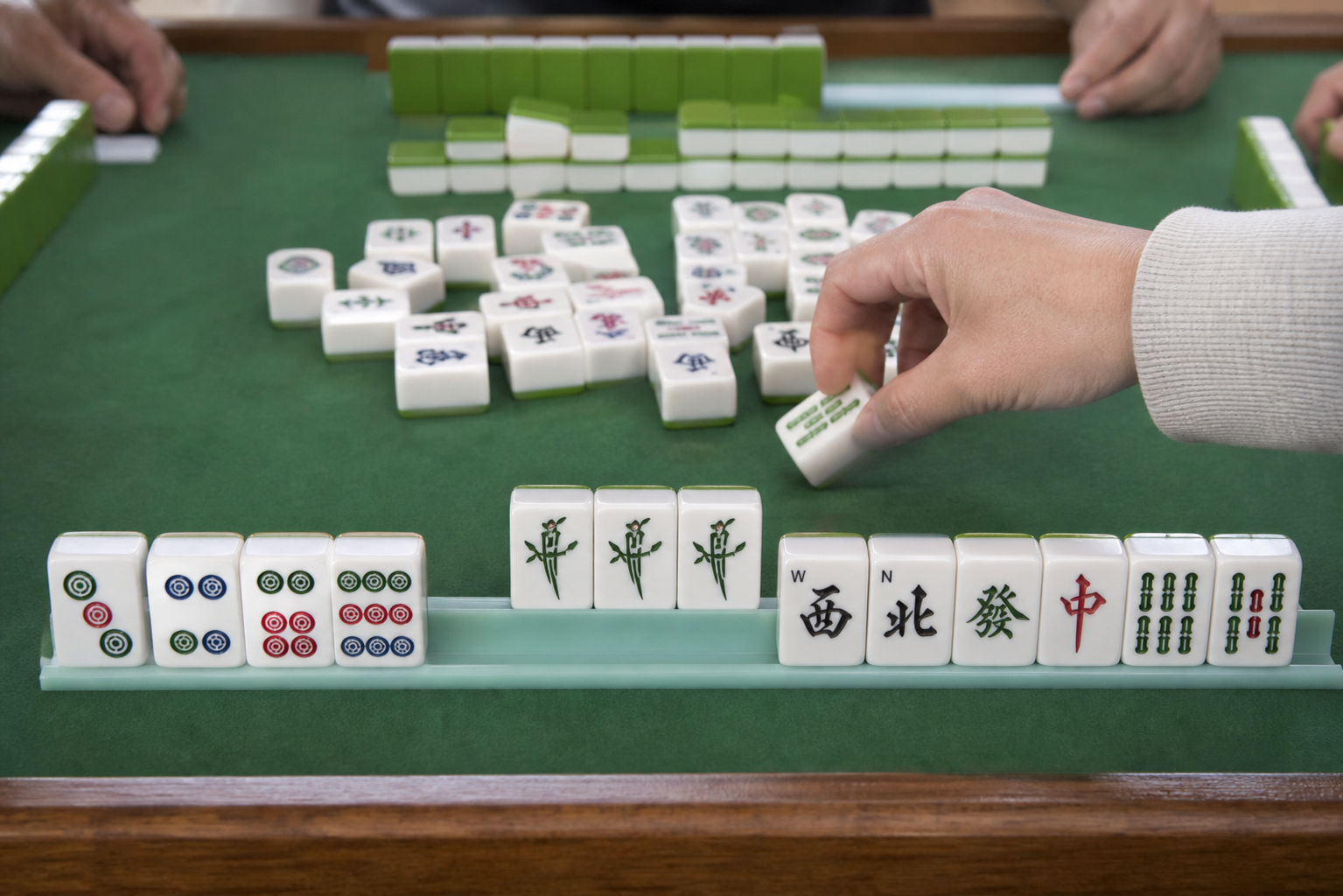
Suppose your rack contains two 7 Craks and your chosen card line needs a Pung of 7 Craks. Another player discards a 7 Crak. You may call, place all three 7 Craks together above your rack, and then discard.
If you hold only one 7 Crak, you cannot take the discard merely to create a pair for later. The exposed group is not complete. Likewise, if the line needs a pair of 7 Craks rather than a Pung, you cannot normally call that tile unless it completes your entire Mahjong hand.
How Jokers affect a call
A Joker can help complete an eligible group of three or more identical tiles. For example, one natural 7 Crak, one Joker, and the discarded 7 Crak can form an exposed Pung. A Joker cannot be used to create a single or pair, and a discarded Joker itself cannot be claimed.
For the important exceptions, see the full American Mahjong Joker rules.
When is a call too late?
The opportunity applies to the most recent discard. At a friendly table, pause briefly after every discard so everyone can hear and react. Once the next player has completed an action that closes the opportunity, the earlier tile is no longer available.
Fast tables sometimes create confusion because a player reaches for the wall immediately. Agree before the game on a calm pace and speak every tile name clearly. If two matching tiles are thrown in quick succession, only the newest discard is the live one.
Calling a tile for Mahjong
A winning call is broader than an ordinary exposure call. You may claim the current natural discard if it completes a valid 14-tile hand. The winning tile may finish an exposed or concealed hand and may complete a single or pair.
Before announcing Mahjong, compare every grouping with the exact card line. An incorrect declaration can create a dead hand or other table penalty. Our dead-hand guide explains the most common problems.
Common beginner mistakes
- Calling a tile that creates only a pair during ordinary play.
- Exposing a group while pursuing a concealed hand.
- Picking a wall tile and then trying to expose tiles from the rack.
- Taking an older discard after a newer discard has replaced it.
- Forgetting to discard after completing the exposure.
- Calling automatically without checking whether the group still fits the card.
A simple practice drill
Deal yourself a sample rack and choose one exposed card line. Ask a friend to reveal one discard at a time. For each tile, answer three things aloud: “useful or not,” “callable or not,” and “which exact group it completes.” This separates hand improvement from a legal claim.
When you are ready to put the decision into context, review the complete American Mahjong rules for beginners.
Frequently asked questions
Can I claim a discard to complete a pair?
Not during ordinary play. You may claim a natural discard for a pair when that tile completes your entire Mahjong hand.
Can I call a discard for a concealed hand?
Normally only when the discard completes Mahjong. Earlier calls and exposures would make a concealed line invalid.
Can two players want the same discard?
Yes. Mahjong takes priority over a call for an ordinary exposure. When competing nonwinning calls occur, the applicable table rule determines priority, so confirm the rule before play.
Do I have to use the exact word “Call”?
No special phrase is necessary at most tables, but your intention must be unmistakable and audible to everyone.
Final takeaway
Call a discard because it completes a legal group for a realistic hand—not simply because the tile looks helpful. Check the card, speak clearly, expose the complete grouping, and finish by discarding. That short routine prevents most beginner calling mistakes.
4 thoughts on “How to Claim Discarded Tiles in American Mahjong Correctly”