American Mahjong Table Etiquette: Calls, Pace, and Courtesy
Good American Mahjong etiquette is not about memorizing fussy social rules. It is about making every action easy to hear, easy to see, and fair to everyone at the table. Clear play also gives beginners room to learn without turning every correction into an interruption.
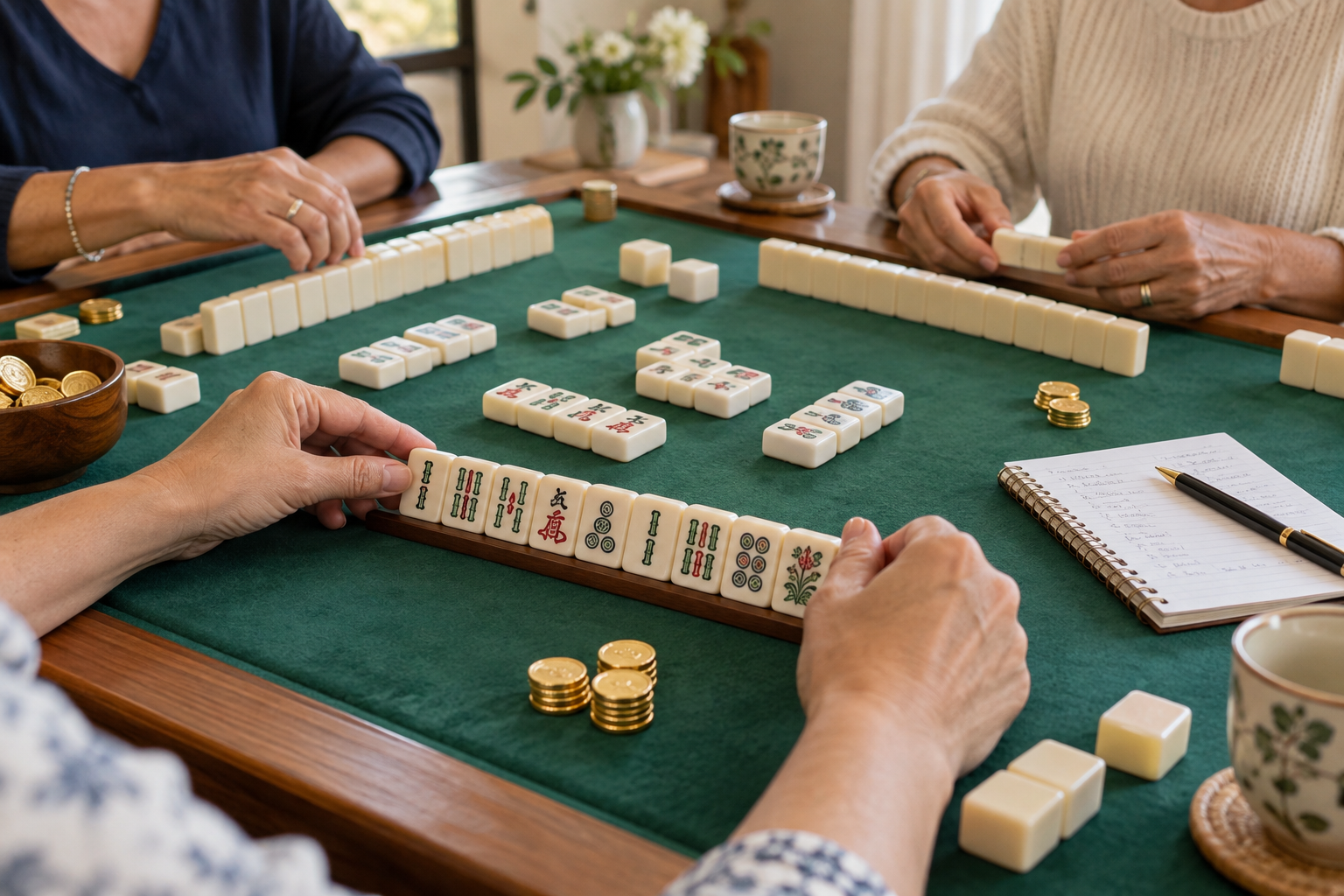
The best home games feel relaxed because the players share a rhythm. They name tiles clearly, keep the center readable, pause for calls, and separate official rules from local preferences.
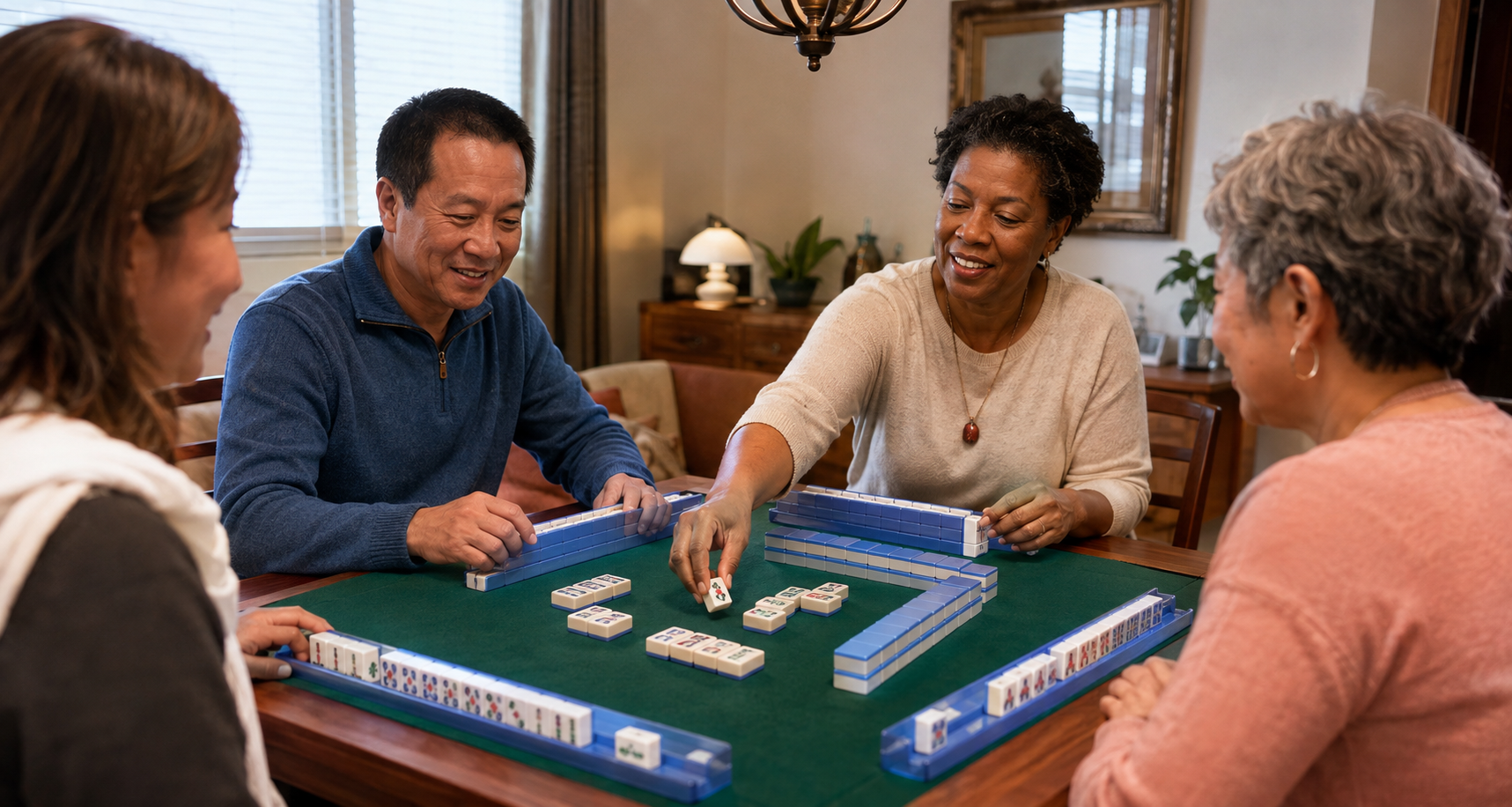
Name every discard clearly
Place the tile face up in the center and say its full name loudly enough for all four players to hear. For numbered suits, include both parts: “Seven Dot,” “Two Bam,” or “Nine Crak.” Say “North,” “Red Dragon,” or “Flower” rather than using an unclear abbreviation.
A complete announcement helps players who cannot see the tile immediately. It also marks the discard cleanly. If you say the wrong name, correct it at once, but do not substitute a different tile after the discard is committed.
Give players a real chance to call
Do not race to the wall the instant a tile touches the table. A brief pause lets the table process the announcement and decide whether the discard completes a legal exposure or Mahjong.
The pause need not be long. A calm one-beat rhythm is enough for most games. The technical timing depends on the call window and the next player’s action; see the guide to claiming discarded tiles for the full rule.
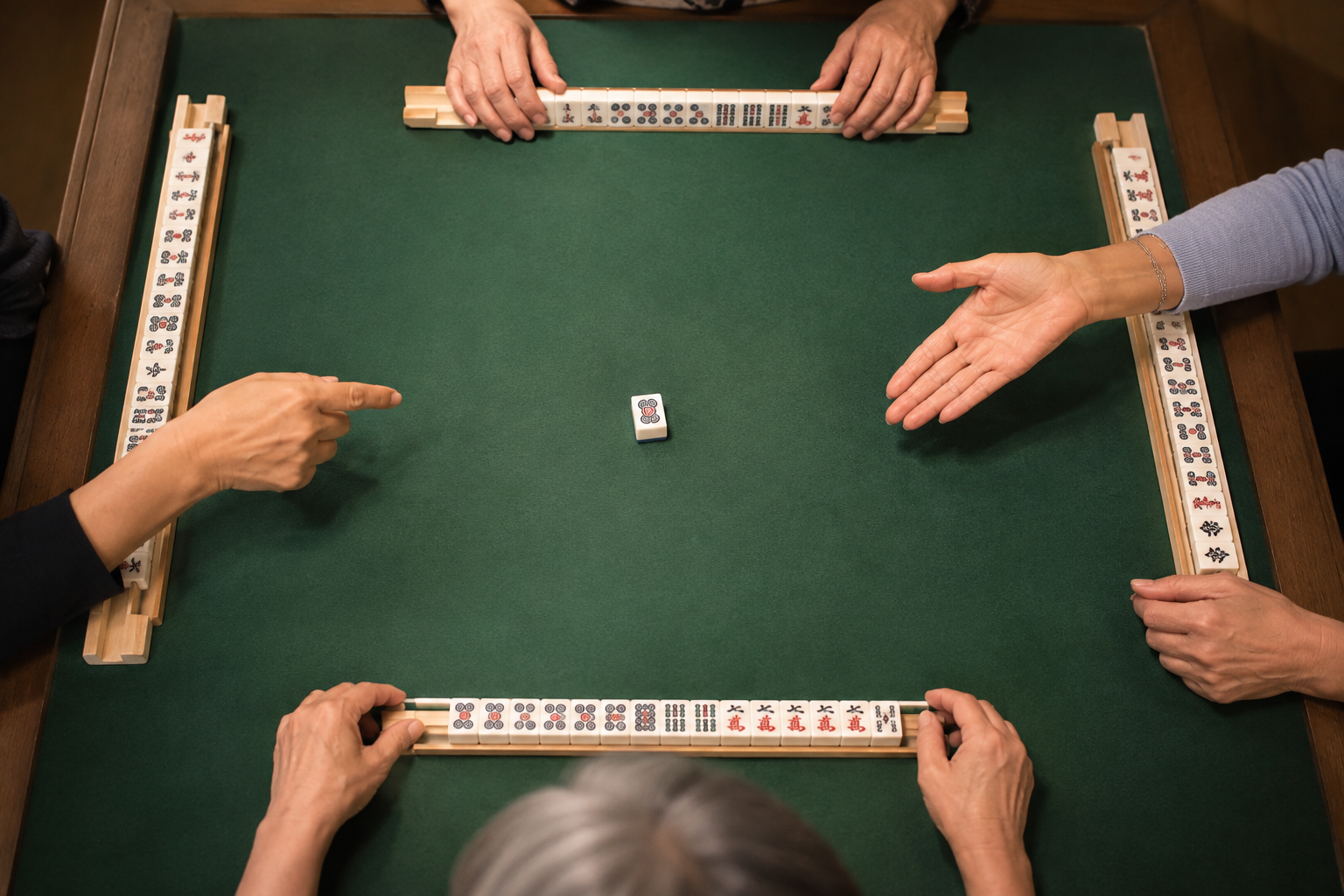
Keep your turn visible
Move one tile at a time and avoid covering the wall with your hands. Keep a newly drawn tile beside the rack while you consider it, then make a clear choice to rack or discard. Ambiguous taps and half-movements invite disagreements about whether an action was complete.
When learning the table language around these actions, keep the American Mahjong terms glossary nearby.
Handle calls and exposures neatly
When calling, speak so everyone hears you. Collect the newest discard, complete the required group above your rack, and keep its tiles aligned. Then discard to finish your turn.
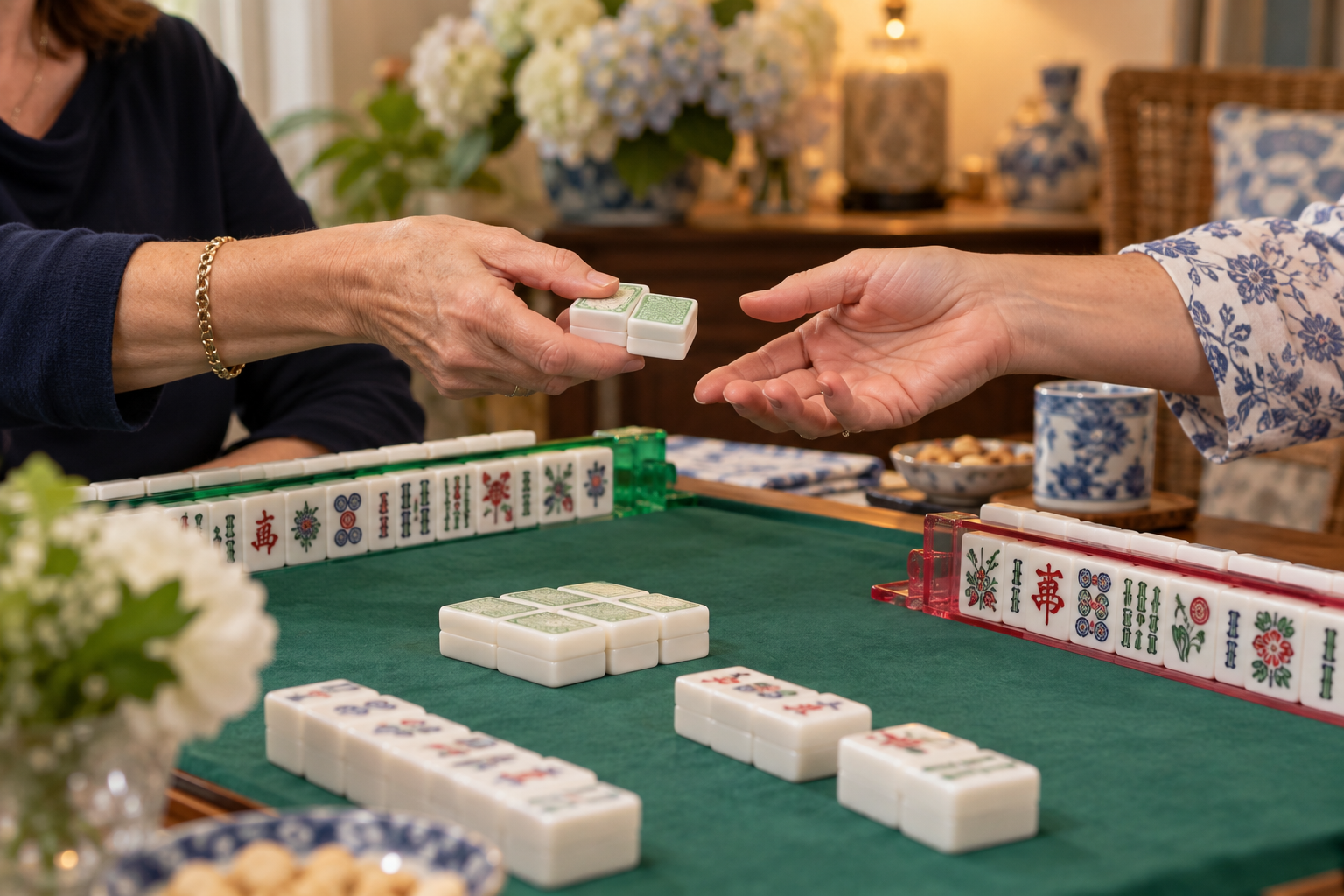
Do not reach across another player’s rack or rearrange someone else’s exposure. During a Joker exchange, offer the natural tile to the player and let that player hand you the Joker. This is clearer and more respectful than touching another rack.
Protect private information
Keep concealed tiles angled away from other players. Avoid commenting on what another player appears to need, and do not react dramatically when someone discards a tile you wanted. Expressions, sighs, and coaching can give away information just as surely as words.
Players may discuss general rules, but strategic help during a live hand should be limited unless the whole table has agreed that the game is instructional.
Correct mistakes without embarrassing anyone
Stop the action when a genuine rules problem occurs, describe what happened, and apply the agreed rule consistently. Focus on the tiles and sequence rather than the player’s experience level.
For example: “That exposure has only two matching tiles, so it is not complete,” is more useful than, “You always call too quickly.” If an error may create a dead hand, consult the American Mahjong dead-hand guide before continuing.
Separate official rules from house rules
Groups often develop preferences about the optional Charleston, table speed, use of “same” when repeating a discard, or how much coaching is welcome. Those customs can make a regular game comfortable, but they should be introduced as house rules rather than universal requirements.
Before play begins, mention any local convention that could surprise a guest. New players should not discover a special rule only after violating it.
Use a beginner-friendly pace
A new player may need extra time to read the annual card. Agree on a reasonable thinking pace and avoid stacking pressure with repeated reminders. At the same time, beginners can help the table by narrowing their choices during other turns instead of beginning every decision from scratch.
If choosing a direction is the main source of delay, the article on how to choose an American Mahjong hand offers a practical method.
Keep the playing area usable
- Place discards face up without building tall piles.
- Keep drinks away from the wall and annual cards.
- Align exposures so Jokers and natural tiles are visible.
- Return unused accessories to the side of the table.
- Silence distracting phone alerts when possible.
- Wait until a winning hand is verified before sweeping tiles together.
Etiquette when someone declares Mahjong
Pause your own hand and let the winner display all 14 tiles. Compare the grouping with one complete line on the current card. Ask neutral questions if something looks different rather than immediately declaring the hand wrong.
Do not expose or mix your own tiles until the winning hand has been checked. If the declaration is valid, acknowledge the win, settle the score according to the group’s method, and rebuild without dragging mistakes from the last hand into the next.
A good welcome for first-time guests
Show a guest where winds sit, how your group handles the Charleston, and which terms you commonly use. Make sure they know whether the session is competitive, social, or instructional. The Mahjong game-night guide can help with the rest of the setup.
During the first hand, explain a rule at the moment it becomes relevant. A five-minute lecture about every possible penalty is less useful than one calm reminder about the current action.
Frequently asked questions
May I say “same” for a repeated discard?
Some groups allow it when your tile exactly matches the immediately previous discard. Saying the full tile name is still clearer, especially with beginners or guests.
Is table talk allowed?
Friendly conversation is part of many home games. Avoid comments that reveal concealed information, direct another player’s strategy, or make it difficult to hear tile announcements.
How long should I wait after a discard?
Use a brief, natural pause rather than a fixed timer. The goal is to let everyone hear and react without making the game crawl.
Should I correct a beginner immediately?
Correct an action that affects the live hand before play advances. Save optional strategy advice for after the hand unless the group has agreed to active coaching.
Final takeaway
Strong etiquette makes American Mahjong easier, not stiffer. Announce clearly, move deliberately, give calls a fair moment, and handle corrections with kindness. When everyone can follow the action, the table becomes both more competitive and more enjoyable.
3 thoughts on “American Mahjong Table Etiquette: Calls, Pace, and Courtesy”