Is Mahjong hard to learn? The game looks harder than it is. A beginner can understand the basic draw-and-discard loop in one lesson. The unfamiliar tiles, different regional rules, and scoring systems create the intimidating first impression—not an unusually difficult core game.

The more useful question is not whether Mahjong is “easy” or “hard.” It is which parts you need for your first game and which parts can wait. Once you separate basic play from advanced strategy, learning becomes manageable.
Why Mahjong looks difficult at first
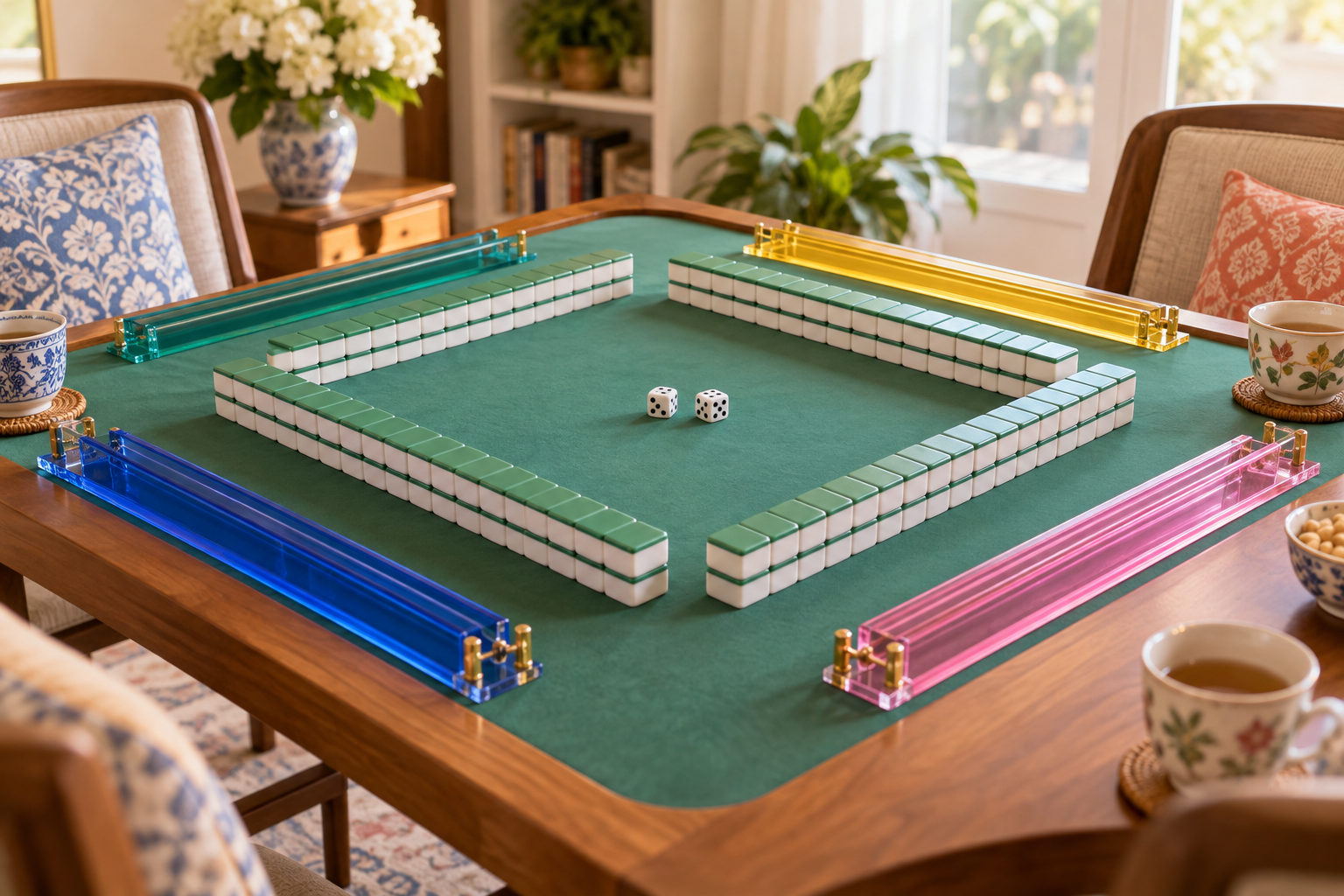
A Mahjong table presents a lot of visual information: dozens of engraved tiles, four racks, a wall, discards, exposed sets, and possibly a printed card. New players often assume they must memorize all of it before they can begin. They do not.
If you want the simplest introduction first, read what Mahjong is. The essential idea is familiar to anyone who has played a rummy-style game: draw, improve your hand, and discard what you do not need.
What is easy about learning Mahjong?
The turn structure repeats
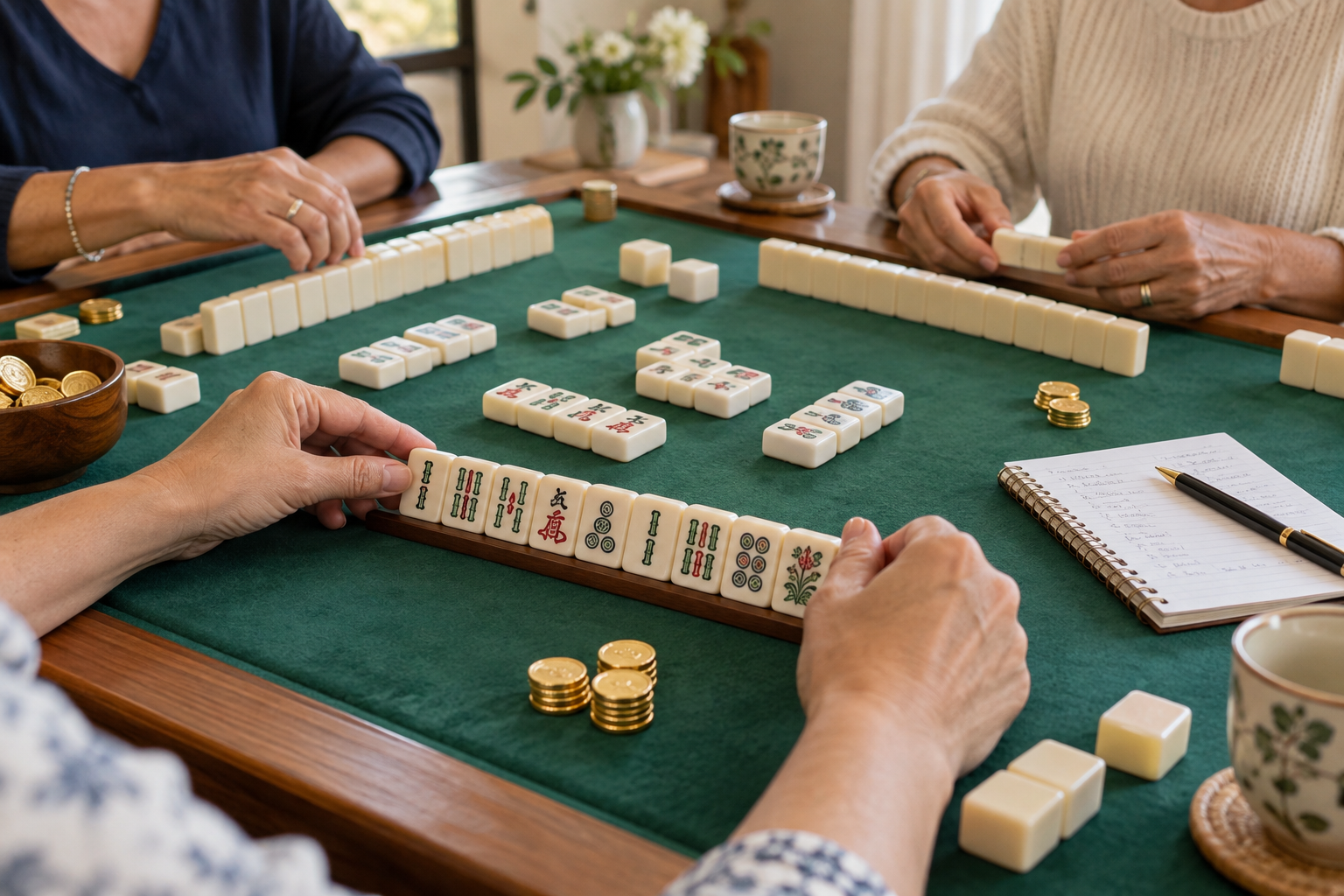
Most turns follow the same pattern. You draw one tile, evaluate your rack, and discard one tile. Other actions—such as claiming a discard or declaring a completed hand—build on that rhythm. Repetition makes the table flow predictable quickly.
The tile system is organized
Mahjong tiles are not random symbols. Numbered suits follow clear sequences, while Winds, Dragons, Flowers, and Jokers have specific roles. American sets commonly include Arabic numbers on suited tiles, making recognition easier for U.S. beginners.
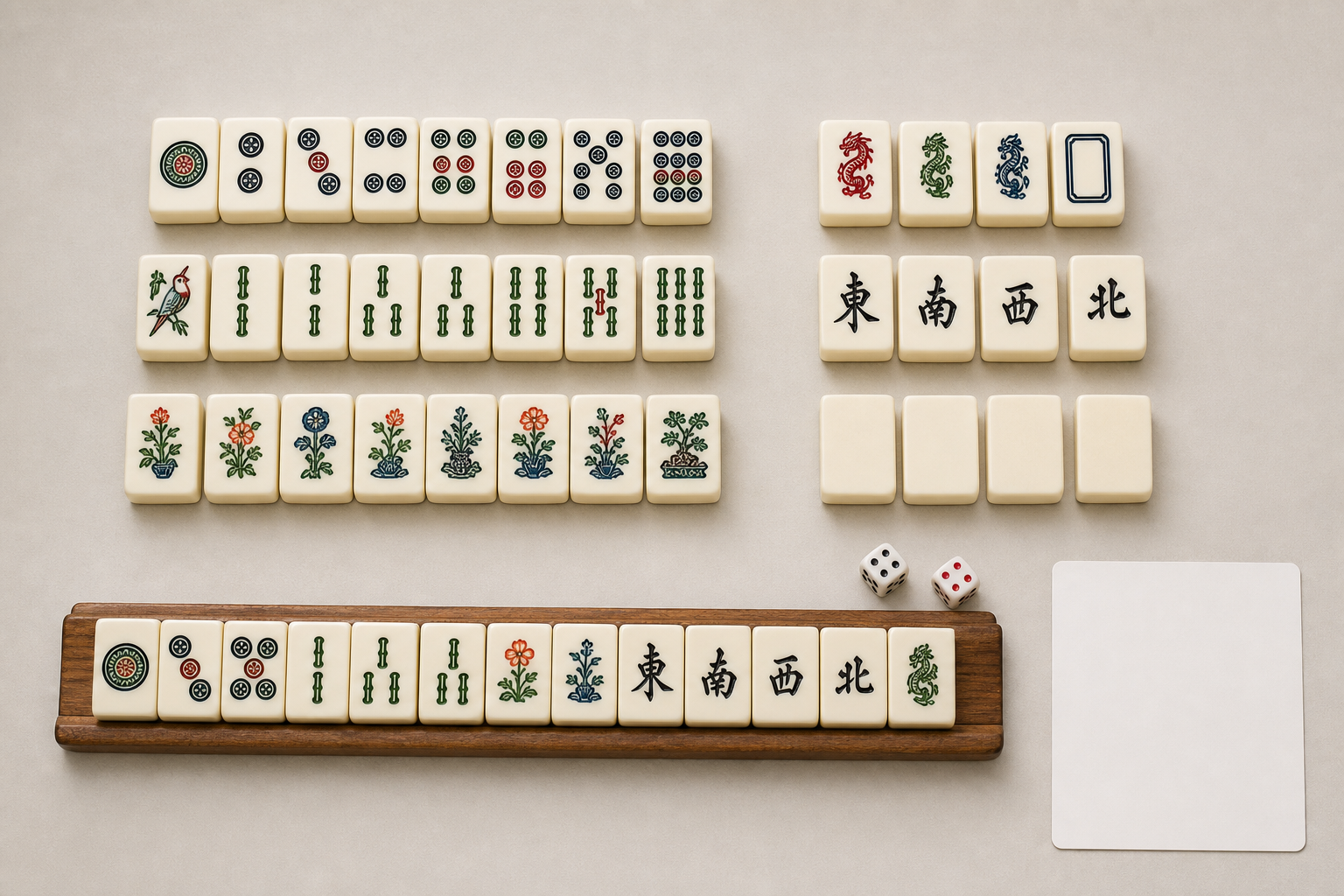
Use our Mahjong tiles explained guide to learn one family at a time. Most players can identify the major groups during their first practice session.
You can use references while playing
American Mahjong players use the current card throughout the game. You are not expected to memorize every legal hand. A printable Mahjong cheat sheet can also keep calls and basic rules visible while you learn.
Casual games allow a slower pace
A friendly beginner table should give new players time to read the card and ask questions. Speed is a result of recognition, not a requirement for starting.
What parts are genuinely challenging?
Choosing among possible hands
In American Mahjong, the card offers many valid hands. The hard part is not reading one line; it is deciding which line fits your starting rack. Beginners often keep too many possibilities open and switch direction too late.
The solution is to choose two or three realistic candidates, compare how many useful tiles you already have, and narrow your options as new tiles arrive. You do not need to evaluate the entire card every turn.
The Charleston happens before your plan feels certain
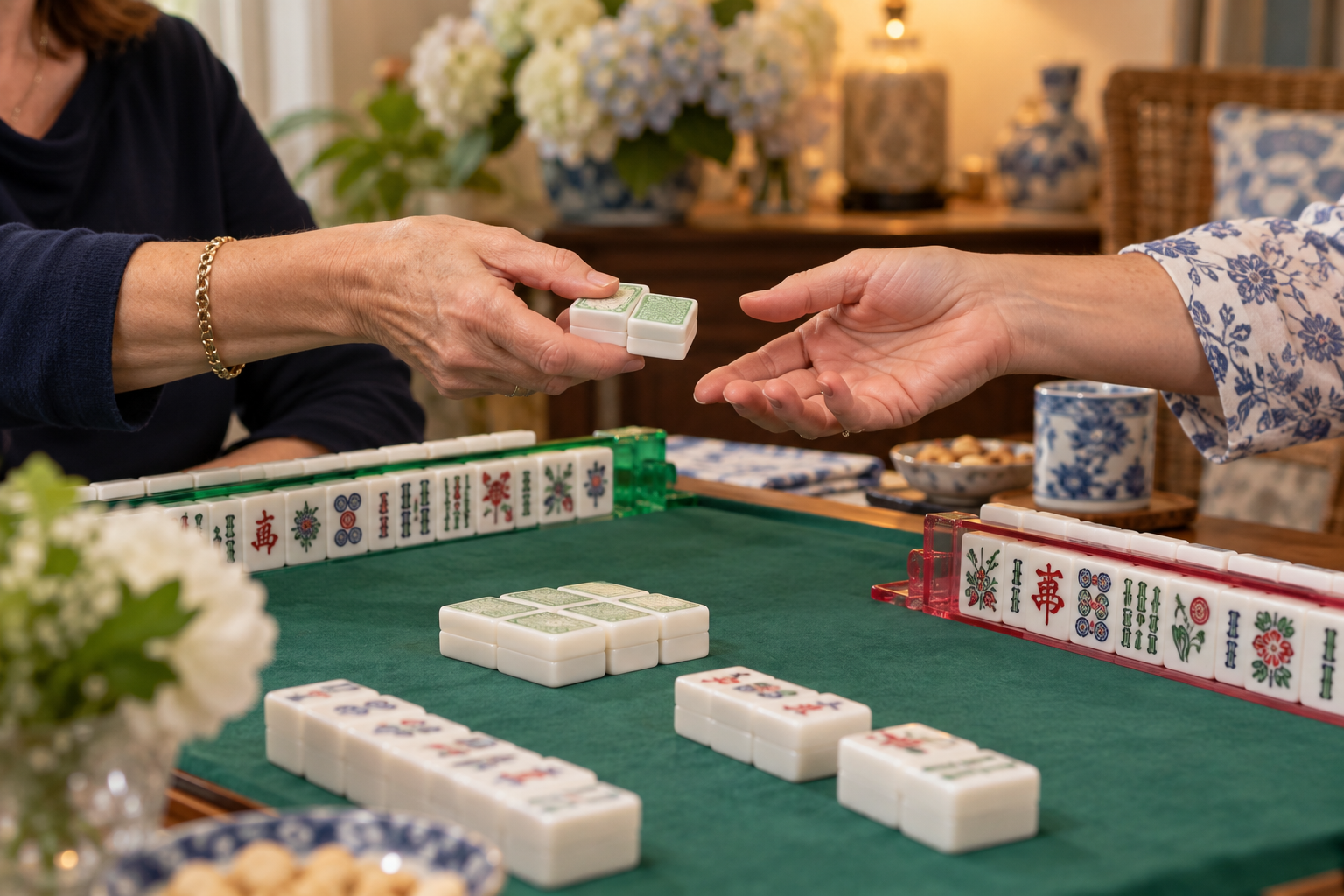
The Charleston asks American Mahjong players to pass tiles before ordinary play begins. That can feel uncomfortable because your hand direction may still be unclear. Treat the phase as a way to remove weak options, not a demand to choose a final hand immediately.
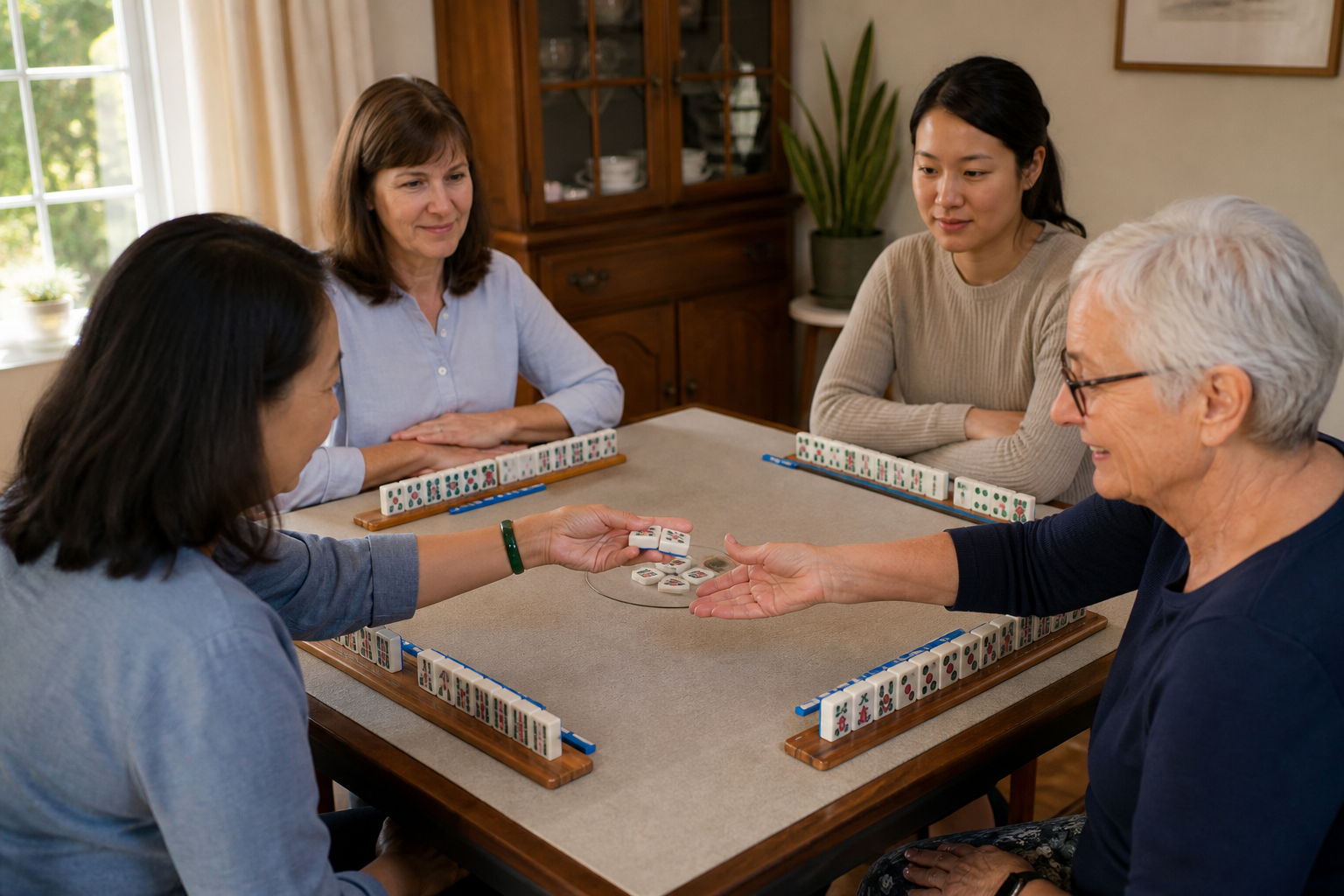
Our guide to what to pass in the Charleston explains how to protect flexible tiles and avoid helping another player.
Calls and timing require live practice
Reading rules can explain a pung, kong, exposure, or Joker swap. Using one at the correct moment requires table experience. Beginners sometimes notice the opportunity after play has already moved on. That improves naturally after several games.
Different versions use different rules
American, Chinese, Hong Kong, and Japanese Riichi Mahjong share a family resemblance but are not interchangeable. Advice that is correct for one version may be wrong for another. Pick the version you intend to play and avoid mixing rules during your first lessons.
Scoring can be more difficult than playing
You can understand the flow of Mahjong before you understand every scoring detail. In American Mahjong, the card provides the value of each hand. In other styles, combinations and bonuses may require more study. Let an experienced player or digital game handle scoring at first.
Is American Mahjong easier for beginners?
For many U.S. learners, American Mahjong is approachable because the card shows valid target hands and Jokers provide flexibility. The tradeoff is learning card notation and the Charleston. If your friends or local club play American rules, it is usually the most useful version to learn first.
Start with our beginner-friendly American Mahjong rules. Stay focused on tile recognition, the card, the Charleston, and the draw-discard loop before worrying about advanced strategy.
How hard are the major Mahjong versions?
- American Mahjong: Beginner-friendly target hands, with extra learning for the annual card, Jokers, and Charleston.
- Chinese Mahjong: Straightforward basic structure, with scoring that changes by ruleset.
- Hong Kong Mahjong: Accessible gameplay, but fan requirements add a scoring layer.
- Japanese Riichi Mahjong: Consistent competitive rules, but yaku, furiten, defense, and scoring demand more study.
None of these versions requires special talent. The learning curve mainly reflects how many rules you want to use at once.
The easiest way to learn without feeling overwhelmed
- Choose one version. Learn the rules used by the people you expect to play with.
- Learn tile families. Recognition removes much of the initial stress.
- Watch one demonstration round. Seeing the sequence is clearer than reading every exception.
- Play an open-hand practice game. Let everyone explain choices and correct mistakes immediately.
- Keep a reference nearby. Use the card and a cheat sheet instead of testing your memory.
- Review one skill at a time. Focus on the Charleston, calls, or hand selection—not all three in the same session.
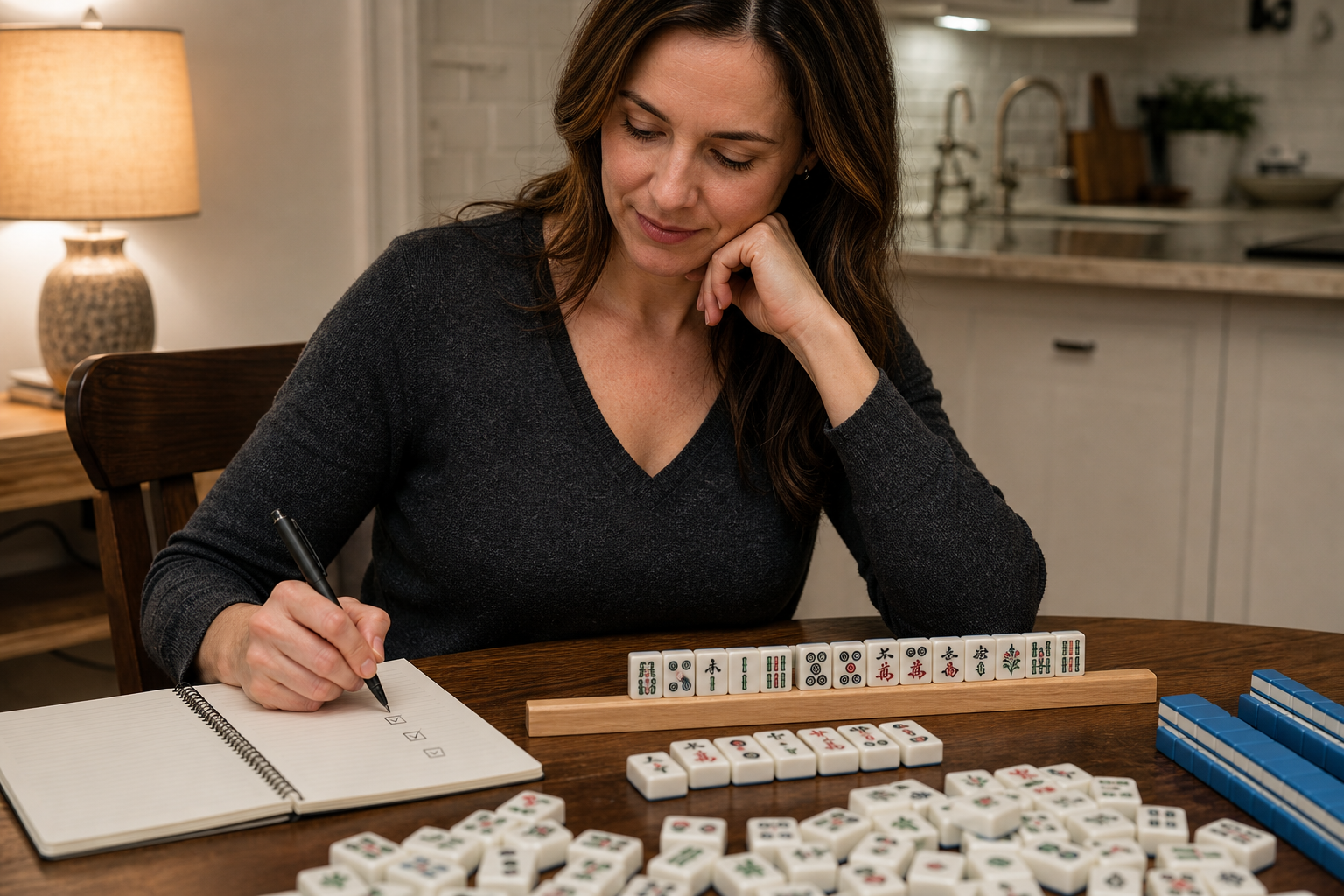
Common thoughts that make Mahjong feel harder
“Everyone else is faster than me”
Experienced players are faster because they recognize tiles and patterns automatically. They were slow at first too. Ask for a teaching table and take the time you need.
“I need to memorize the whole card”
You do not. Learn how the card is organized, then read the few sections relevant to your rack. The card is designed to stay in front of you.
“One mistake will ruin the game”
Beginner games are for mistakes. An incorrect discard or missed call becomes useful feedback. Review our list of common beginner Mahjong mistakes so you can recognize problems without feeling embarrassed by them.
“I am not good at strategy games”
Early Mahjong is more about organizing information than planning far ahead. Start by making legal, understandable choices. Strategic depth develops after the mechanics become comfortable.
Frequently asked questions
Can I learn Mahjong in one day?
Yes. You can learn enough to complete a guided game in one day. Expect several games before you play comfortably without frequent help.
Do I need to read Chinese characters?
No. American sets usually print Arabic numerals on suited tiles. Winds and Dragons are a small group that you can learn with a reference.
Is Mahjong mostly luck or skill?
Individual draws involve luck, but hand selection, discards, flexibility, observation, and defense reward skill over repeated games.
What is the hardest part for most beginners?
American Mahjong beginners often struggle most with choosing a hand and making Charleston decisions before their direction is clear. Both skills improve quickly with guided repetition.
How many games before Mahjong feels easy?
Many learners understand the rules after one lesson and feel comfortable after five to ten games. Strategy continues improving well beyond that point.
Final answer
Mahjong is unfamiliar, not inaccessible. Learn one version, keep references visible, and give yourself several games to become comfortable. Once tile recognition and the turn sequence become automatic, the game changes from confusing to absorbing—and that is when the strategy becomes fun.