How long does it take to learn Mahjong? Most beginners can understand the basic turn structure in one lesson, finish a guided game the same day, and play with reasonable confidence after five to ten games. Becoming strategically strong takes longer, but you do not need mastery before joining a friendly table.
The honest answer depends on the version you choose, how often you practice, and what you mean by “learn.” Recognizing tiles is different from understanding a legal hand, and understanding a legal hand is different from making good strategic decisions. This guide separates those stages so you can set a realistic goal instead of expecting everything to click at once.
The short answer: you can start playing in one day
A focused beginner lesson usually takes 60 to 90 minutes. In that time, you can learn the purpose of the game, identify the main tile families, understand drawing and discarding, and follow the structure of a complete hand. You will still need reminders, but you will know what is happening at the table.
If you are completely new, begin with what Mahjong is and how the game works. That overview gives you the vocabulary you need before details such as scoring or defensive play matter.
A realistic Mahjong learning timeline
First 30 minutes: learn the tile families
Your first task is simple: recognize Dots, Bams, Craks, Winds, Dragons, Flowers, and Jokers. You do not need to memorize every symbol immediately. Instead, learn how each group is organized and keep a reference beside you.
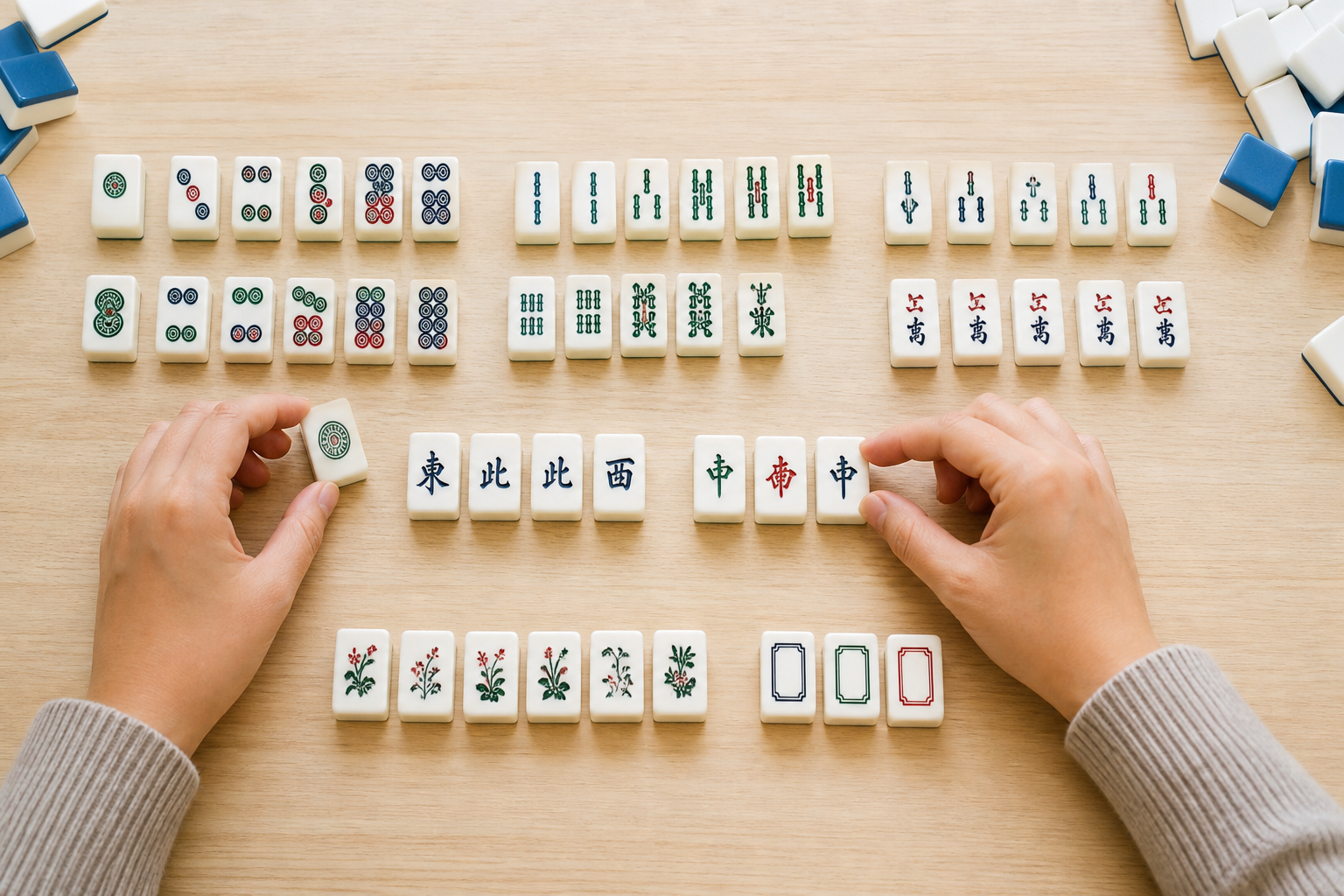
Most American sets print Arabic numerals on the suited tiles, which makes this stage easier for U.S. players. Our beginner guide to American Mahjong tiles explains the groups and the role of each special tile.
First lesson: understand the flow of play
During a first lesson, concentrate on the repeating loop: organize your rack, evaluate the hand you are building, draw one tile, and discard one tile. In American Mahjong, you will also learn how the current card defines legal hands and how the Charleston works before normal turns begin.
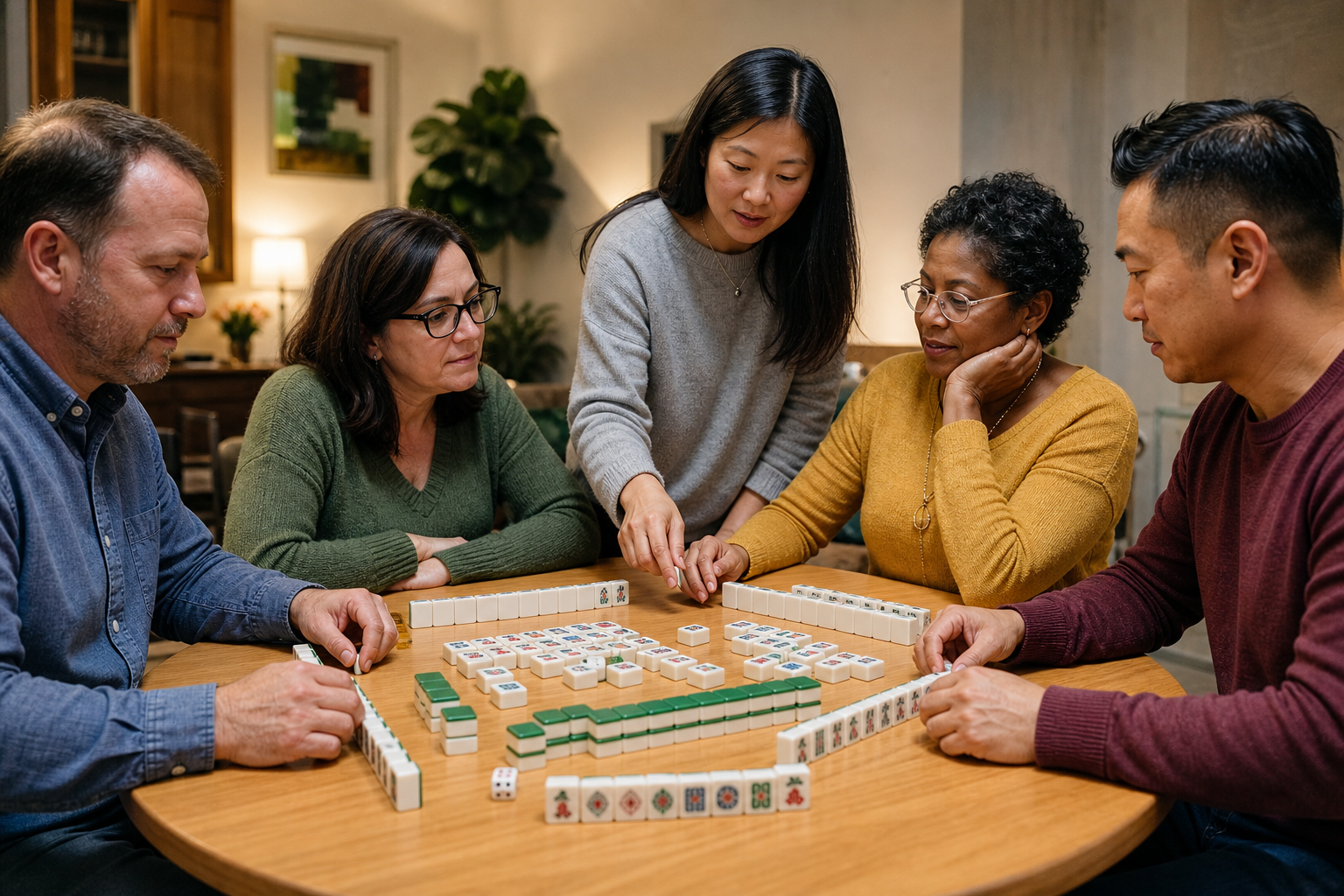
You do not need to play quickly. A good teaching game pauses for questions and allows everyone to check the card. By the end of one guided game, the table should feel less like a wall of symbols and more like a pattern puzzle.
After 3–5 games: the mechanics begin to feel natural
After a few games, you spend less energy identifying tiles and more energy comparing possible hands. You begin to notice which tiles are flexible, which discards are safe, and when a hand is becoming unrealistic. You may still change direction too often or hold unhelpful tiles, but those are normal beginner mistakes.
This is also the point when a simple Mahjong cheat sheet for beginners becomes especially useful. It reduces the pressure to remember every call and lets you focus on making one good decision at a time.
After 5–10 games: you can play without constant help
Most regular learners become comfortable after five to ten games. “Comfortable” does not mean perfect. It means you can set up, follow turns, use the card, make legal calls, and finish a game without needing someone to explain every move.
Your pace also improves. You recognize common tile combinations faster and narrow your options earlier. At a casual table, this is enough to participate confidently and enjoy the social side of the game.
After 20–30 games: strategy starts replacing guesswork
With more repetition, your questions change. Instead of asking “What can I do?” you begin asking “Which option gives me the best chance?” You make better Charleston passes, preserve useful pairs, watch exposed tiles, and notice when another player may be close to winning.
If you regularly play one or two games a week, reaching this stage may take two or three months. Faster practice produces faster pattern recognition, but there is no benefit in rushing through games without reviewing your decisions.
Which version of Mahjong is fastest to learn?
The core draw-and-discard rhythm is approachable in every version, but each ruleset adds a different challenge:
- American Mahjong: The annual card gives you clear target hands, while Jokers add flexibility. The Charleston and card notation are the main early learning tasks.
- Chinese Mahjong: The basic hand structure is intuitive, but scoring rules vary by table and region.
- Hong Kong Mahjong: The game flow is direct, while fan-based scoring takes practice.
- Japanese Riichi Mahjong: The rules are consistent, but yaku, furiten, and detailed scoring create a steeper learning curve.
For many U.S. social players, American Mahjong is the practical starting point because local groups often use it and the card keeps legal hands visible. Review the American Mahjong rules for beginners before your first lesson.
What makes learning faster?
Use one ruleset at the beginning
Switching between American, Chinese, Hong Kong, and Riichi rules too early creates avoidable confusion. Choose the version your local group plays and stay with it until the basic flow feels automatic.
Practice in short, regular sessions
Two 30-minute practice sessions are usually more useful than one long session followed by a month away. Frequent exposure helps tile recognition become automatic.
Play with patient people
A beginner-friendly group should allow questions, slow turns, and card checking. If your first table treats learning like a speed test, find a different table. Mahjong is social, and a welcoming group shortens the learning curve.
Review mistakes after the hand
Do not interrupt every turn with a full strategy discussion. Make a note, finish the hand, and review the decision afterward. Our guide to common Mahjong mistakes can help you recognize the habits that slow beginners down.
A simple 7-day beginner plan
- Day 1: Learn tile families and the purpose of the game.
- Day 2: Read the basic rules for your chosen version.
- Day 3: Practice building sample hands without a timer.
- Day 4: Play one guided game.
- Day 5: Review calls, Jokers, and the Charleston if you play American Mahjong.
- Day 6: Play a second game and record three decisions that felt difficult.
- Day 7: Review those decisions and play again.
After one week, you may not know every rule, but you should be able to follow a game and ask specific questions. That is a meaningful milestone.
Frequently asked questions
Can I learn Mahjong by myself?
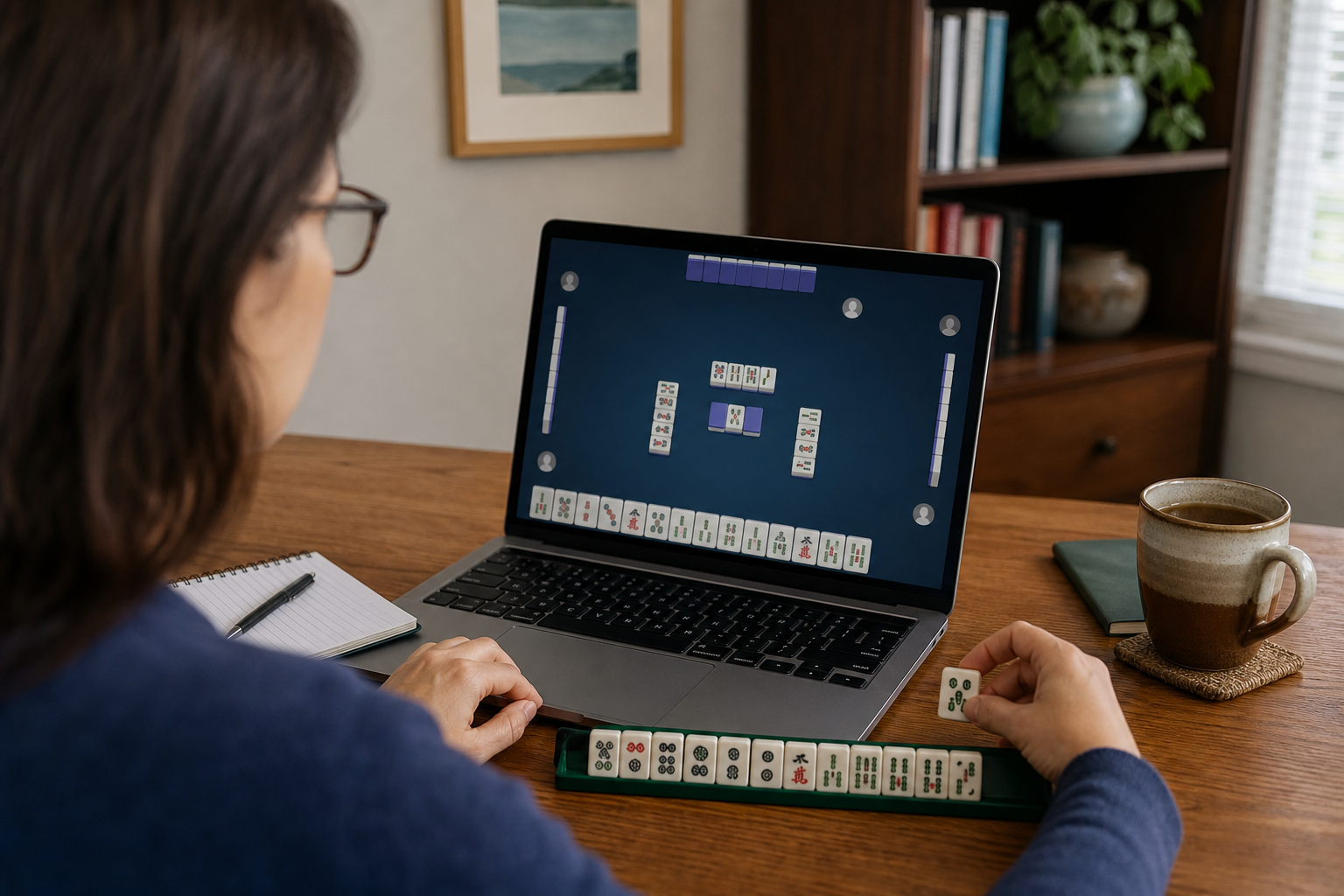
You can learn the tiles, rules, and hand structure alone. However, playing with people or a rule-enforcing digital game helps you understand timing, calls, and table flow.
Do I need to memorize the American Mahjong card?
No. The card is a reference, not a memory test. Beginners and experienced players look at it throughout the game.
How long does it take to get good at Mahjong?
Many players feel comfortable after five to ten games and noticeably more strategic after 20 to 30 games. Strong play develops over months or years because every table presents different decisions.
Am I too old to learn Mahjong?
No. Mahjong is popular with adult learners of many ages. Good instruction, large readable tiles, and a patient pace matter more than age.
Final answer
You can learn enough Mahjong to play a guided game in one day. Expect five to ten games before you feel comfortable and several dozen games before strategy feels natural. Start with one version, use a reference, and practice consistently. The goal of your first month is not mastery—it is becoming comfortable enough to keep playing.