How to Set Up a Mahjong Table for American Play
If you are trying to set up a Mahjong table for the first time, the hard part is usually not the rules. It is figuring out where the tiles, racks, walls, dice, dealer, and card go before anyone can make a first discard.
This guide focuses on American Mahjong as it is commonly played at home in the United States. Other styles, including Chinese Mahjong, Hong Kong Mahjong, and Japanese Riichi, use different tile counts and table routines, so always follow the version your group has chosen.
Quick Answer: What Goes on the Table?
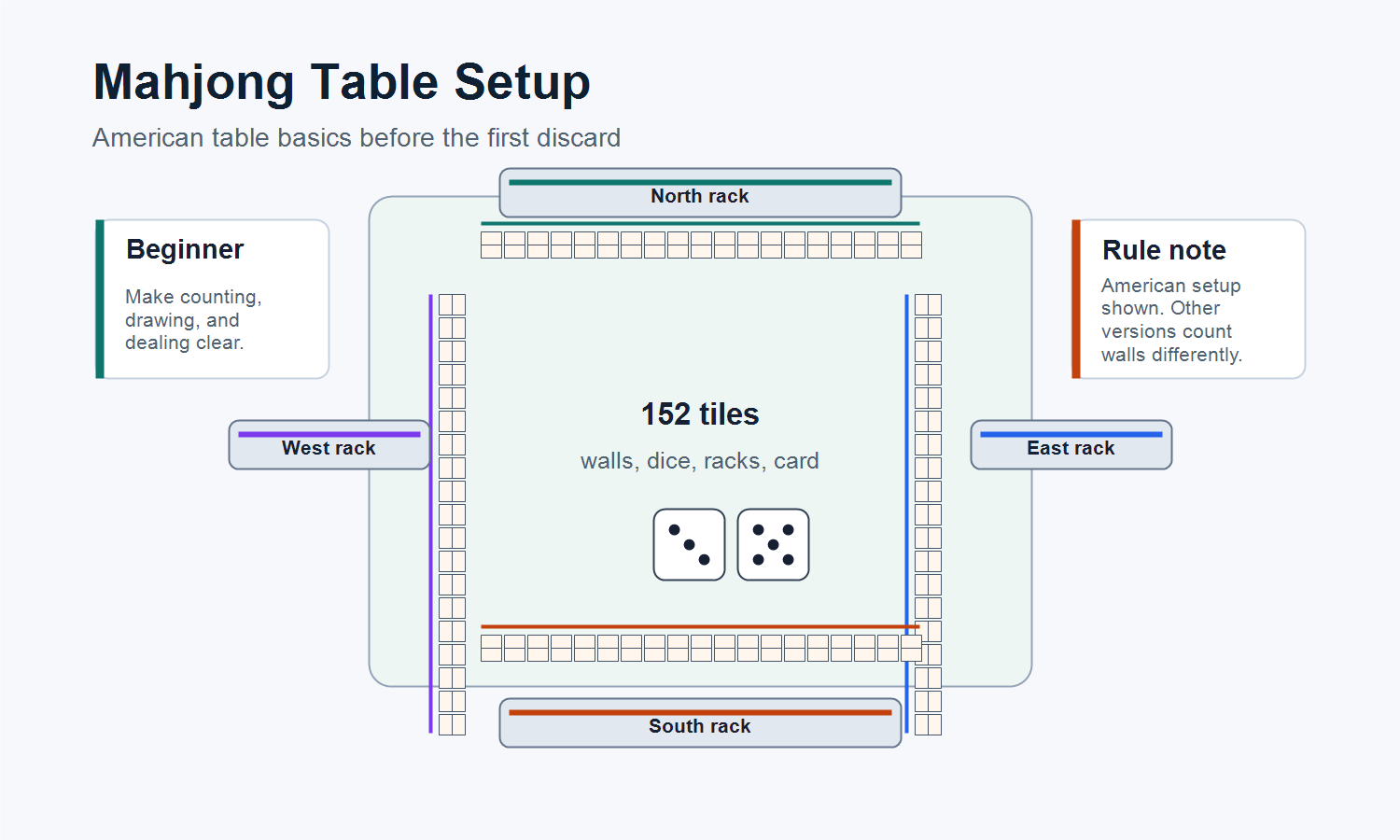
For a standard American Mahjong table, each player needs a rack, access to the current card, and a wall built in front of them. The 152 tiles are mixed face down, stacked into four walls, then dealt so East starts with 14 tiles and the other players start with 13.
If your group is still learning the overall game flow, keep an American Mahjong cheat sheet nearby after setup. It helps beginners remember what happens after the deal.
| Table Item | American Mahjong Setup | Beginner Tip |
|---|---|---|
| Tiles | 152 tiles, including jokers and flowers | Remove spare blanks unless your group uses them. |
| Racks | One rack per player | Place the rack in front of each wall. |
| Pushers | Helpful but not always required | Use them to move walls neatly, not to hide tiles. |
| Dice | Used to choose East and break the wall | Agree on the dice routine before dealing. |
| Card | Current NMJL-style card for each player | Make sure everyone uses the same year’s card. |
Before You Start: Confirm the Mahjong Version
The phrase “Mahjong setup” can mean different things depending on the rule set. American Mahjong commonly uses 152 tiles, four racks, jokers, and a yearly card. A Chinese or Riichi set may look similar in the box but set up differently on the table.
If you are unsure whether your set is complete, start with how many tiles are in Mahjong. If you are buying a set for a U.S. home game, the American Mahjong set buying guide explains why jokers, racks, and readable tiles matter.
Step-by-Step American Mahjong Table Setup
1. Seat the Players and Place the Racks
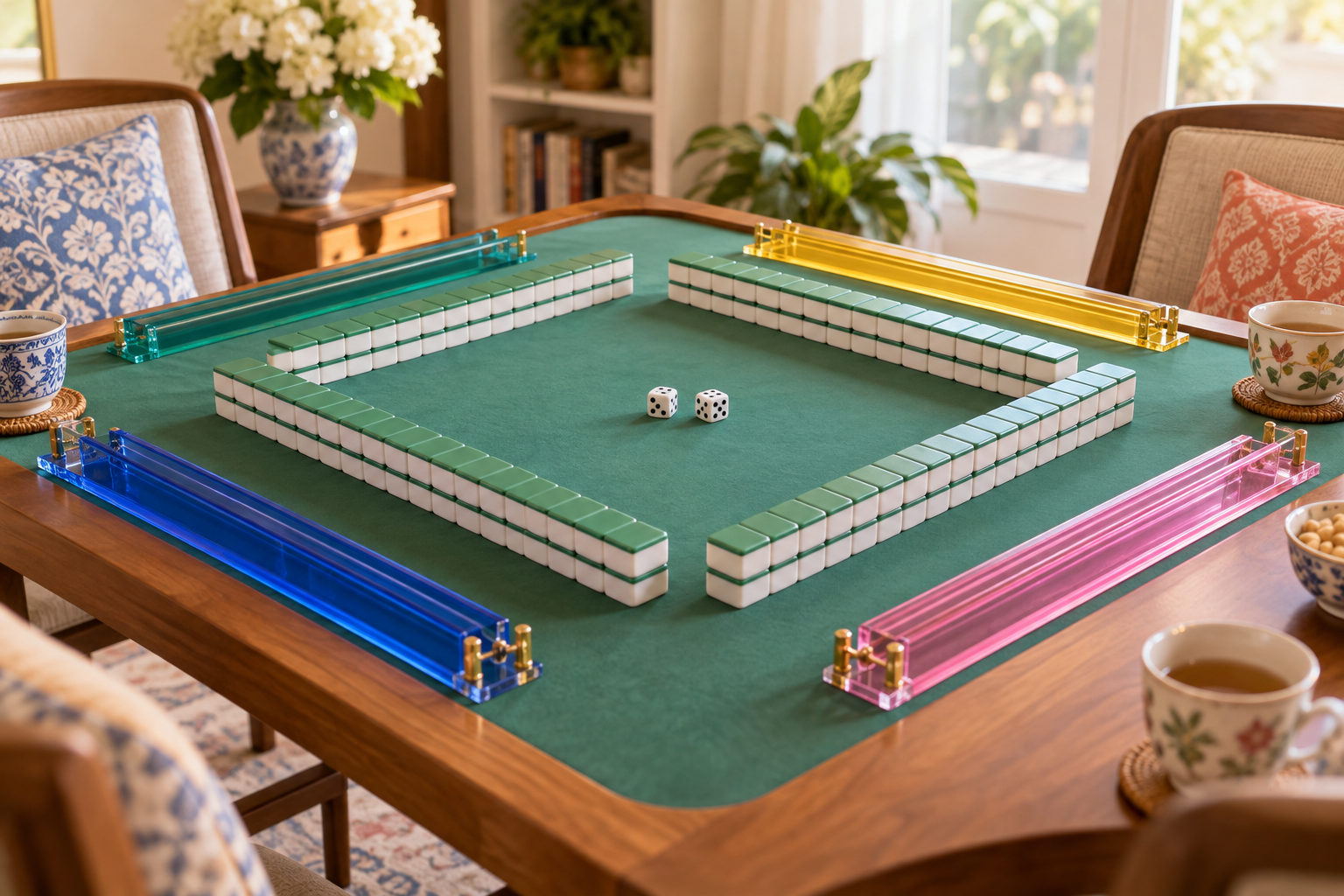
Start with four players around the table, each with a rack directly in front of them. If your racks have pushers, the pusher usually faces the center so the wall can be moved forward later.
Put the dice where everyone can see them. Each player should also have the current card within easy reach, but not covering the rack or wall area.
2. Mix the Tiles Face Down
Turn all playing tiles face down in the middle of the table and mix them thoroughly. Many players call this “washing” the tiles.
For American Mahjong, include the jokers and flowers used by your table. Do not include extra blank tiles just because they came in the case.
3. Build Four Walls
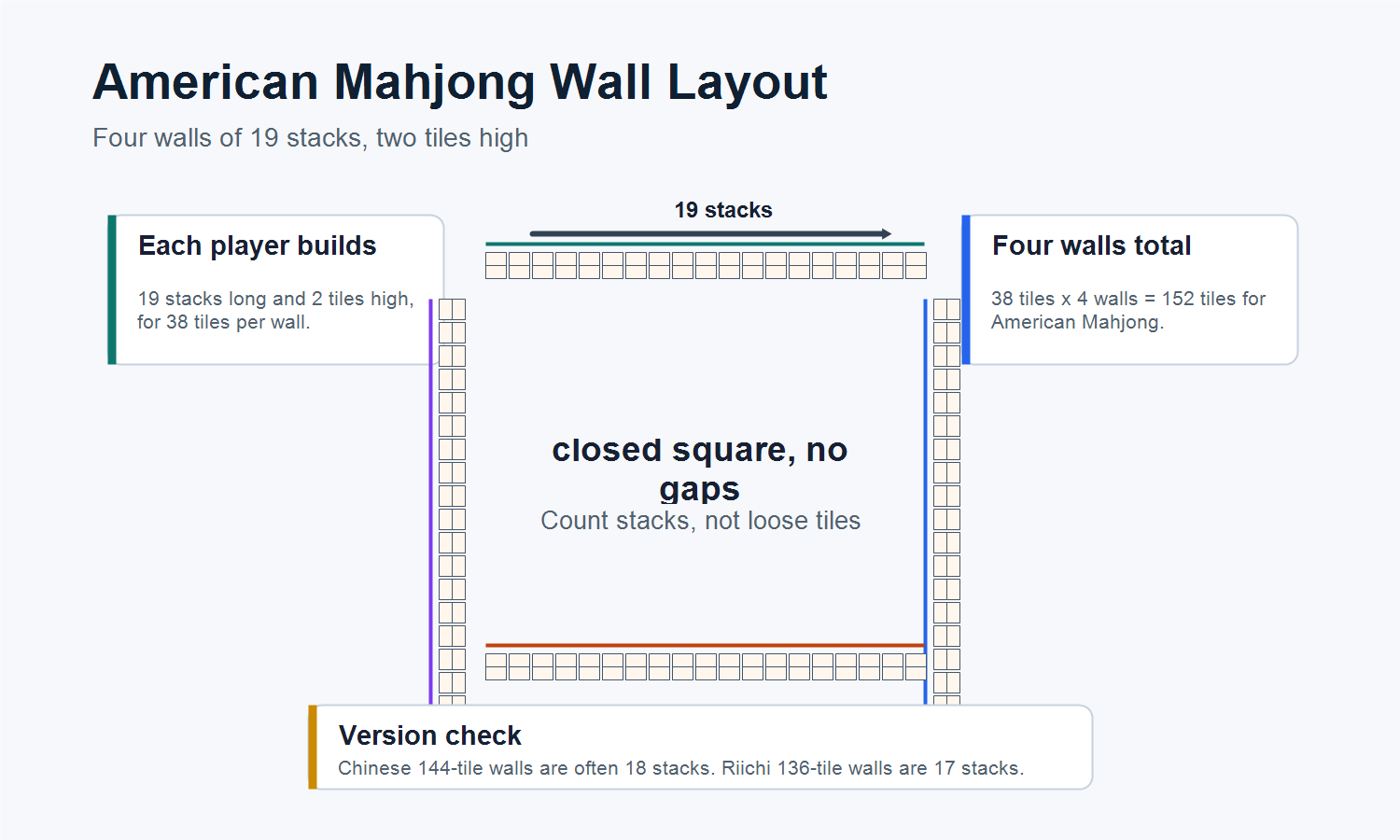
Each player builds one wall in front of their rack. In standard American Mahjong with 152 tiles, each wall is 19 stacks long and 2 tiles high.
That gives each wall 38 tiles. Four walls of 38 tiles make 152 tiles total, which is why the wall count changes when you play another version.
4. Choose East
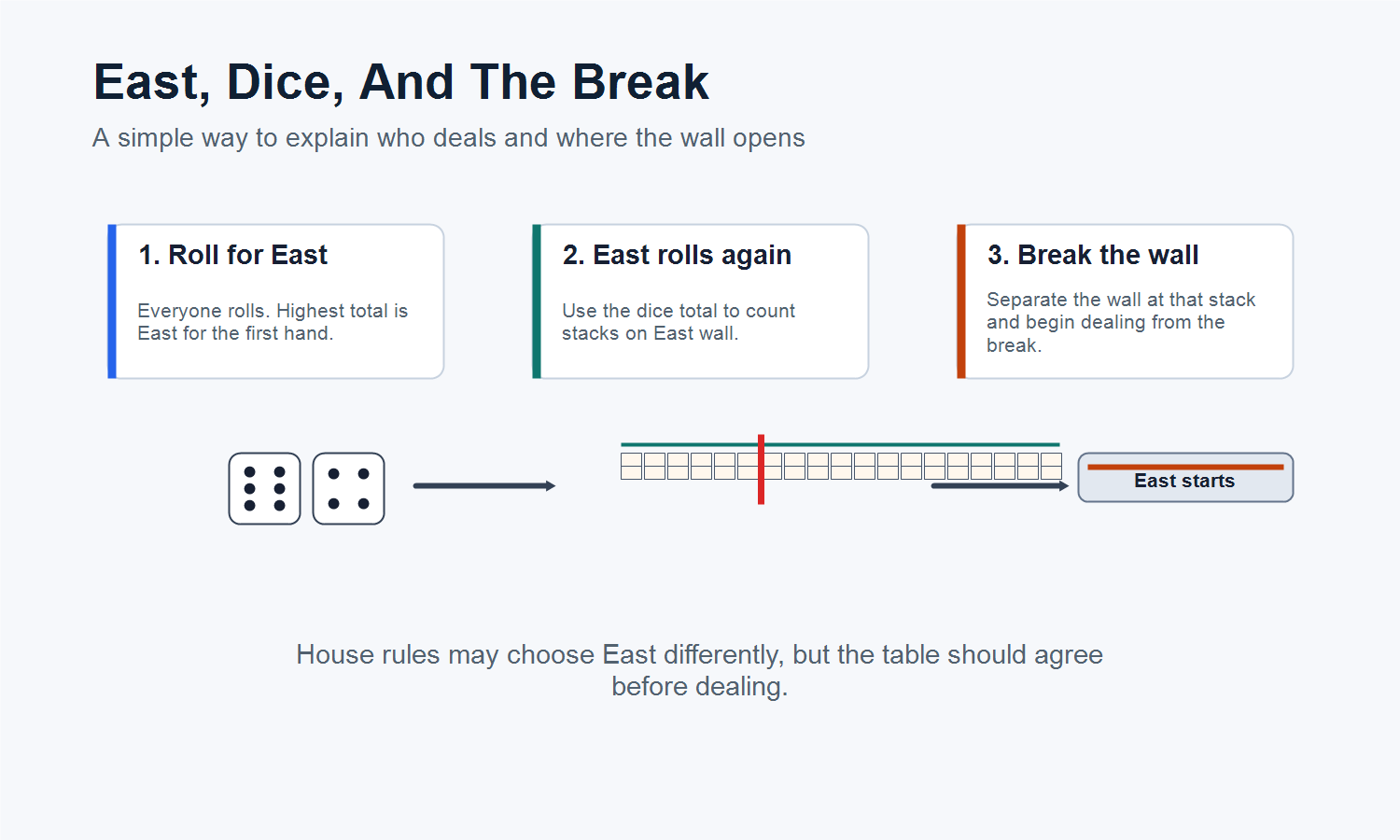
Many casual tables have all four players roll dice, with the highest roll becoming East for the first hand. East is the dealer and starts with the extra tile.
Some groups assign East by seating order, host choice, or previous game results. The method matters less than making sure everyone agrees before the wall is broken.
5. Break the Wall
After East is chosen, East rolls the dice again and uses the total to count stacks on the wall. The break point tells the table where dealing begins.
Count stacks, not single tiles. For example, a roll of 7 means you count seven two-tile stacks, then separate the wall at that point according to your table’s house routine.
6. Deal the Starting Tiles
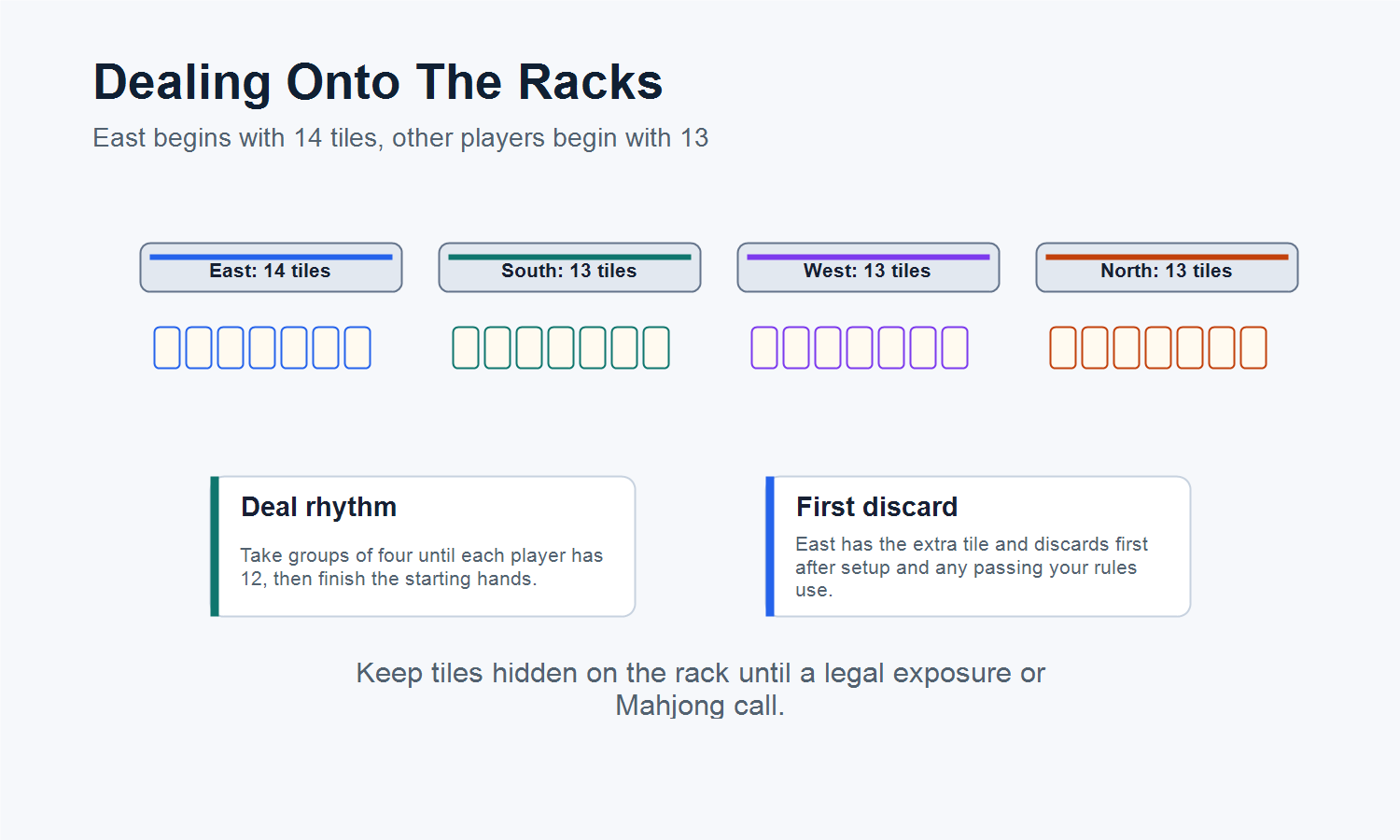
Deal from the break in turn order until each player has their starting hand. A common American Mahjong deal gives East 14 tiles and the other three players 13 tiles each.
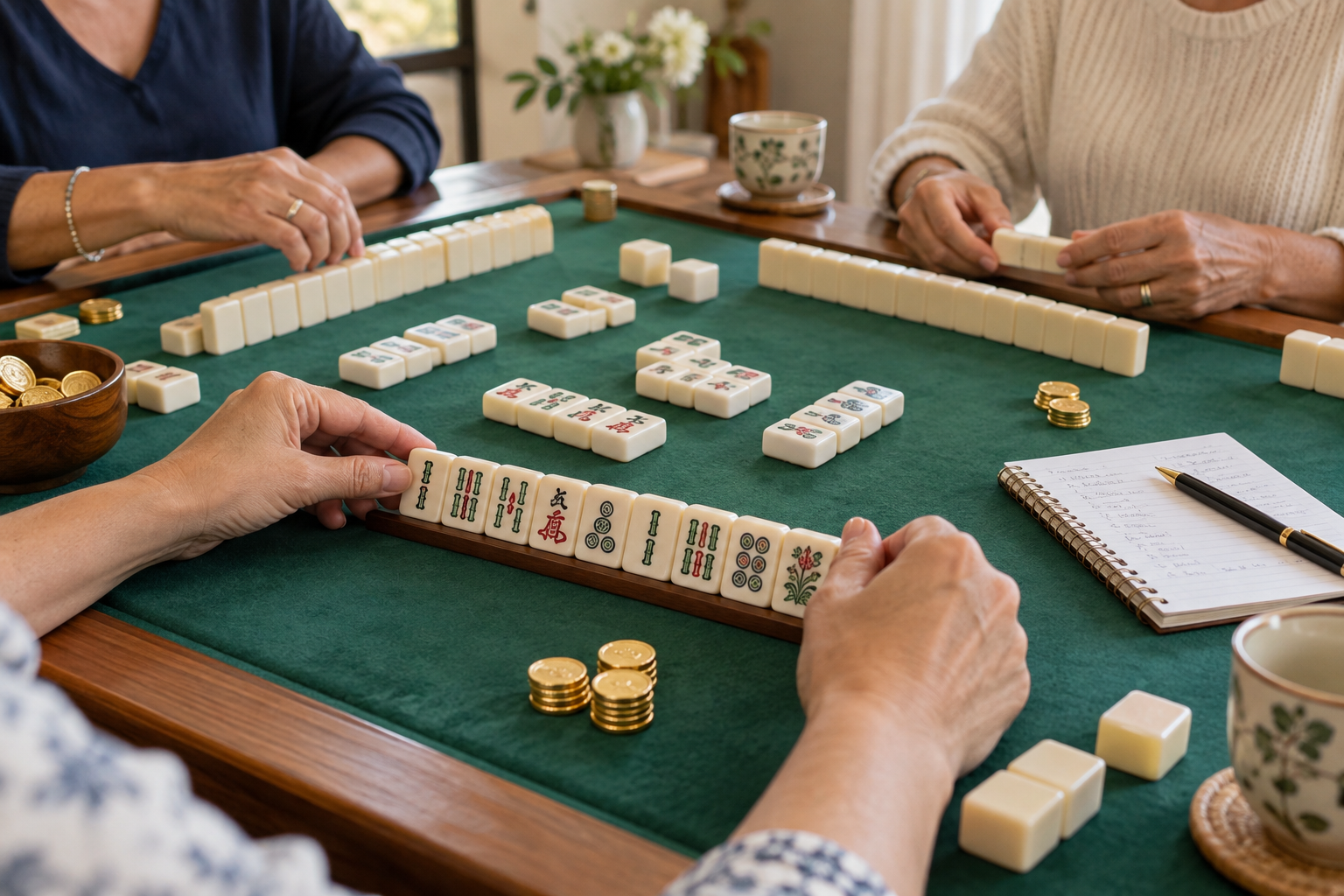
Players arrange their tiles on the rack, hidden from the other players. East will eventually discard first, but American tables usually complete the Charleston before regular play begins.
7. Prepare for the Charleston
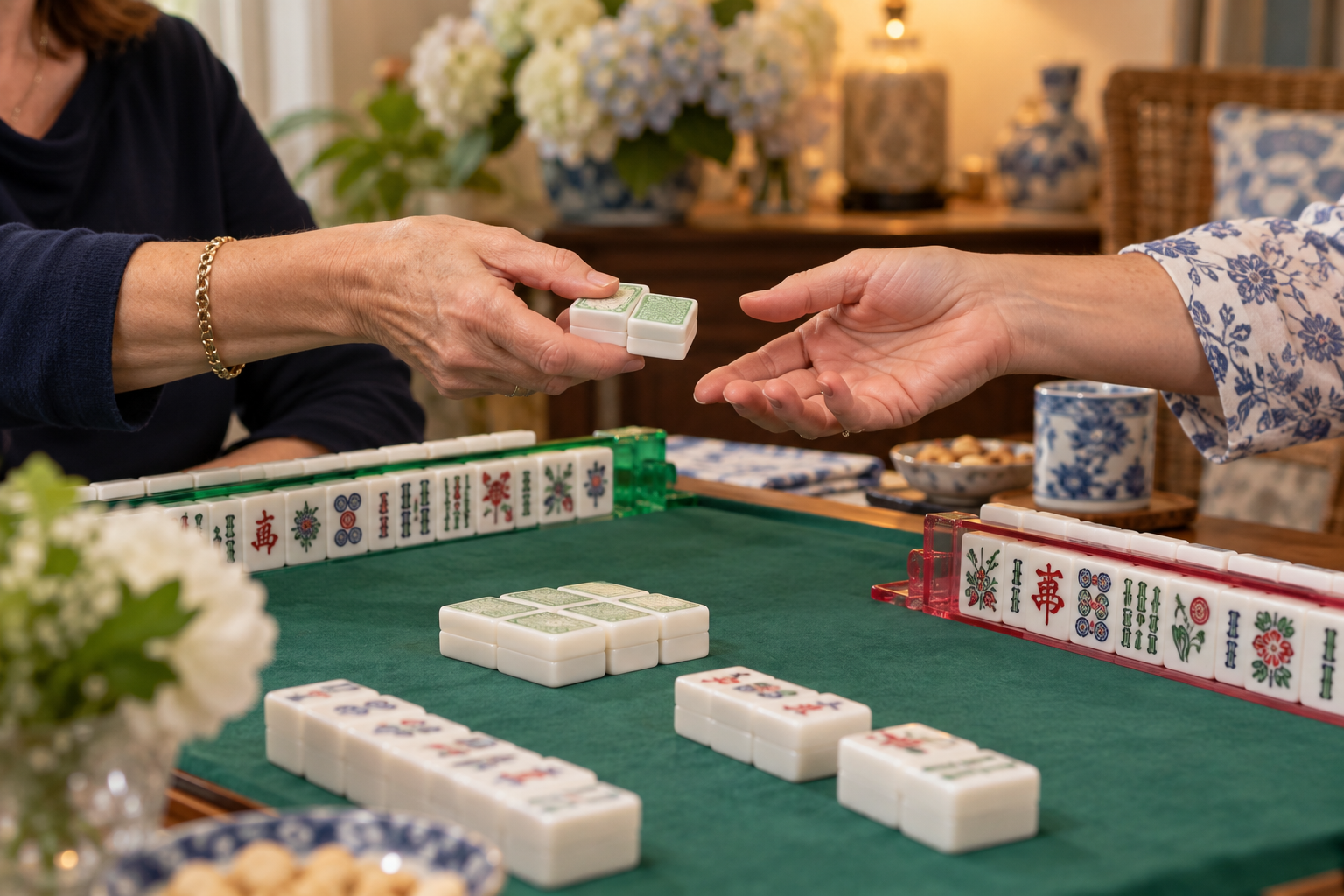
Once everyone has their tiles, players study the card and begin choosing possible hands. In American Mahjong, the next step is usually the Charleston, where players pass unwanted tiles in a set pattern.
If this part is new to your table, read the Charleston explained before game night. The setup is only half the job; the passing round is where many beginners first shape a realistic hand.
How Setup Changes by Mahjong Version
Not every Mahjong table should use the American 19-stack wall. Tile counts, flowers, jokers, dead walls, and cards vary by version.
| Version | Common Tile Count | Common Wall Setup | Important Difference |
|---|---|---|---|
| American Mahjong | 152 | 19 stacks per wall | Uses jokers, racks, and a yearly card. |
| Chinese Mahjong | Often 144 | Often 18 stacks per wall | No American card or joker system. |
| Hong Kong Mahjong | Often 144 | Often 18 stacks per wall | Focuses on fan scoring and local table rules. |
| Japanese Riichi | 136 | Often 17 stacks per wall | Uses dead wall, dora indicators, and riichi rules. |
For the full American game flow after the table is ready, use the American Mahjong rules guide. If you are hosting friends, the Mahjong game night checklist can help with seating, timing, and table comfort.
A Simple Setup Example
Suppose four beginners sit down with a complete American Mahjong set. Everyone turns the 152 tiles face down and mixes them. Each player then builds one wall of 19 two-tile stacks in front of their rack.
All four players roll dice. Dana rolls the highest number, so Dana is East. Dana rolls again to create the wall break, and the deal begins from that point.
After the deal, Dana has 14 tiles. The other players have 13. Everyone studies the card, organizes possible hands, and gets ready for the Charleston.
Common Mahjong Table Setup Mistakes
Most setup problems are easy to fix if you catch them early. The trouble starts when the table does not notice until after tiles have been dealt.
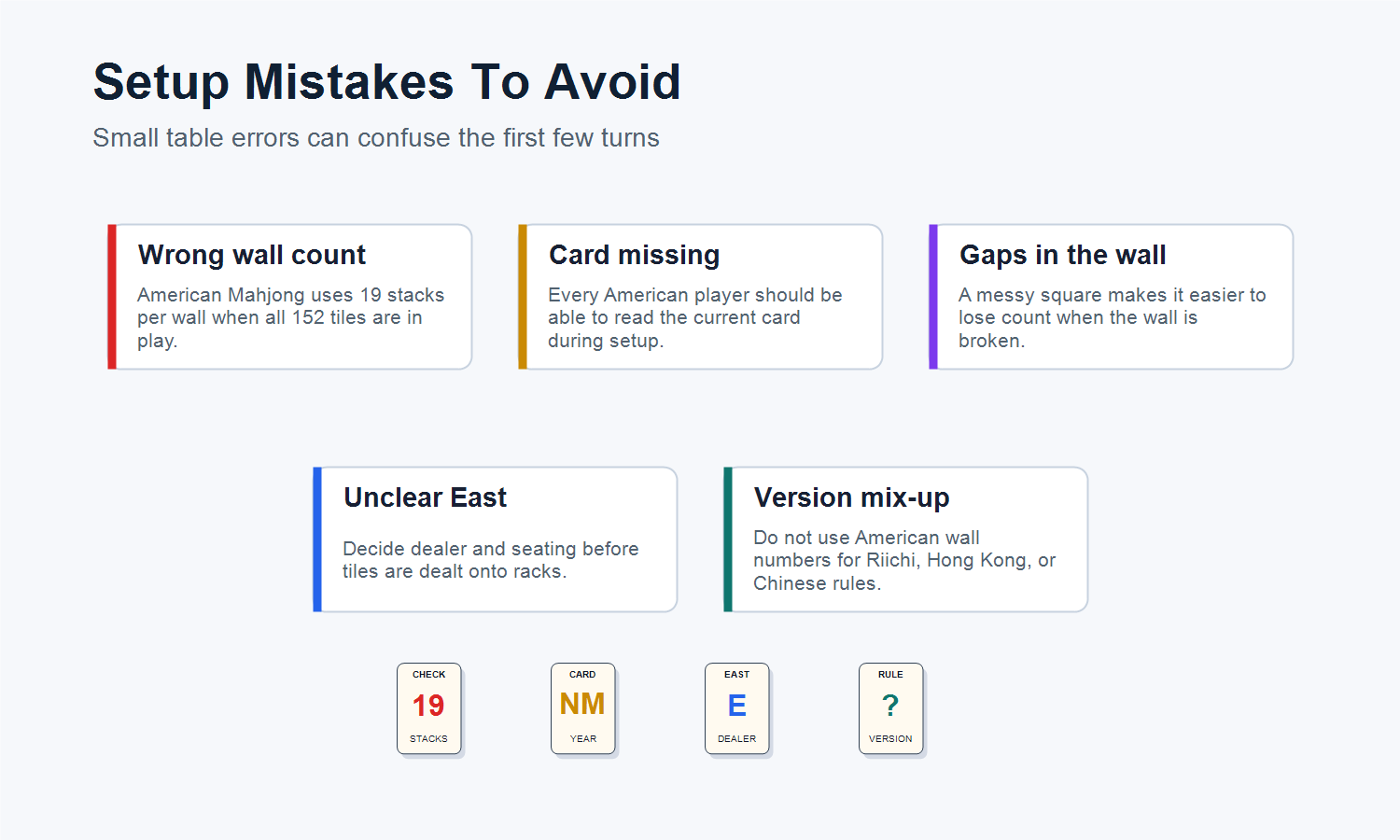
- Using a 144-tile wall count for American Mahjong.
- Leaving spare blank tiles in the game by accident.
- Forgetting that East starts with the extra tile.
- Letting players use different card years at the same table.
- Starting the Charleston before everyone understands the hand options.
- Assuming online app setup matches the exact routine your home table uses.
FAQ
How many tiles do you need to set up an American Mahjong table?
American Mahjong commonly uses 152 tiles. That includes the core suited and honor tiles plus flowers and jokers. Some sets include extra blanks or spare tiles, but those are usually not part of regular play.
How many stacks are in each American Mahjong wall?
With 152 tiles, each of the four walls is usually 19 stacks long and 2 tiles high. If your table uses a different tile count, the wall length may change.
Who gets 14 tiles in Mahjong?
East, the dealer, starts with 14 tiles in a common American Mahjong setup. The other players start with 13. East has the extra tile because East makes the first discard after setup and passing.
Do you build a wall for Siamese Mahjong?
Usually no. Many Siamese Mahjong tables draw from a face-down center pile instead of building four walls. Because Siamese is a two-player American Mahjong variation, confirm the house rules before you begin.
Do pushers matter?
Pushers are convenient, especially for American Mahjong, because they help move walls neatly as tiles are drawn. They are helpful accessories, but the rules can still be played without them if your table is comfortable.