Mahjong Solitaire vs. Real Mahjong: What Beginners Need
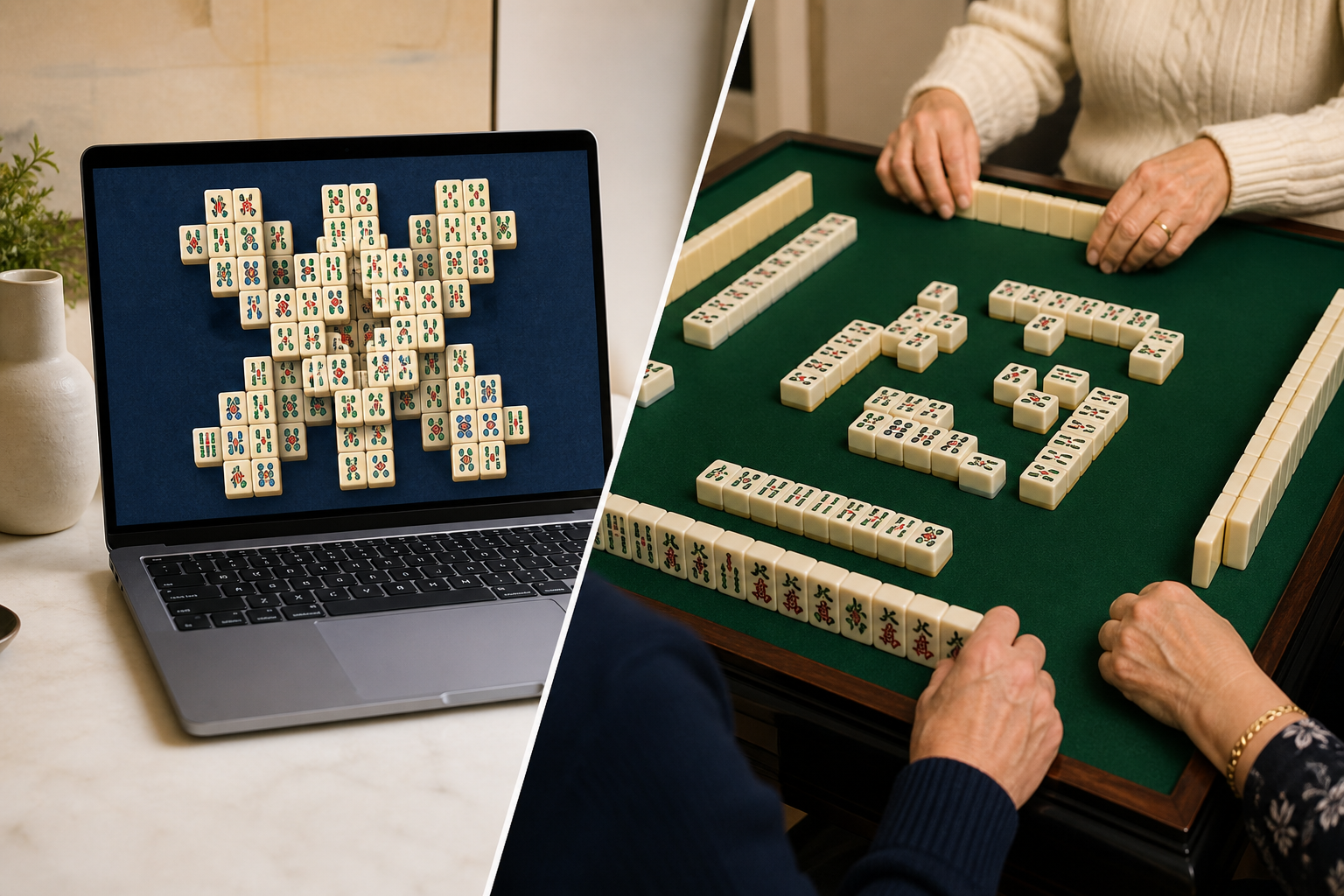
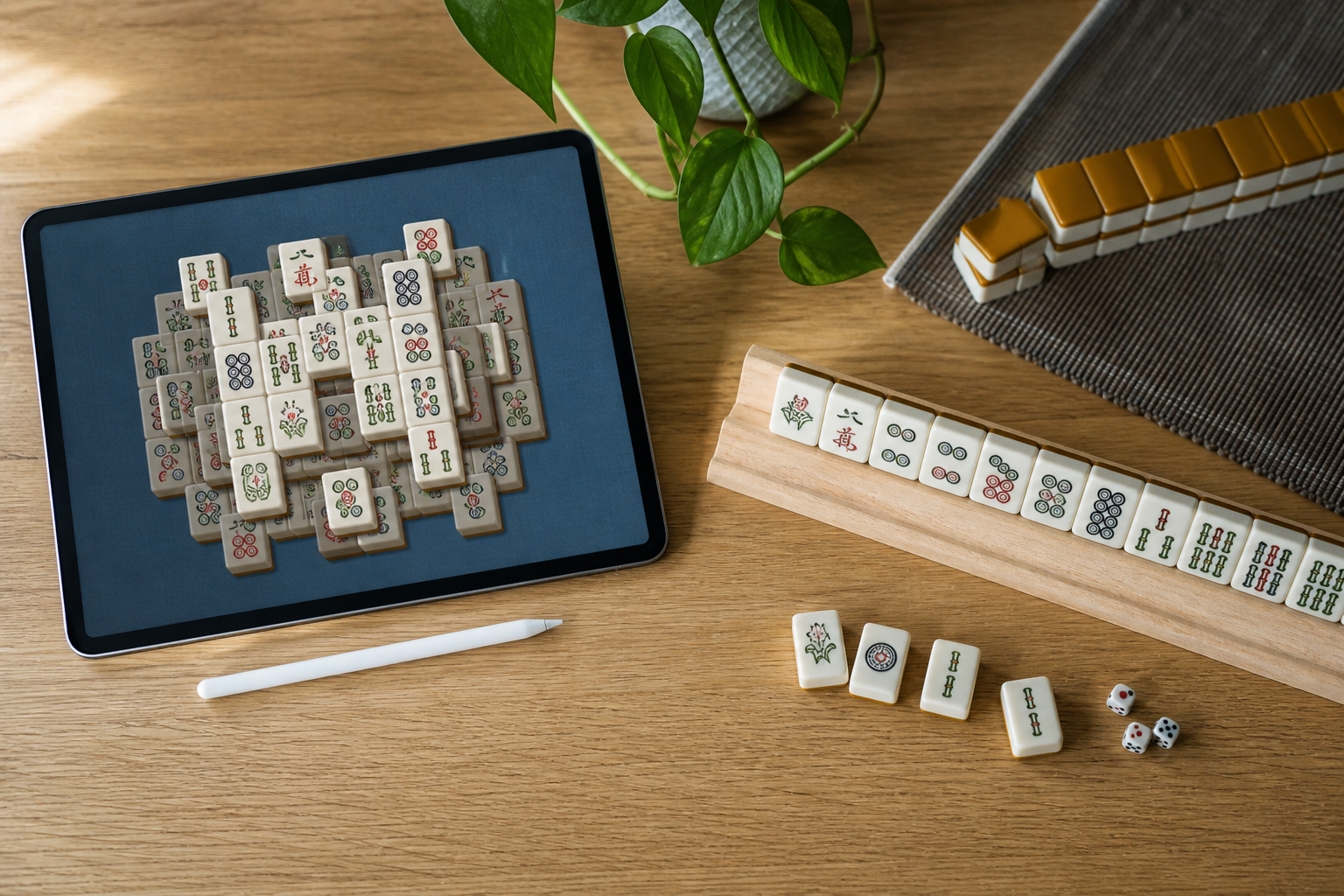
Search for a free Mahjong game and you will probably see layered tiles that disappear when you match a pair. That game is Mahjong Solitaire. It uses familiar artwork, but it is not the four-player game played around a table. Knowing the difference saves beginners from practicing the wrong skills.
The short answer
Mahjong Solitaire is a one-player matching puzzle. Real Mahjong is a competitive draw-and-discard game in which players build legal hands. Solitaire asks which two uncovered tiles match. Real Mahjong asks which tile improves your hand, which tile is safe to discard, and what your opponents may be building.
How Mahjong Solitaire works
Tiles begin in a stacked layout. A tile is available only when it is uncovered and has an open side. You remove matching pairs until the board is clear or no moves remain. There is no wall to draw from, no turn order, no calling a discard, and no opponent forming a hand.
The puzzle is approachable and relaxing. It can also help a new player become visually familiar with Dots, Bams, Craks, Winds, and Dragons. But recognizing pictures is only a small part of learning real Mahjong.
How the real tile game works
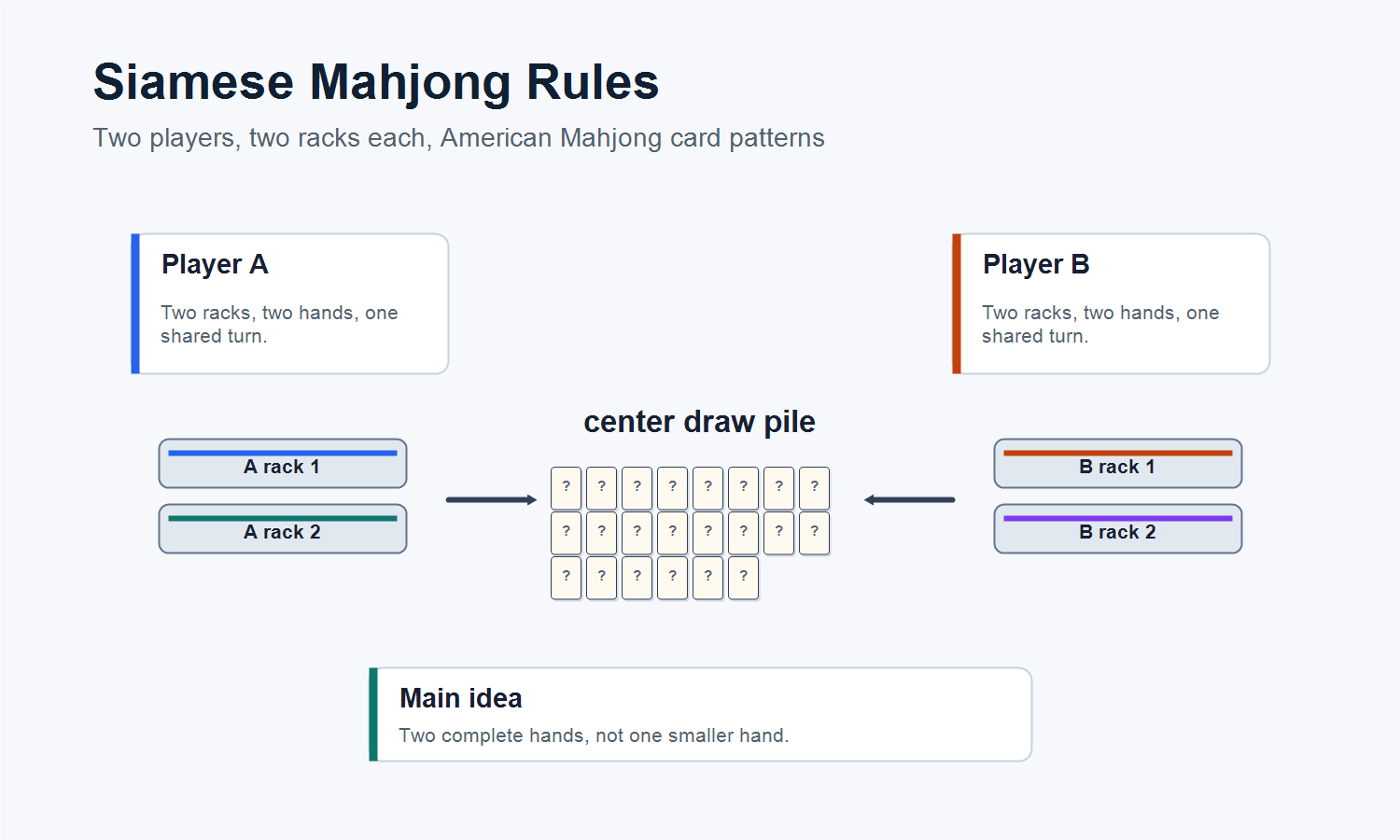
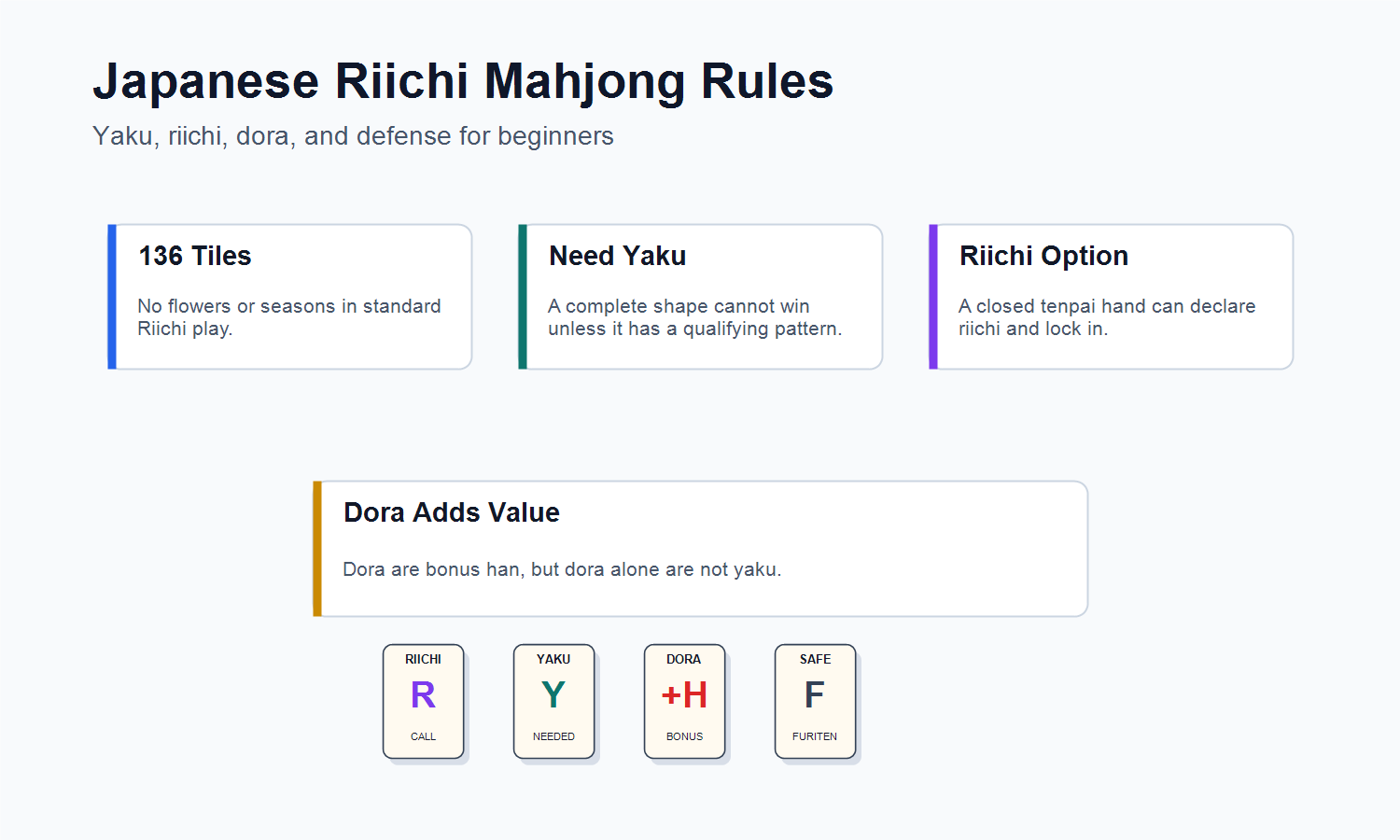
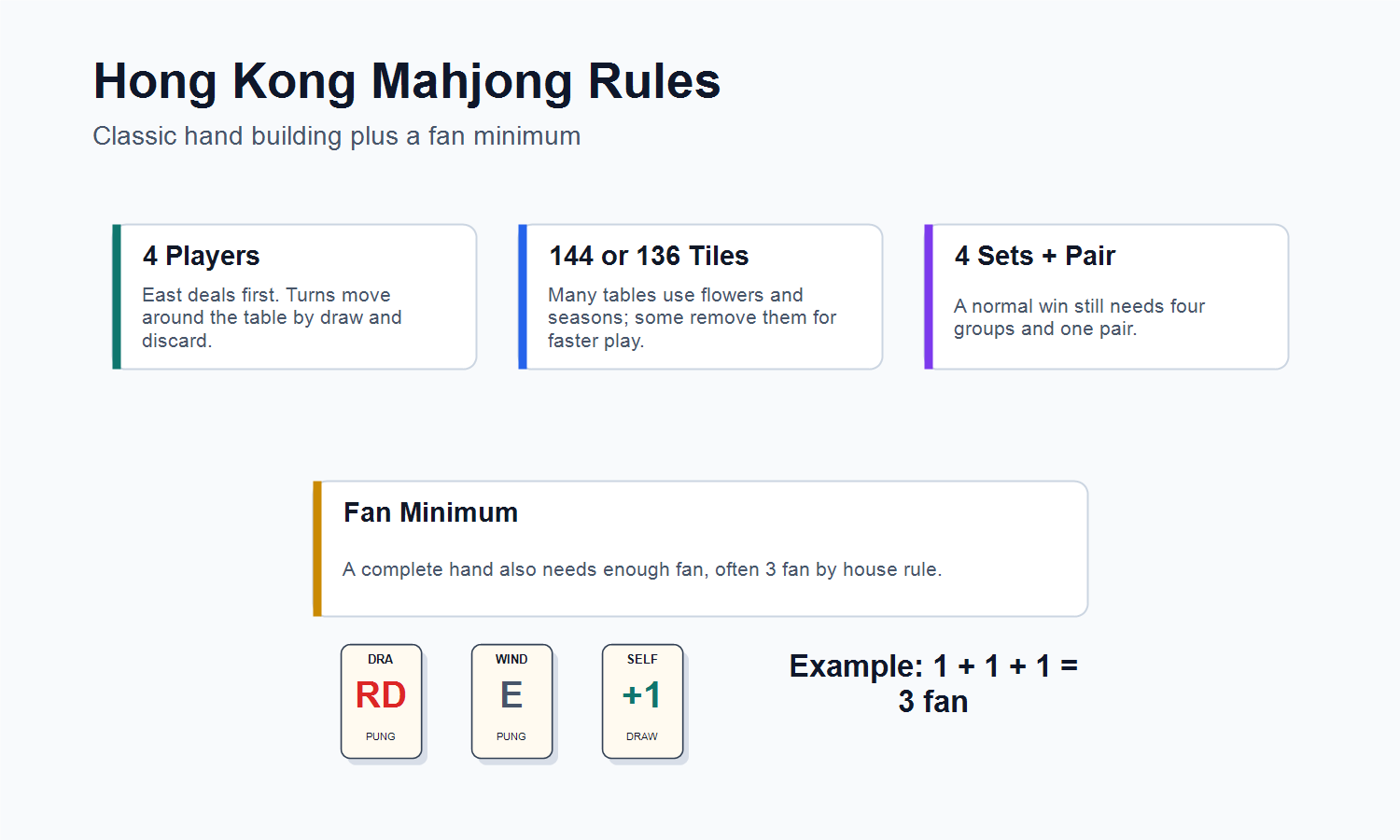
In real Mahjong, players begin with concealed tiles, draw and discard in turn, and race to complete a legal hand. Traditional styles often use combinations such as chows, pungs, kongs, and a pair. American Mahjong uses patterns printed on the current NMJL card. Our American Mahjong rules guide walks through an actual round.
Key differences at a glance
| Feature | Mahjong Solitaire | Real Mahjong |
|---|---|---|
| Players | One | Usually four |
| Main action | Match exposed pairs | Draw, evaluate, and discard |
| Goal | Clear the layout | Complete a legal hand |
| Opponents | None | Human players or bots |
| Strategy | Freeing blocked tiles | Hand selection, efficiency, defense |
| American features | None | NMJL card, Jokers, Charleston |
Does Solitaire teach you to play Mahjong?
Only in a limited way. It may improve symbol recognition and make the tiles feel less foreign. It does not teach the flow of a turn, why a discard is risky, how an exposure changes a hand, or how to read a scoring card. Someone who is excellent at the matching puzzle still begins the real game as a beginner.
Why the names became mixed up
Computer games introduced millions of people to tile-matching software labeled simply “Mahjong.” The name was convenient because the puzzle used Mahjong tiles. Over time, many players encountered the digital puzzle before seeing the multiplayer game, so search engines and app stores now use the same word for two different activities.
Which version should an American beginner learn?
If your goal is to join a U.S. club or neighborhood game, learn American Mahjong. It uses racks, Jokers, a yearly card, and the Charleston. Begin by learning the components in our American Mahjong tile guide, then study how to read the NMJL card.
Can you play real Mahjong alone?
You cannot reproduce a normal social game without opponents, but you can practice against computer players. Bots keep the turn order moving and let you test decisions. Physical solo drills also help: deal a rack, identify two possible card lines, complete a Charleston exercise, and explain which tiles you would pass.
What real online practice should include
- A complete rack rather than a layered matching board.
- Drawing and discarding on every turn.
- Legal hands for the chosen Mahjong version.
- Calls, exposures, and a visible discard area.
- For American play, Jokers, the Charleston, and NMJL-style patterns.
You can try these ideas in our guided American Mahjong game. It is built as practice, so you can stop and read an explanation before choosing a tile.
Does the matching puzzle have any value?
Absolutely. Play it because you enjoy a calm visual puzzle, not because it will prepare you for a league table. It is also a friendly way to learn the look of the suits before handling a physical set. Just separate that benefit from rules training.
A simple learning path
- Use Solitaire briefly if tile symbols feel unfamiliar.
- Read the rules for the specific version you want to play.
- Learn what makes a winning hand; our beginner winning-hands guide is a useful next step.
- Practice full rounds against bots or patient players.
- Join a live table once the turn sequence feels natural.
The two games do not need to compete. Mahjong Solitaire is a pleasant puzzle. Real Mahjong is a social strategy game. Choose the one that matches what you actually want to learn.