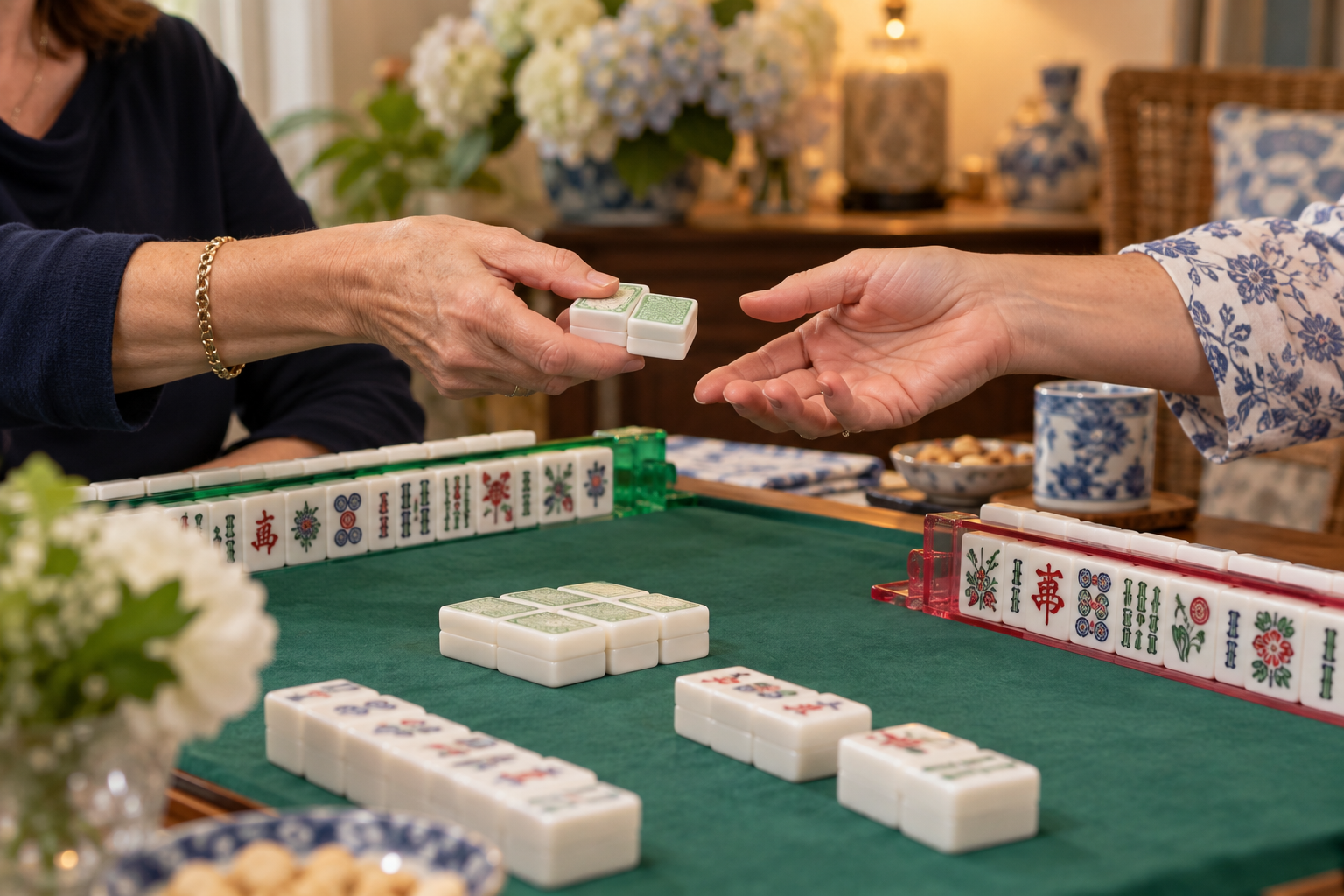
How to Deal American Mahjong Tiles: An Easy Beginner Guide
Dealing American Mahjong looks complicated because the tiles begin in four walls instead of a shuffled deck. Once you see the rhythm, however, the process is orderly: choose East, build the walls, make the break, and let each player select tiles in turn.
This guide explains the practical table sequence for a standard four-player game. It is meant to help a new group get started without rushing. If the tile count is still confusing, first review how many tiles are in a Mahjong set.
What you need before the deal
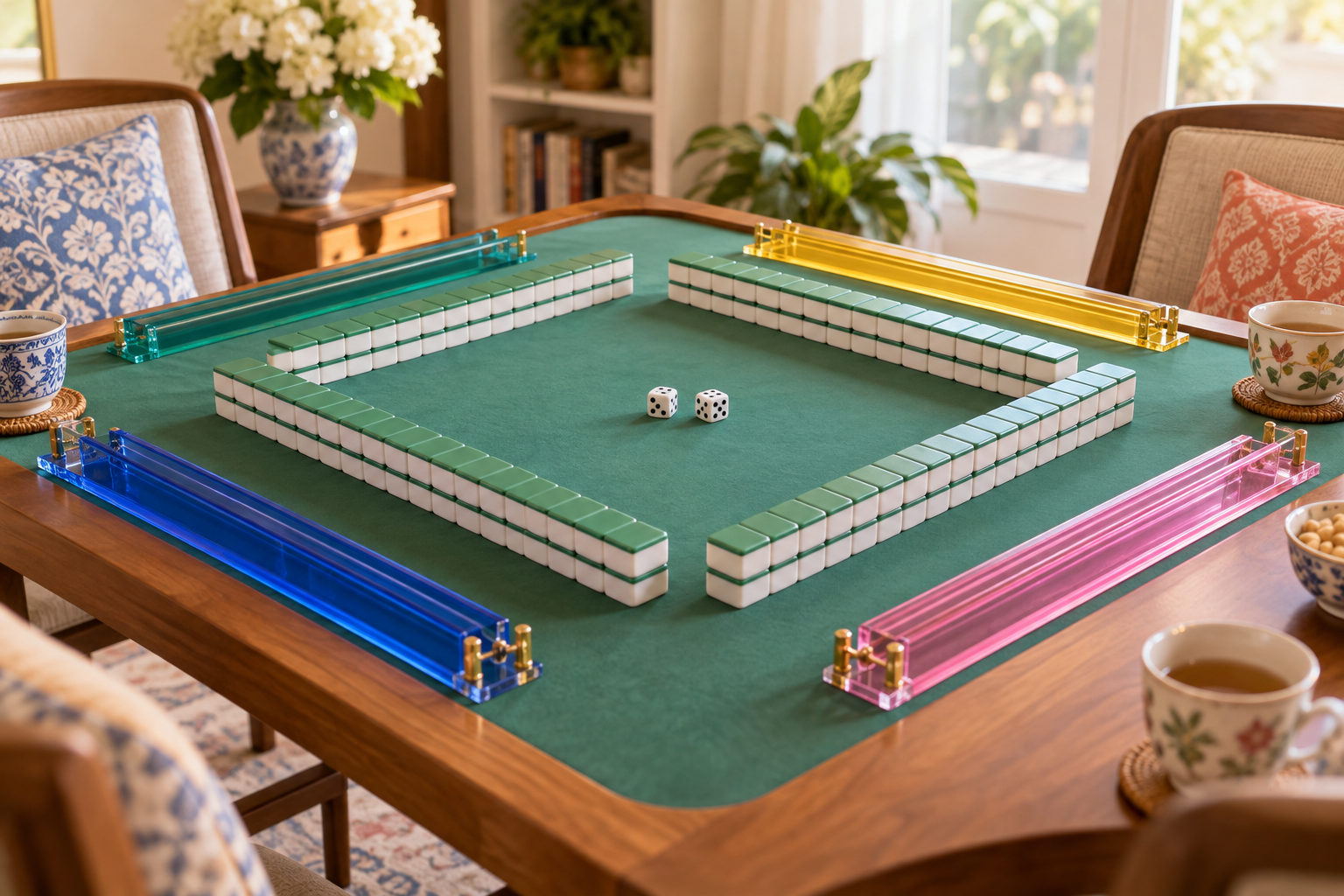
Set out the tiles your group uses, four racks with pushers, two dice, and a current rules card for each player. Mix the tiles face down in the center. Each player then builds a wall in front of their rack, two tiles high. With a typical American set, each side is commonly 19 stacks long.
Keep the walls close enough to form a square. A pusher makes this easier and prevents loose tiles from tipping. For a fuller picture of the table layout, see how to set up a Mahjong table.
Step 1: Choose East
East is the first player for the hand and begins with one extra tile. Groups commonly choose East with a dice roll, though regular tables may rotate the position from one hand to the next. Agree on the method before anyone touches the wall.
The player positions run counterclockwise around the table: East, North, West, and South. That order often surprises beginners, so say the seats aloud once before starting.
Step 2: Break the wall
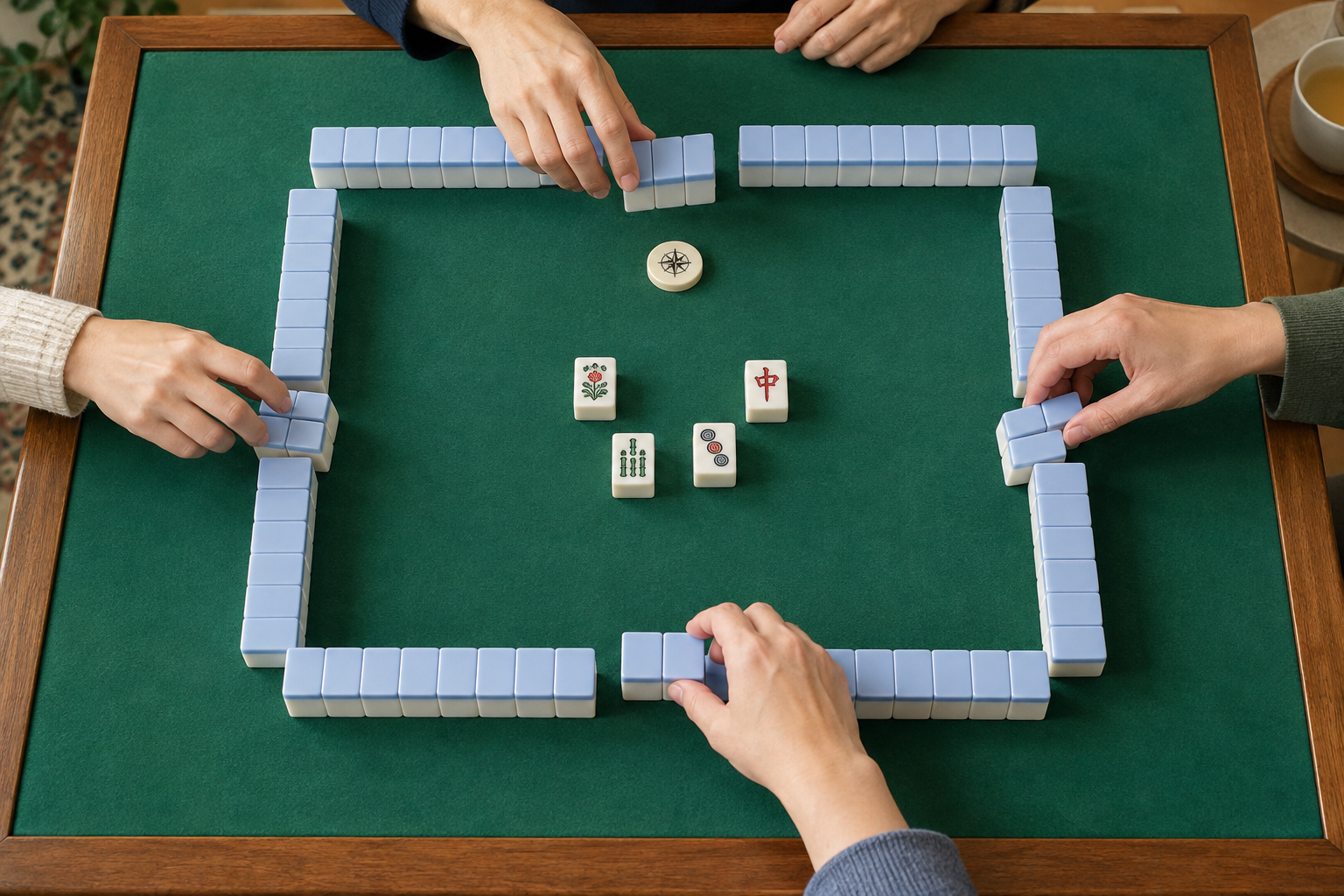
East rolls the dice to determine where the wall opens. Follow the rulebook or house method your group has chosen, count the indicated stacks, and separate the wall at that point. The open end becomes the starting point for selecting tiles.
The exact counting convention can vary between teaching groups. Consistency matters more than speed. A beginner table should pause, confirm the break, and then begin together.
Step 3: Select tiles in packets
Starting with East, players take tiles in counterclockwise order. The usual rhythm is four tiles at a time—two adjacent stacks—until everyone has 12. Each non-East player then takes one more tile for a total of 13. East receives a 14th tile because East will make the first discard.
Players should take their own tiles rather than having one person distribute the entire wall. Keep selected tiles stacked or turned away until everyone has the correct total.
Step 4: Count before arranging
Before sorting, verify the totals: East has 14 tiles and each other player has 13. If the numbers are wrong, correct the deal immediately while the source of the mistake is still clear.
After counting, place the tiles on the rack and organize them by suit, number, winds, dragons, flowers, and Jokers. Do not expose the faces to other players. Beginners can use the terminology in the American Mahjong glossary while sorting.
Step 5: Begin the Charleston
The deal does not move directly into drawing and discarding. American Mahjong normally starts with the Charleston, a structured exchange that helps players shape their hands. Jokers are not passed during the Charleston.
New players should choose a realistic direction before making the first pass. The guide to choosing an American Mahjong hand explains how to compare possible card lines without locking in too early.
Common dealing mistakes
- Building a wall with the wrong number of stacks because unused tiles were not removed.
- Moving clockwise instead of counterclockwise during tile selection.
- Giving every player 14 tiles instead of only East.
- Turning tiles face up before the deal is complete.
- Starting regular play before completing the Charleston.
What happens after the deal?
Once the Charleston and any agreed courtesy exchange are complete, East discards one tile. Play then continues with each player drawing from the wall and discarding in turn. A discarded tile may be called only under specific conditions, which are covered in the guide to claiming discarded tiles.
Final takeaway
A clean American Mahjong deal is mostly a matter of sequence. Build the walls, choose East, make the break, select in packets, and check that East has 14 while everyone else has 13. Slow the process down for the first few hands; accuracy makes the rest of the game much more enjoyable.