How to Play American Mahjong With Three Players at Home
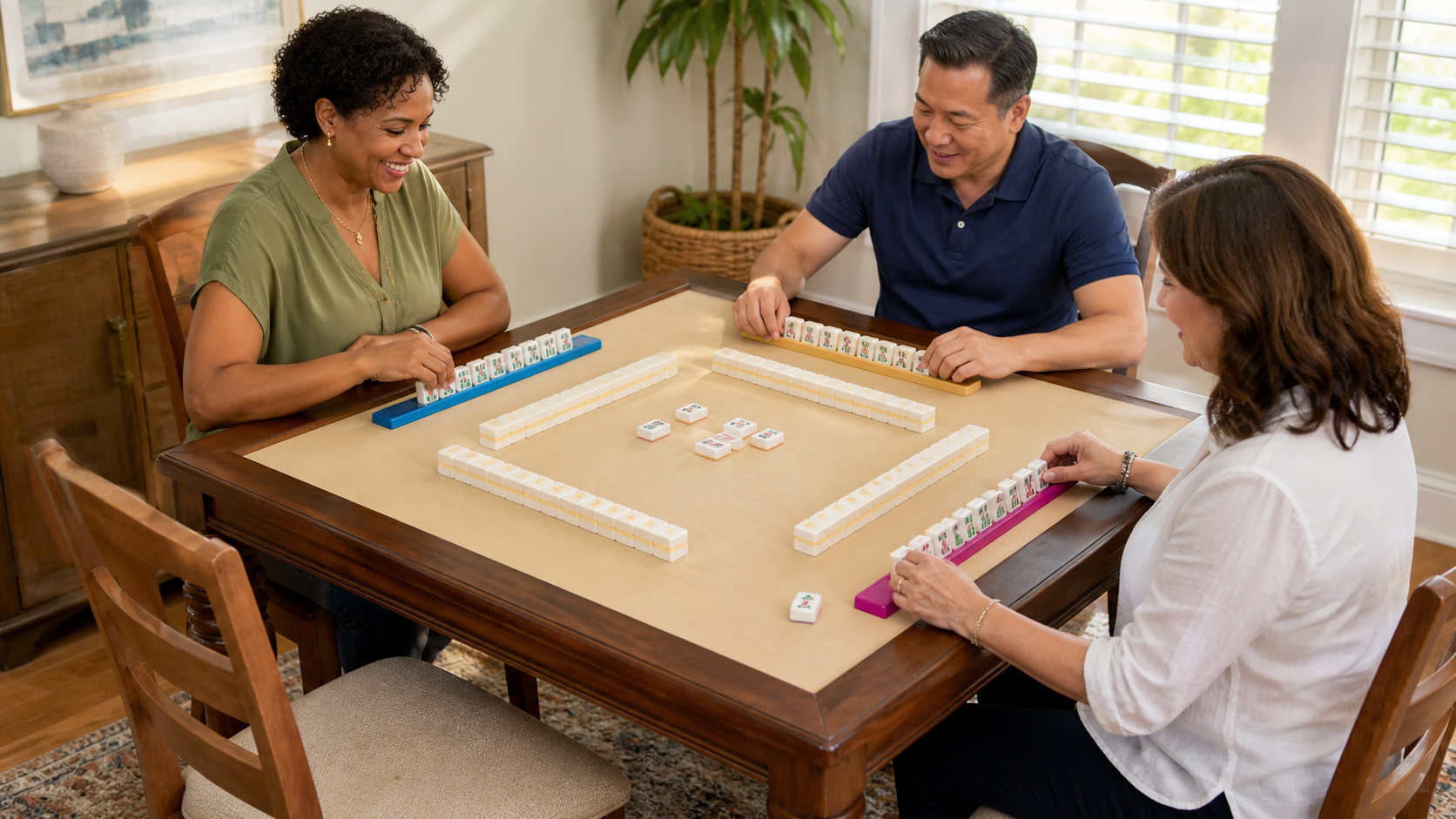
You planned a Mahjong night, but the fourth player canceled. The good news is that three people can still play American Mahjong. The table keeps four walls, skips the empty seat during dealing, and begins normal play without a Charleston.
Three-player rules are best treated as an adjustment to the standard game, not a completely different version. Everyone still builds a 14-tile hand from the current card, draws and discards in turn, and follows the usual rules for Jokers, exposures, and Mahjong.
Three-player American Mahjong at a glance
| Part of the game | Three-player adjustment |
|---|---|
| Walls | Build all four walls as usual. |
| Dealing | Skip the unoccupied seat. |
| Starting tiles | East starts with 14; the other two players start with 13. |
| Charleston | Omit it and begin play immediately. |
| Turns | Continue counterclockwise among the three active seats. |
| Winning hands | Use the same current card and standard 14-tile requirements. |
What you need
Use a standard American Mahjong set, four walls of tiles, three racks, dice, and a current card for each player. You do not need to remove a suit or reduce the tile count. Flowers and Jokers remain part of the game.
If you are checking whether your set is complete, use the Mahjong tile-count guide before building the walls.
Build four walls, not three
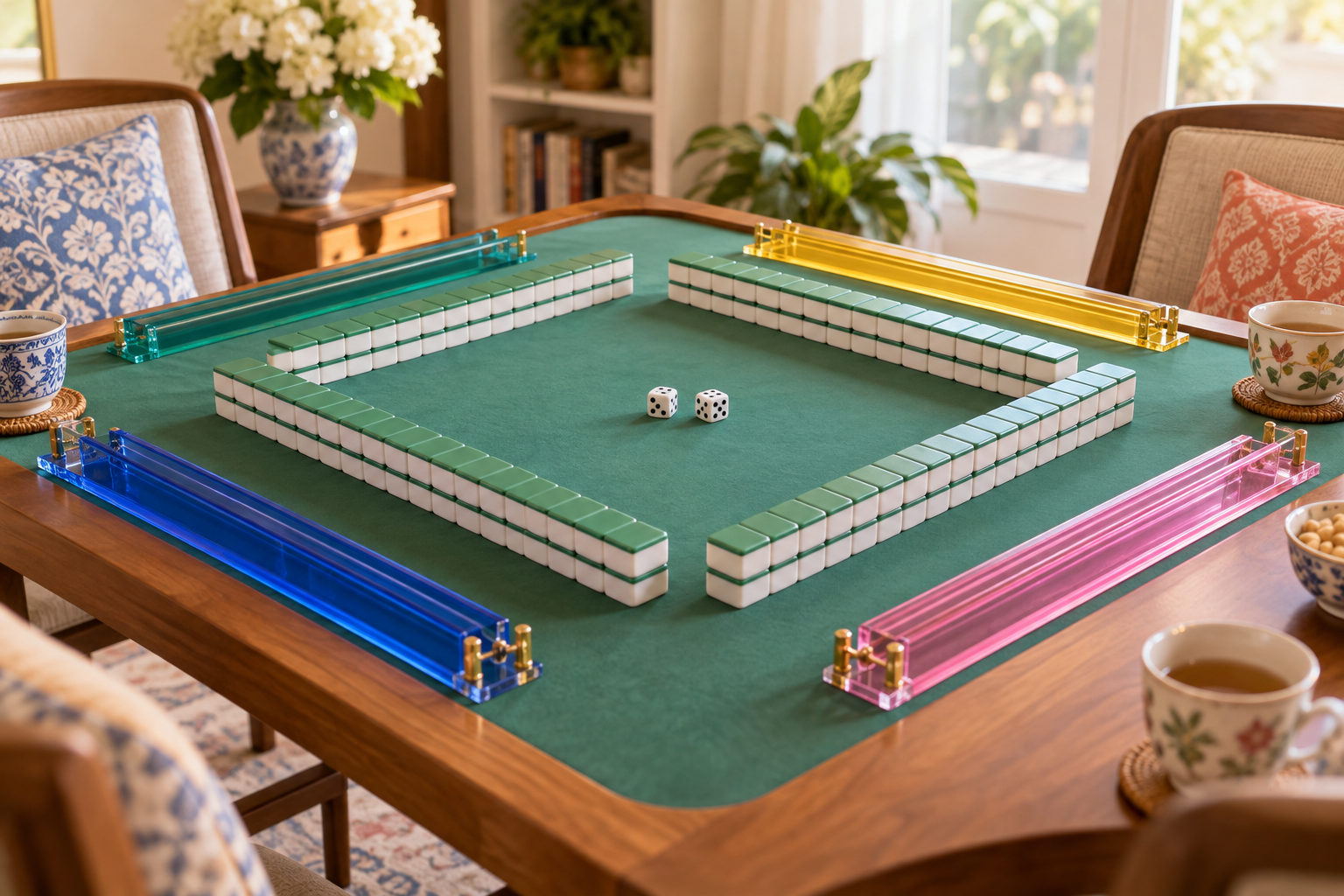
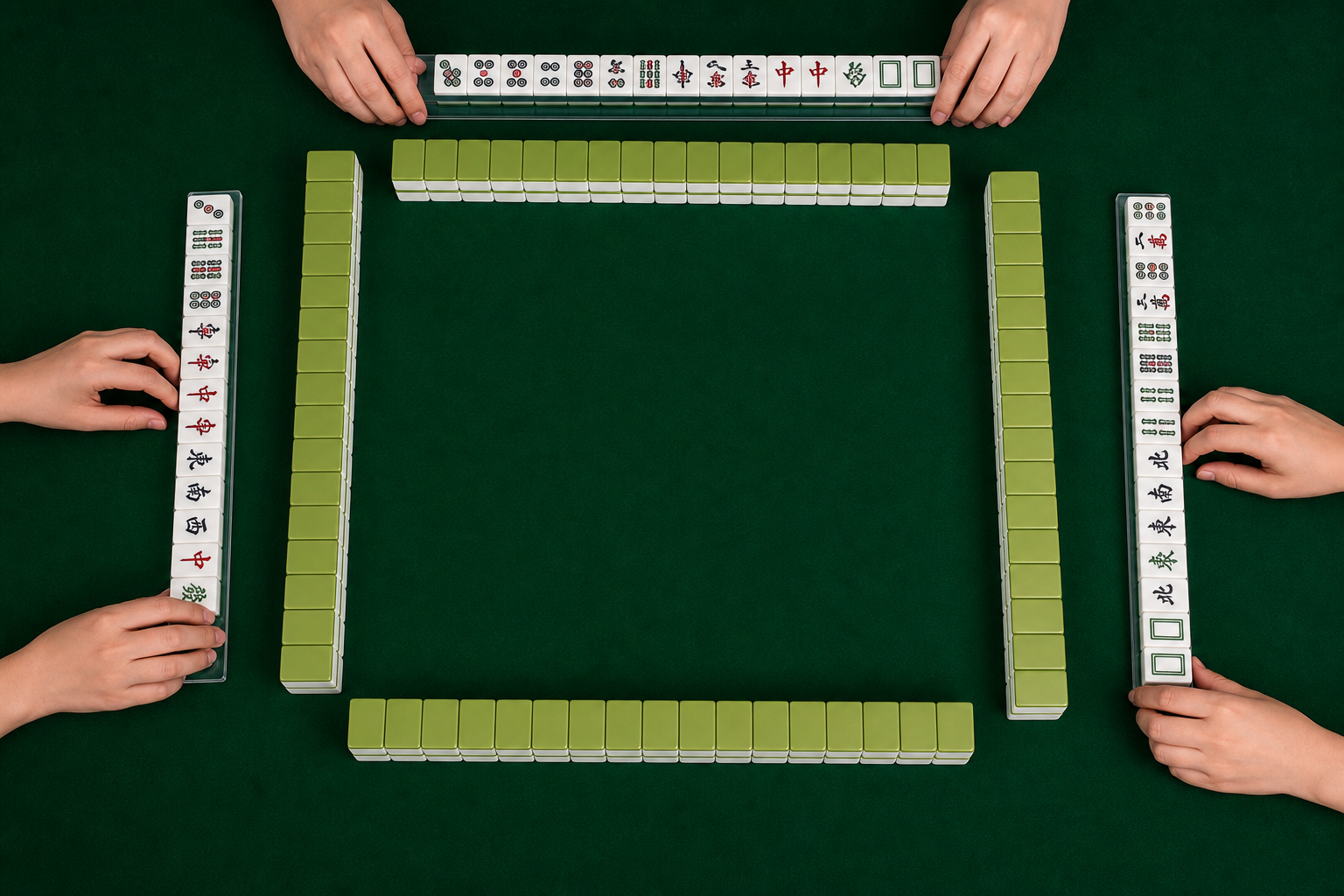
Make the normal square with four walls. Each wall is 19 tiles long and two tiles high in a standard 152-tile American set. Each player can build the wall directly in front of them, and one player builds the extra wall at the empty side.
Keeping four walls preserves the normal tile pool and makes it easier to follow familiar wall-breaking and drawing procedures.
Choose East and break the wall
Select East with the same method your group normally uses. East rolls the dice and breaks the appropriate wall. The empty seat is a gap in seating only; it does not become a player and never receives a rack or tiles.
New players may want to review the full American Mahjong beginner rules before making player-count adjustments.
How to deal tiles to three players
Deal in the familiar rhythm while skipping the unoccupied position:
- Beginning with East, each active player takes four tiles.
- Repeat that cycle two more times, giving every player 12 tiles.
- Each active player takes one more tile, bringing all three to 13.
- East takes the extra starting tile and begins with 14.
Count before the first discard. Starting with the wrong number of tiles can cause confusion and may create a dead hand once play begins.
Skip the Charleston
Standard three-handed American Mahjong omits the Charleston. There is no player at the fourth position to complete the prescribed passing pattern, so everyone keeps the dealt rack and moves directly to normal play.
This is the largest change for regular American players. If your group usually depends on the passing phase to shape a hand, take an extra minute to study the card before East discards. The regular Charleston guide still applies when you return to four-player games.
Turn order and ordinary play
East makes the opening discard. Play continues counterclockwise to the next occupied seat. When the sequence reaches the empty side, simply skip it and continue to the next player.
On each turn, pick one tile from the live wall or claim the latest discard when permitted, check for Mahjong, make an optional Joker exchange, and discard. The goal and legal hands do not change because one seat is empty.
Does three-player Mahjong feel different?
Yes. With fewer racks holding tiles, more tiles remain in the walls. You also receive fewer clues from exposures and discards because only two opponents are contributing information. A hand may therefore feel less predictable even though the underlying rules are familiar.
Do not force a hand simply because you missed the Charleston. Start with two or three realistic possibilities, protect flexible tiles, and narrow the choice as useful groups develop. The guide to choosing an American Mahjong hand can help.
House rules to agree on first
Some groups have local three-player customs. Before dealing, confirm:
- Whether the Charleston will be omitted completely.
- How East rotates after each game.
- Whether you are keeping score or playing casually.
- How quickly players should draw after a discard.
- Which authority or printed rulebook resolves disagreements.
Writing down one or two house rules prevents a friendly game from turning into a rule debate. For a comfortable setup, see the Mahjong game-night hosting guide.
Can beginners learn with three players?
Three players can be an excellent learning table because everyone gets turns more quickly and there is room for questions. However, beginners should understand that skipping the Charleston is a special player-count adjustment. Their first four-player session will include an important phase they have not practiced.
If no local partners are available, the site’s online American Mahjong practice guide offers another way to learn the full turn flow.
Frequently asked questions
Do you remove tiles for three-player American Mahjong?
No. Keep the standard American set and build all four walls.
Do three players perform the Charleston?
No. Under the standard three-handed adjustment, players skip the Charleston and begin regular play after dealing.
How many tiles does each player receive?
East begins with 14 tiles. Each of the other two players begins with 13.
Do you still use the NMJL card?
Yes. Players still complete a valid 14-tile hand listed on the current card.
Can three people use ordinary four-player rules instead?
The standard game needs adjustments for the empty seat, especially during dealing and the Charleston. Agree on the three-player procedure before starting.
Final takeaway
For three-player American Mahjong, keep four walls, deal only to the occupied seats, give East 14 tiles, omit the Charleston, and then follow normal play. It is a practical way to save game night when a fourth player is unavailable.