American Mahjong Racking Rules: When a Draw Becomes Final
You draw from the wall, glance at the tile, and hear another player call the previous discard. Who gets the tile? The answer often turns on one small action: whether the drawn tile has been racked.
Racking is more than a habit. In American Mahjong, it helps mark the point when the opportunity to claim the last discard has closed. Understanding that moment keeps the game fair and prevents the awkward argument that begins with, “But I had already picked.”

What does racking a tile mean?
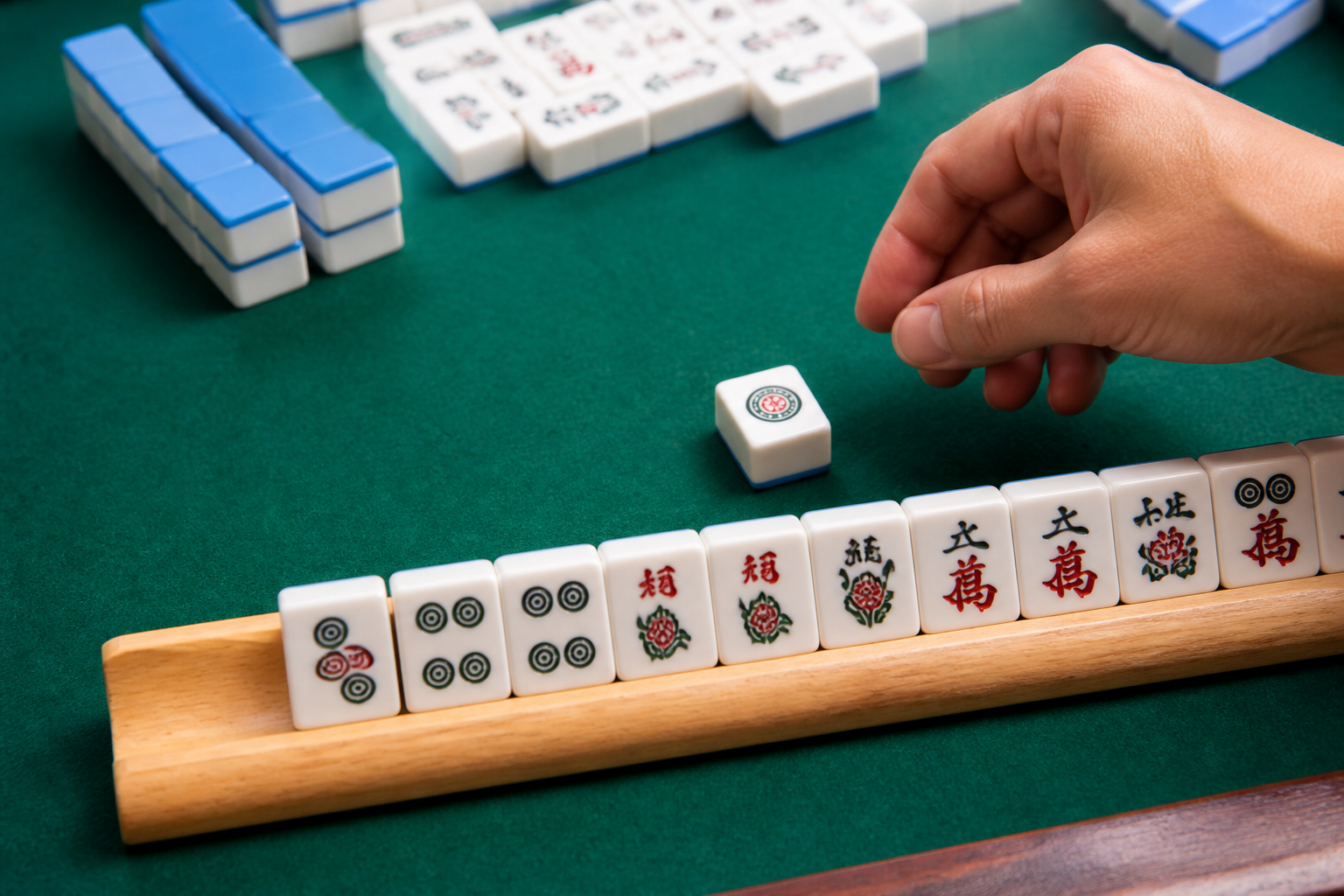
To rack a tile is to place the tile you picked from the wall onto the sloping part of your rack with the rest of your concealed hand. Merely holding the tile above the rack or tapping the rack does not communicate the same completed action.
The distinction matters because all players briefly have a chance to claim the most recent discard. For the broader calling rules, read how to claim a discarded tile correctly.
The window of opportunity in plain English
The “window of opportunity” is the short period when the newest discard remains available to be claimed. It opens when the discard touches the table or is fully named, whichever happens first.
The next player may pick from the wall while that window is still open. Picking and looking at the tile does not, by itself, defeat a timely call. If another player legally calls the discard before the window closes, the picked tile is returned to its original place in the wall.
Four actions that close the window
After picking from the wall, the next player closes the opportunity to claim the prior discard by taking one of these actions:
- Racking the picked tile. The tile is placed with the concealed hand.
- Discarding immediately. The player may throw the tile just picked without first racking it.
- Declaring Mahjong. A valid winning declaration ends the ordinary turn sequence.
- Beginning a Joker exchange. Starting the exchange is a clear use of the current turn.
Racking is therefore the most familiar way to close the window, but it is not the only one. A player does not have to rack a tile they intend to discard immediately.
Picking is a commitment too
Although picking alone does not close the claim window, moving a wall tile commits you to that pick if nobody makes a valid call. You cannot inspect one tile, dislike it, and choose a different tile from the wall.
This rule protects the hidden information in the wall. Touching a tile without moving it is different from lifting or sliding it out of position. New players should use deliberate movements: choose the next wall tile, move it once, and keep it visible near the rack until deciding what to do.
A typical table example
Jordan discards and clearly announces “Five Bam.” Casey, seated to Jordan’s right, picks the next wall tile and holds it above the rack. Riley immediately calls the Five Bam for a valid Pung. Because Casey has not racked, discarded, declared Mahjong, or begun a Joker exchange, Riley’s call is still timely. Casey returns the picked tile to the same wall position.
If Casey had already placed the tile among the concealed tiles, the call would be late. The Five Bam would remain a dead discard and play would continue from Casey’s turn.
Why beginners should avoid speed-racking
Quickly grabbing and racking the next tile can shut the window before other players have a reasonable chance to react. Even when technically permitted, rushing creates tension and makes a social game harder to follow.
A smooth table uses a brief natural pause after each clearly announced discard. That pause is not a countdown and does not need to be dramatic. It simply lets everyone hear the tile name and check their rack.
How racking affects your own decision
Once the tile is placed in the rack, it may be harder to remember which tile was drawn. Many players keep the new tile separate for a moment while comparing it with their plan, then either rack it or discard it.
Use that moment to check the complete hand rather than judging the new tile in isolation. The guide to choosing an American Mahjong hand explains how to compare realistic card lines without overcommitting.
Racking, concealed hands, and exposures
Racking a wall tile keeps it in your concealed hand. It does not create an exposure. An exposure is a face-up grouping placed on top of the rack after a permitted call.
Do not place ordinary concealed tiles on top of the rack just to organize them. That can look like an exposure and may reveal information. If you are unsure which hands must remain hidden, review exposed versus concealed hands.
Simple habits that prevent disputes
- Name each discard fully: number plus Bam, Crak, or Dot, or the complete honor name.
- Allow a short beat before the next player reaches for the wall.
- Keep a newly picked tile beside the rack until you decide.
- Rack with a clear placement rather than an ambiguous tap.
- If a call and a pick overlap, pause the game and reconstruct the order calmly.
- Explain any house convention before the first Charleston.
These habits fit naturally into the basic turn sequence described in the beginner-friendly American Mahjong rules.
Frequently asked questions
Does touching the rack with a tile count as racking?
A casual tap is not the clearest completed action. Place the tile onto the sloping rack with the concealed hand so every player can see that it has been racked.
Must I rack a tile before discarding it?
No. You may discard the picked tile immediately. That discard closes the previous window and opens a new opportunity around the new discard.
Can someone call after I have looked at my wall tile?
Yes, if you have not yet taken an action that closes the window. Seeing the tile does not automatically make the prior discard unavailable.
What happens to my picked tile when another player calls?
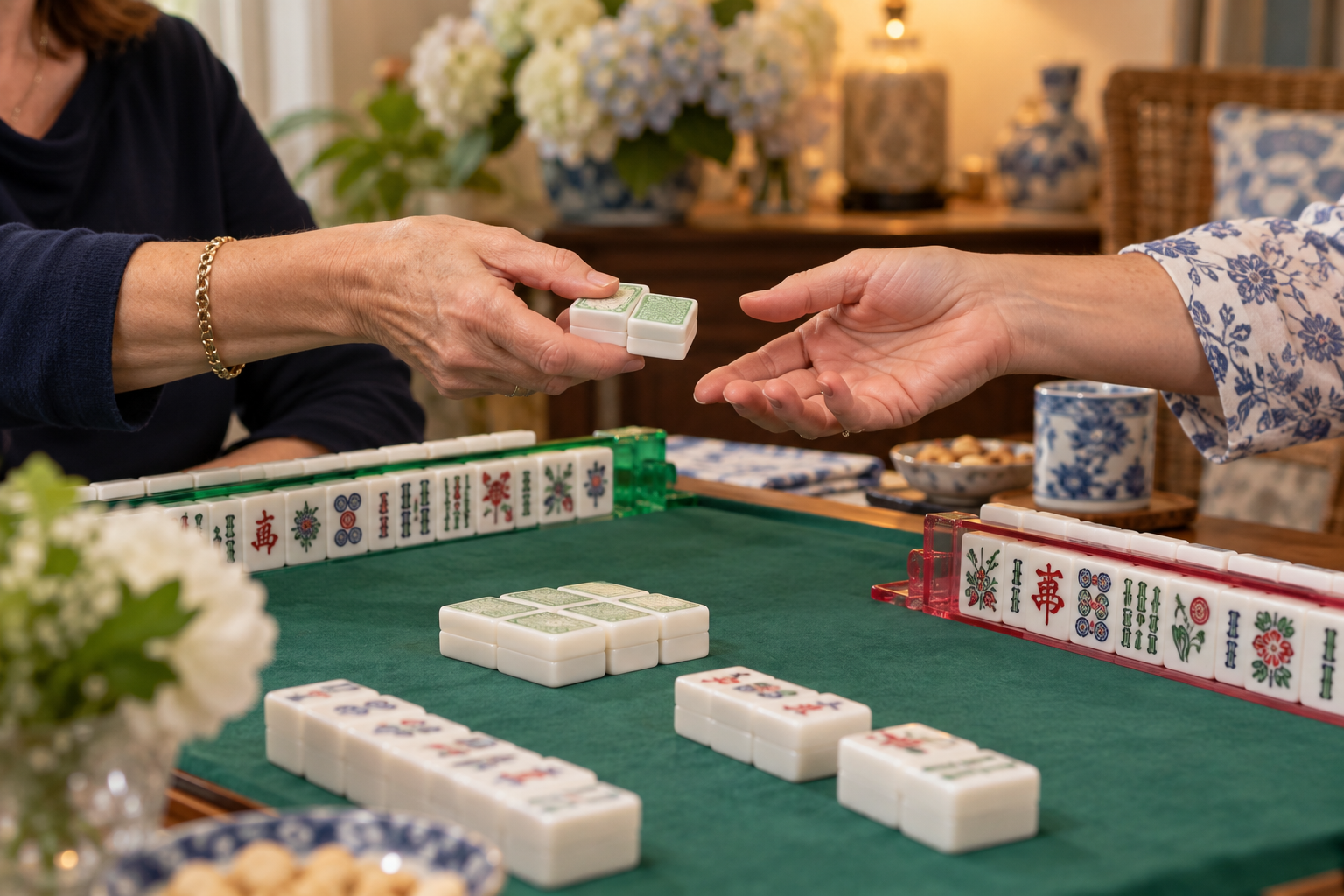
If the call is timely and legal, return the picked tile to the exact place it came from in the wall. The caller completes the exposure and continues the turn.
Final takeaway
Think of racking as a visible period at the end of the table’s chance to claim the prior discard. Pick carefully, pause briefly, and make your next action unambiguous. A few calm seconds keep the rules clear without slowing the game.
One thought on “American Mahjong Racking Rules: When a Draw Becomes Final”