American Mahjong Scoring Guide: Payments for New Players
American Mahjong scoring is easier to understand when you separate two things: the value printed for the winning hand and the payment rule your table uses. The card tells you what the hand is worth. Your table rules decide who pays that amount, whether anyone pays double, and how ties or unusual situations are handled.
This beginner guide explains the common scoring ideas without trying to replace your current card or your group’s house rules. If you are still learning the full turn order, start with American Mahjong rules for beginners.
Start with the hand value
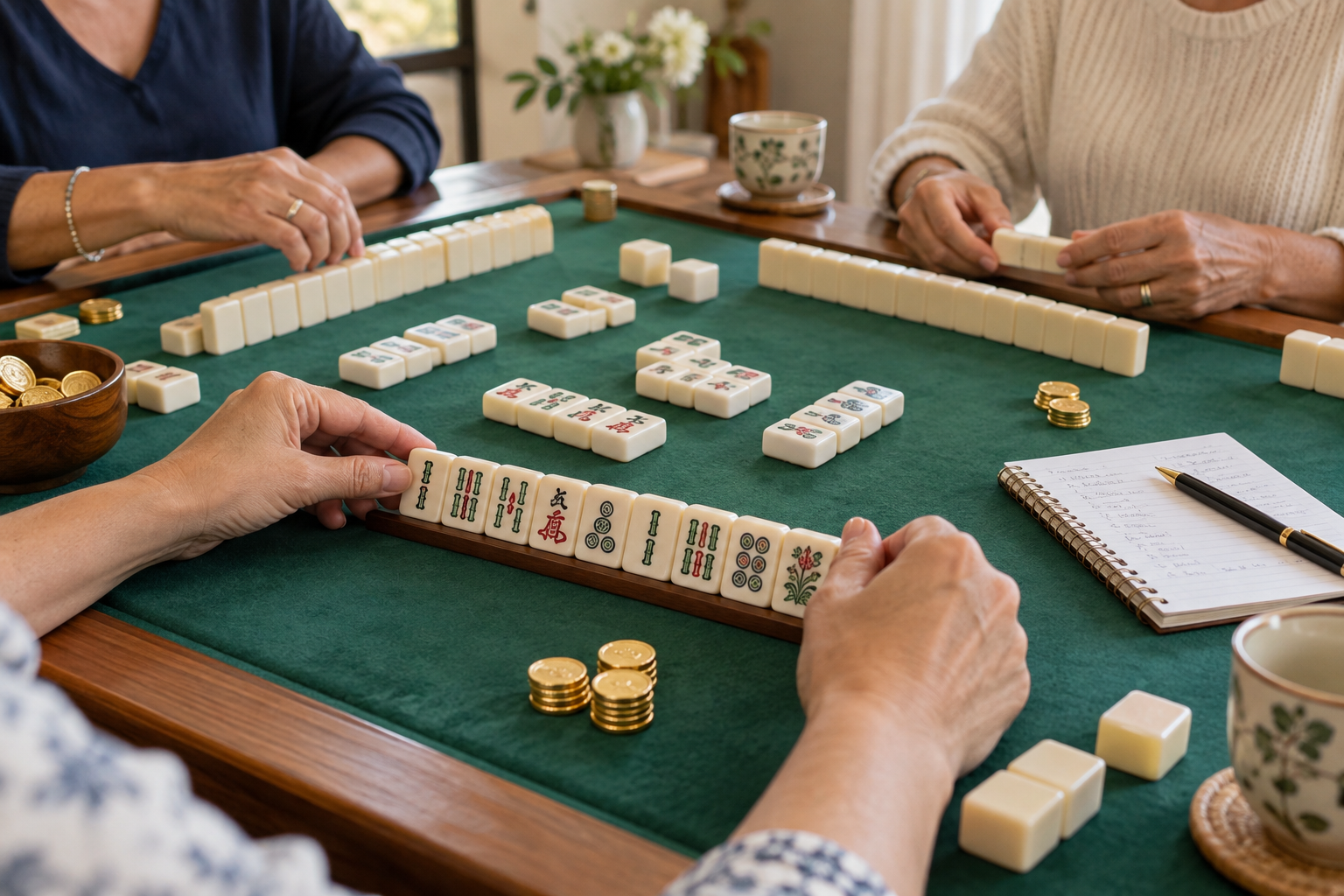
In American Mahjong, each official card line has a value. When someone declares Mahjong correctly, the table identifies the exact line, checks that the exposed and concealed parts match, and uses that value as the base score.
The first mistake beginners make is looking only at the tiles and not the hand requirements. Some hands allow exposures. Some must stay concealed. If that distinction is still unclear, review exposed versus concealed hands.
Who pays the winner?
Many American Mahjong groups use this basic pattern: if the winner wins on a discard, the discarder pays more and the other players pay the normal amount. If the winner picks the winning tile from the wall, all other players may pay more.
Exact payments vary by card, league practice, and house agreement. Before the first game, ask the table how they handle discards, self-picked wins, doubles, wall games, and dead hands.
Discard win versus self-pick win
A discard win happens when another player throws the tile that completes the winning hand. A self-pick win happens when the winner draws the needed tile from the wall. Many tables treat self-pick as stronger because no opponent directly supplied the winning tile.
The discard rule is connected to calling rules. For more detail, read how to claim discarded tiles correctly.
What beginners should confirm before playing
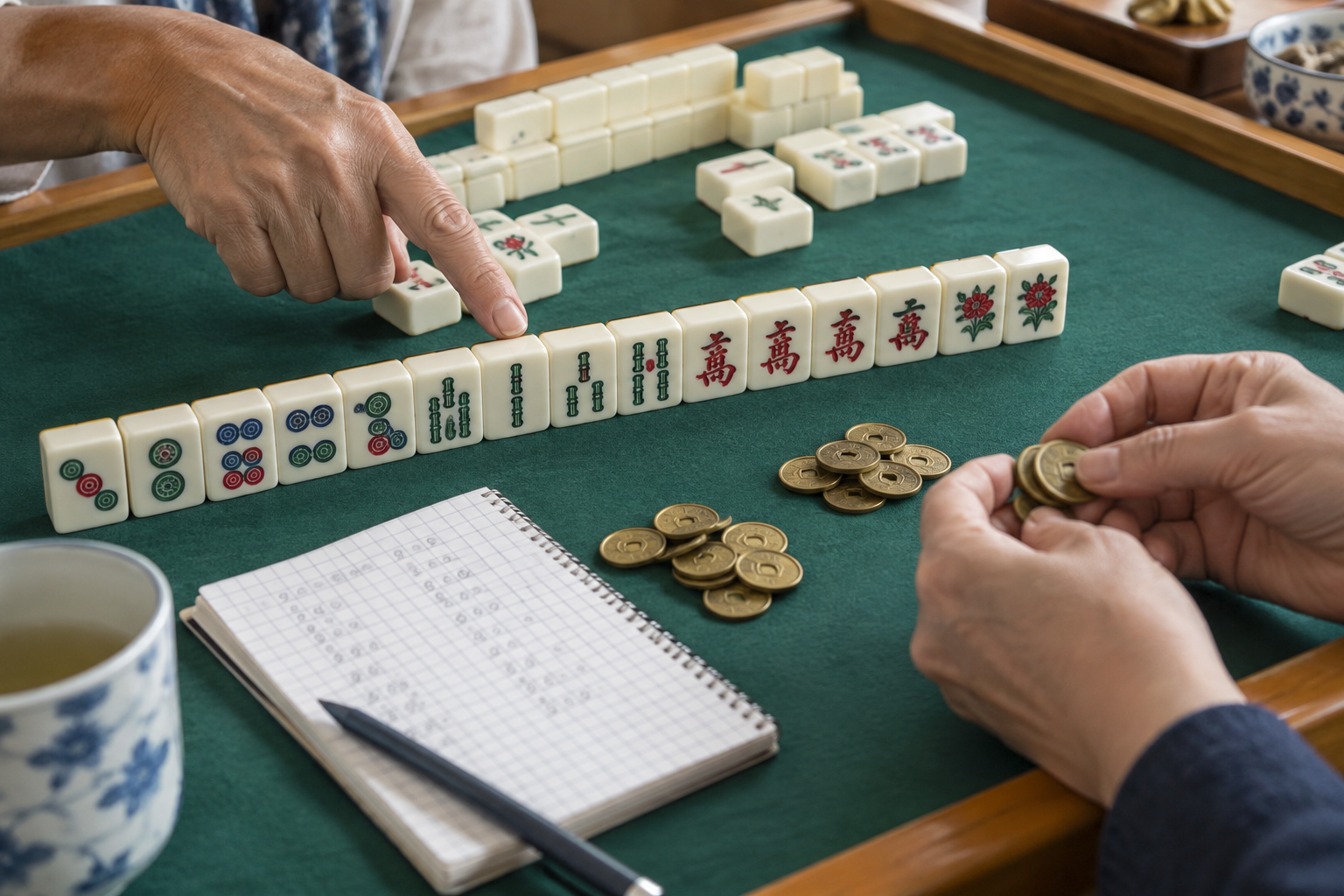
- Whether the group pays with coins, chips, or score only.
- How much a discard win pays compared with a self-pick win.
- Whether East pays or receives any special amount.
- How the table handles Joker-heavy hands.
- Whether a dead hand changes payment responsibility.
- What happens when the wall ends with no Mahjong.
Those last two items matter because a scoring question often starts with a rules question. See dead hands in American Mahjong and racking rules for related situations.
Simple scoring example
Suppose Riley declares Mahjong on a 25-point hand. If Riley wins from Casey’s discard, Casey may owe a higher payment while the other players owe the base amount. If Riley draws the winning tile from the wall, every other player may owe the higher payment. The exact numbers depend on the table’s agreed payment chart.
The important habit is to identify the winning line first, then apply the payment rule. Do not start moving chips until the table agrees the hand is valid.
Final takeaway
American Mahjong scoring is not just one number. Read the hand value, confirm how the win happened, and apply the table’s payment rule. For beginners, the best scoring system is the one everyone understands before the first tile is drawn.