American Mahjong Courtesy Pass Rules: A Guide for Beginners
The courtesy pass is a small, optional exchange that may happen after the Charleston. It gives two players sitting opposite each other one last chance to trade unwanted tiles before normal play begins. Unlike the formal Charleston passes, it happens only when both players agree.
Because house customs differ, the courtesy pass can feel vague at a new table. The safest approach is simple: ask, agree on the number, and exchange the same number of eligible tiles at the same time.
When does the courtesy pass happen?
It comes after the required Charleston sequence has finished and before East makes the opening discard. At many tables, each pair of opposite players handles its exchange separately.
If you are still learning the larger exchange sequence, read the American Mahjong Charleston strategy guide. The courtesy pass does not replace any required Charleston step.
How many tiles can you pass?
Players generally agree to exchange zero, one, two, or three tiles. Both sides must pass the same number. If you want to pass two and your opposite player wants to pass one, the exchange is one tile. The lower number is the agreement.
No one has to participate. Saying “zero” or politely declining is valid, especially when every tile supports the hand you are considering.
How to make the exchange
- Look at your rack and decide whether you have any safe unwanted tiles.
- Ask your opposite player how many they would like to exchange.
- Agree on a number from zero to three.
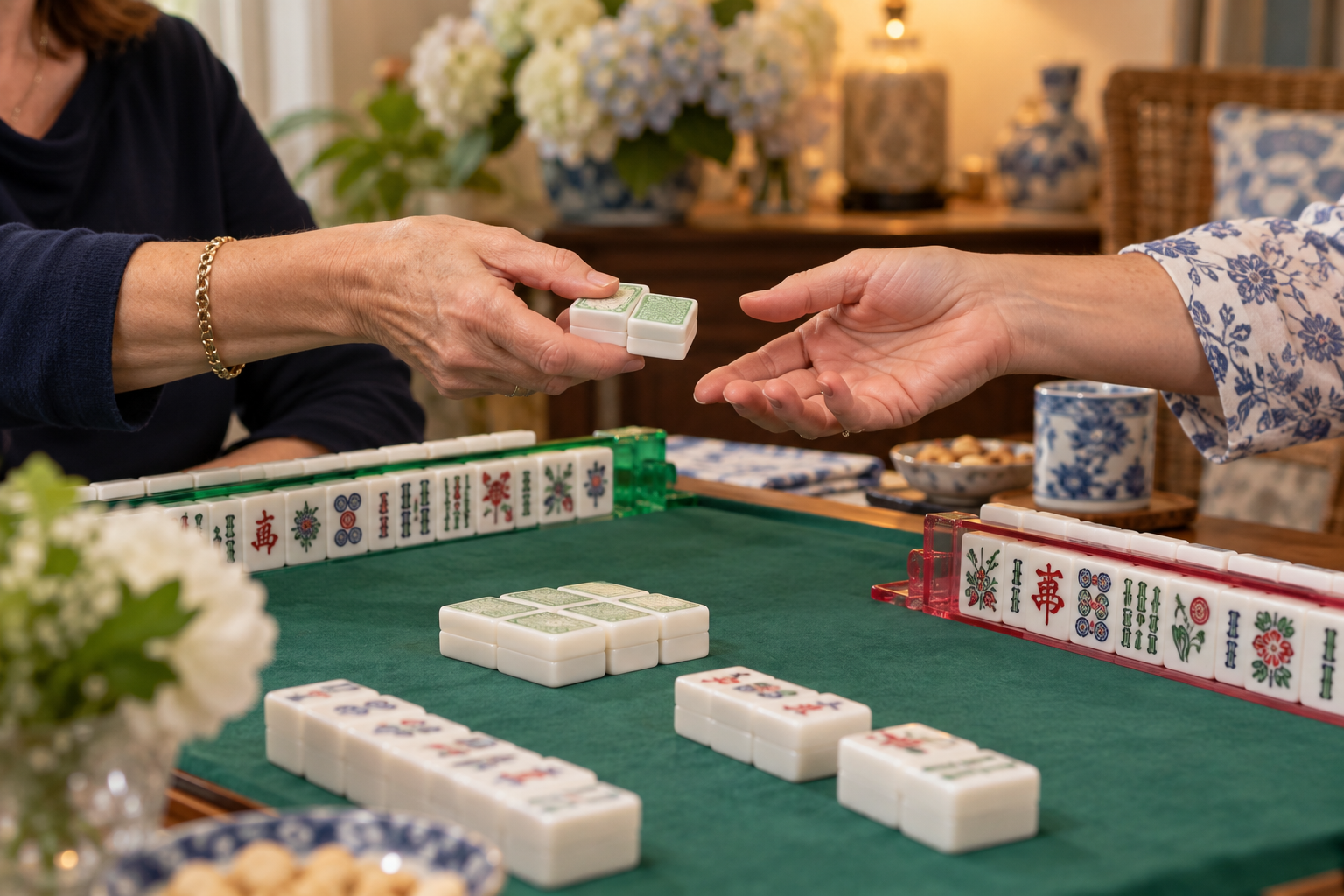
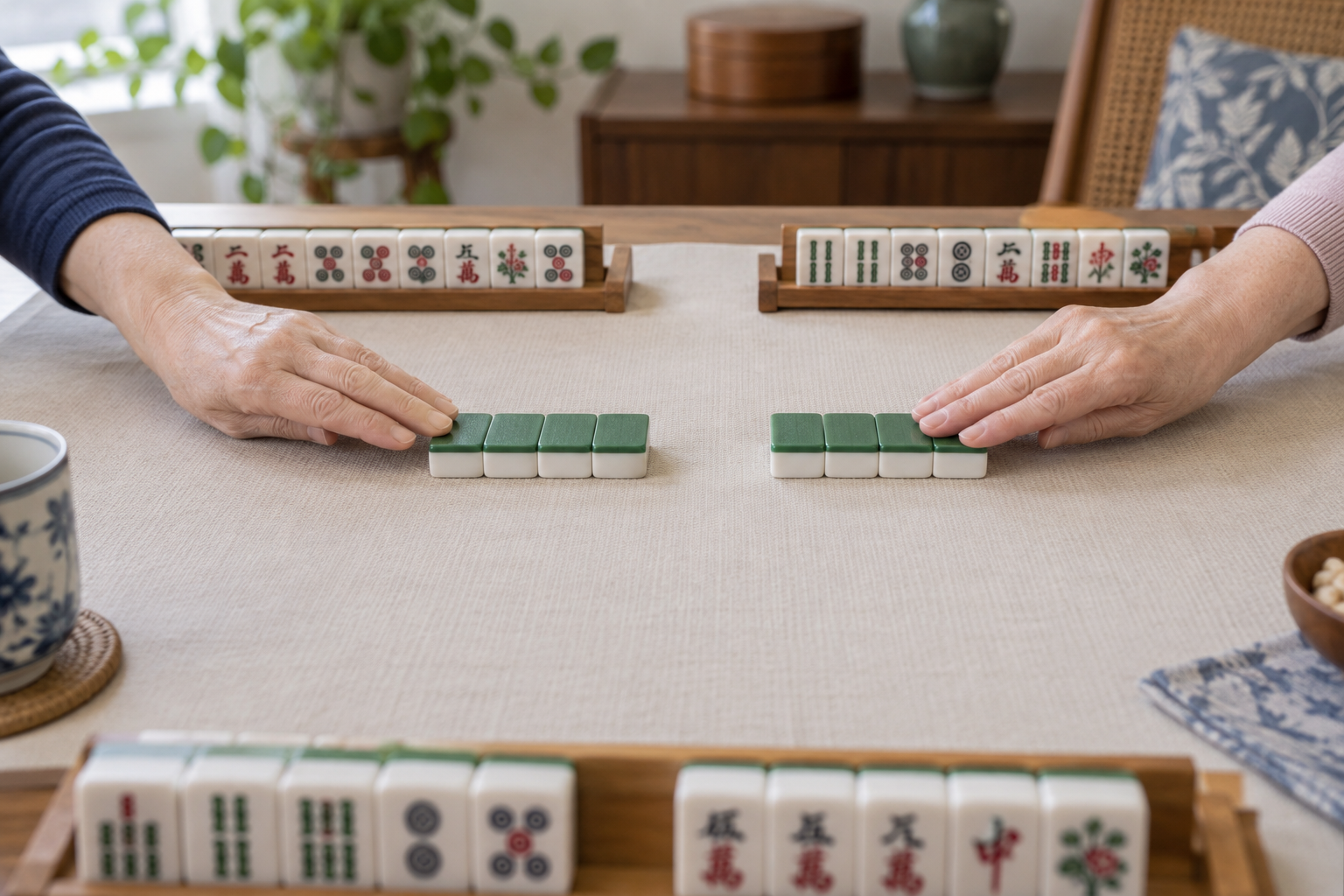
- Place that exact number face down.
- Slide the tiles across at the same time, then add the received tiles to your rack.
Keep the exchange clear and visible. Do not change the number after seeing what the other player offers, and do not reveal tile faces during the pass.
Can you pass a Joker?
No. Jokers are not passed in the Charleston or courtesy pass. Keep them on your rack while deciding which ordinary tiles you can release. The separate rules for using and replacing Jokers are explained in the Joker exchange guide.
Which tiles should a beginner pass?
Start by comparing two or three realistic lines on the current card. Pass tiles that fit none of those options. Isolated suit tiles, unsupported winds, or extra flowers may be candidates, but the right choice depends on your rack and the card.
Avoid dismantling a useful pair just to participate. Pairs can be difficult to rebuild because a discarded tile cannot normally be called merely to complete a pair. If you are unsure about hand structure, revisit beginner-friendly American Mahjong hands.
Courtesy pass etiquette
- Ask instead of assuming the exchange will happen.
- Accept “no pass” without pressure or commentary.
- Agree on the count before moving tiles.
- Keep all passed tiles face down.
- Do not discuss what you received.
- Move promptly so the opening of play is not delayed.
Good table habits matter as much as the technical rule. The broader American Mahjong etiquette guide covers calls, pace, and courtesy during the rest of the hand.
What if your table skips it?
Some groups do not use a courtesy pass, while others treat it as a familiar final step. Follow the table’s announced practice. If players disagree, skipping the exchange is cleaner than inventing a rule in the middle of the hand.
Once all exchanges are finished, East begins by discarding. Players then draw and discard in turn under the normal American Mahjong rules.
Final takeaway
The courtesy pass is optional, equal, and mutual. Opposite players may exchange up to three eligible tiles, but only after agreeing on the same number. Keep Jokers out, keep tiles face down, and remember that declining is always acceptable.