How to Host a Mahjong Game Night at Home
Hosting a Mahjong game night does not need to feel formal or intimidating. A good host makes the table easy to use, explains the house rules before play starts, and keeps the pace friendly enough for new players to learn. The tiles do the rest.
This guide is written for U.S. players planning a casual home game, especially groups with beginners. It covers supplies, seating, setup, timing, etiquette, snacks, and simple ways to keep the night fun without turning it into a rules lecture.
Start With the Rule Set
Before you invite people, decide what version of Mahjong you are hosting. American Mahjong needs a current card, racks, jokers, and often the Charleston. Chinese-style games use a different flow and do not rely on the NMJL-style card.
If your group is new, send a short note before the game. Tell players whether you are playing American Mahjong, Chinese Mahjong, or a simplified teaching round. For a broader introduction, share What is Mahjong? ahead of time.
| Hosting Choice | Beginner-Friendly Recommendation | Why It Helps |
|---|---|---|
| Rule set | Pick one and say it clearly. | Prevents mixed-rule confusion. |
| First round | Make it a teaching round. | Players can ask questions without pressure. |
| Scoring | Keep it simple at first. | New players learn faster when the goal is clear. |
| References | Allow a card or cheat sheet. | Reduces table anxiety for beginners. |
Supplies You Need
For four players, you need a Mahjong set, enough table space, and a way to track the game. American Mahjong groups often use racks, pushers, jokers, dice, and the current card. Traditional sets may not include jokers or racks.
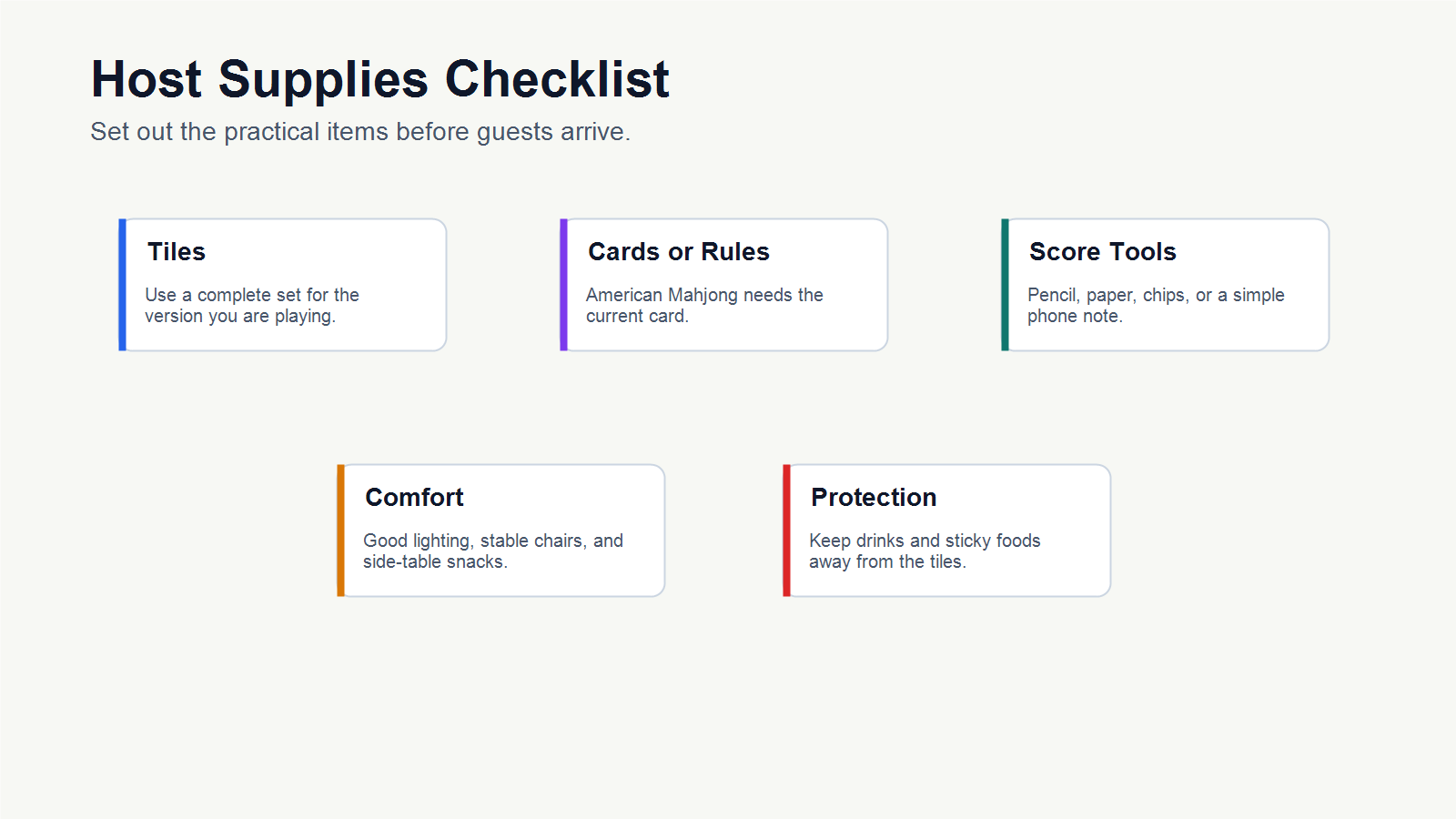
- Mahjong tiles for the version you are playing
- Four seats with enough elbow room
- Racks and pushers for American Mahjong if your group uses them
- Dice or other starting tools used by your rules
- Current American Mahjong card if playing American style
- Score sheet, pencil, or phone note
- Small bowls or trays for snacks away from the tiles
- Good lighting so tile faces are easy to read
If someone is still learning tile names, send them this Mahjong tiles guide before game night.
Set Up the Table
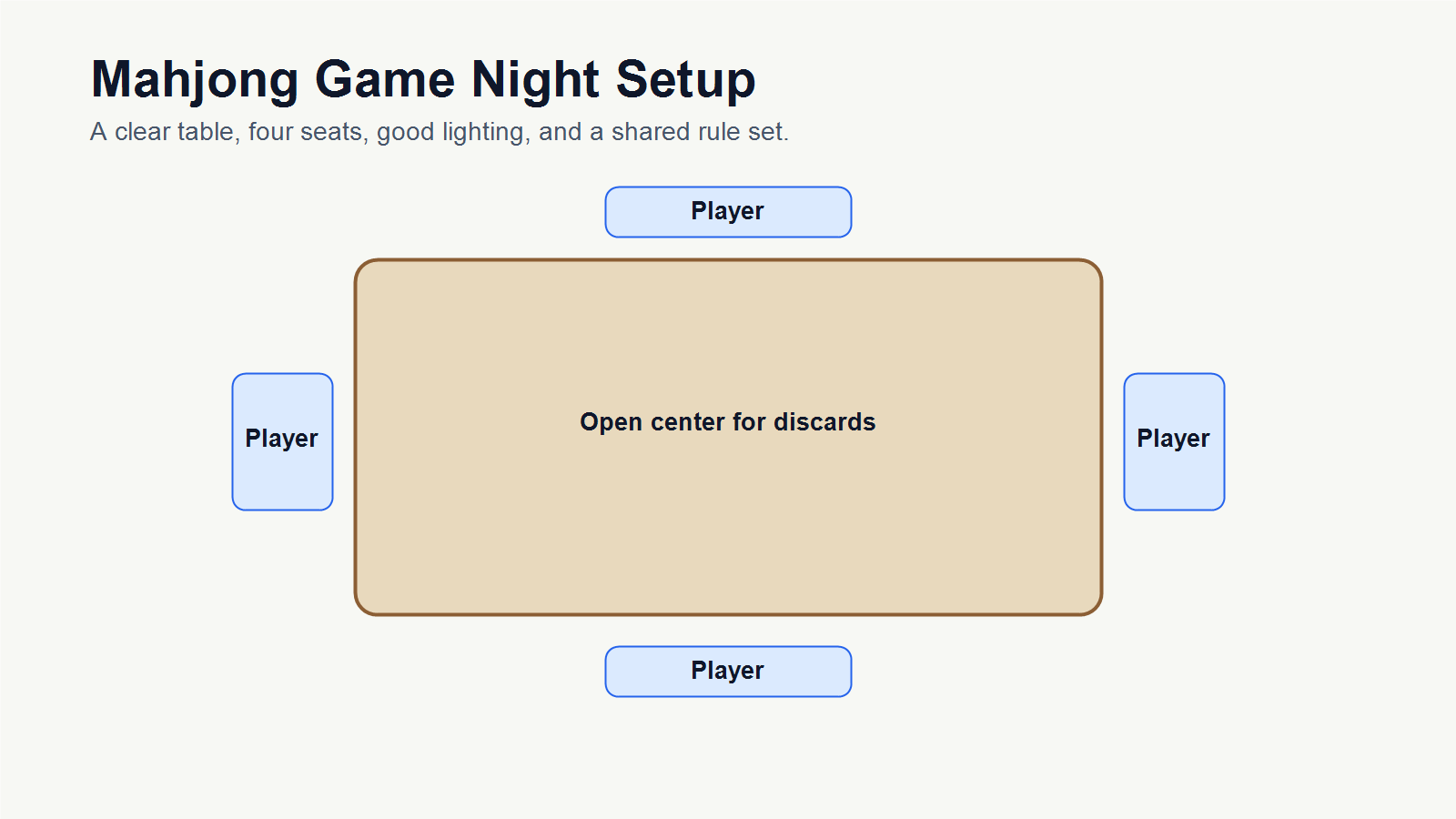
A Mahjong table does not have to be fancy. It does need to be stable, well lit, and large enough for each player to build a wall or manage a rack comfortably. Avoid a table that is so crowded that players bump tiles every turn.
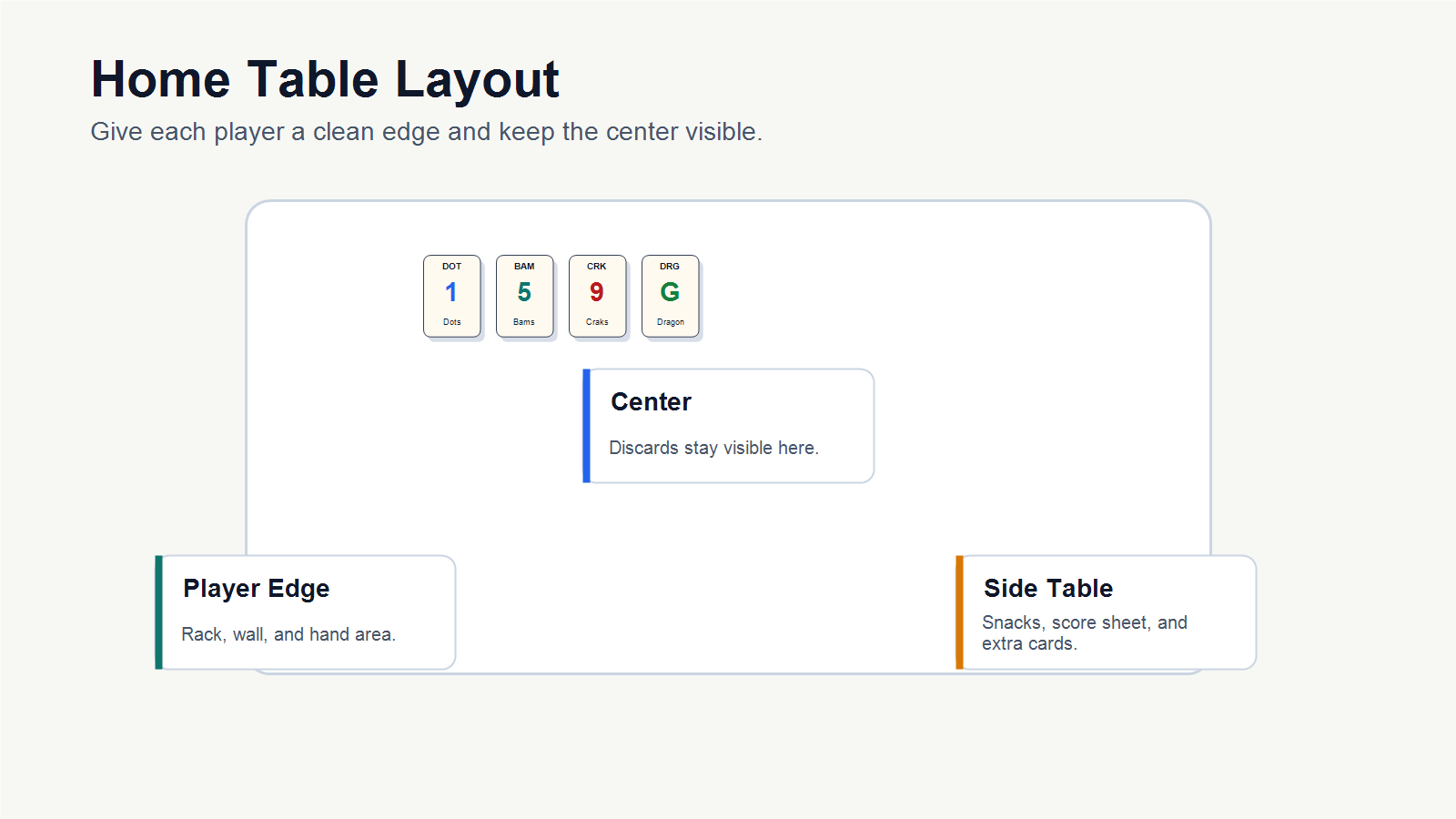
| Area | What Goes There | Host Tip |
|---|---|---|
| Center | Discards and shared visibility | Keep drinks and plates out of this space. |
| Player edge | Rack, hand, wall, or personal tiles | Make sure each player has the same amount of room. |
| Side table | Snacks, extra cards, score sheet | Prevents clutter on the main table. |
| Reference spot | Card or quick guide | Put shared references where everyone can see them. |
Help Beginners Without Slowing the Whole Night
The easiest way to host mixed-experience players is to make the first round instructional. Let beginners ask what a tile is, why a discard matters, or whether a call is legal. After that, gradually reduce coaching so the game can find a rhythm.
For American Mahjong, give beginners a short reminder of the card, jokers, and exposure rules. The site’s American Mahjong rules guide is a good pre-game link.
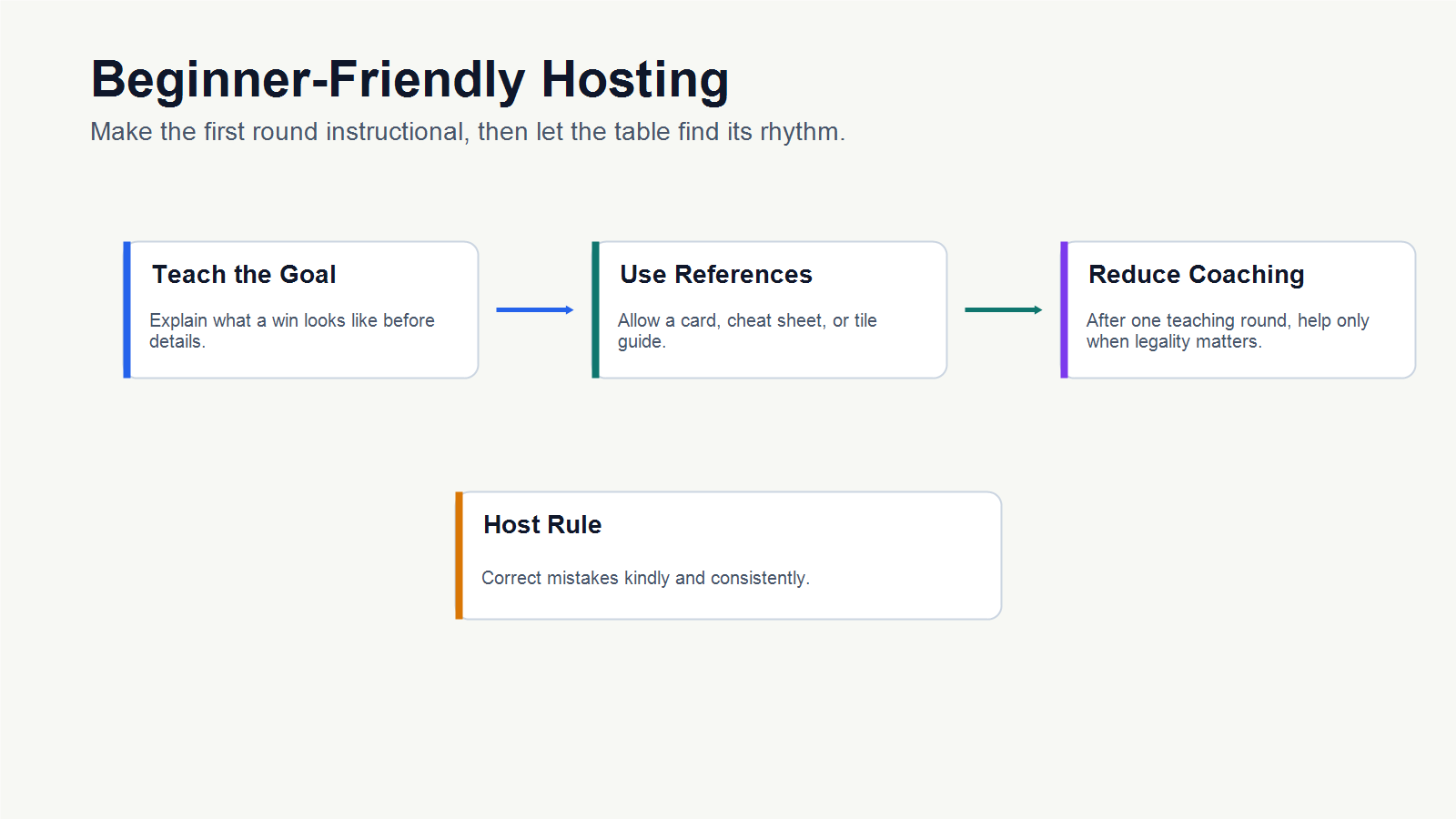
- Explain the goal before explaining every detail.
- Use one reference sheet instead of five different explanations.
- Let beginners sort their racks slowly for the first round.
- Correct rule mistakes kindly and consistently.
- Pause only for decisions that affect legality, not every small preference.
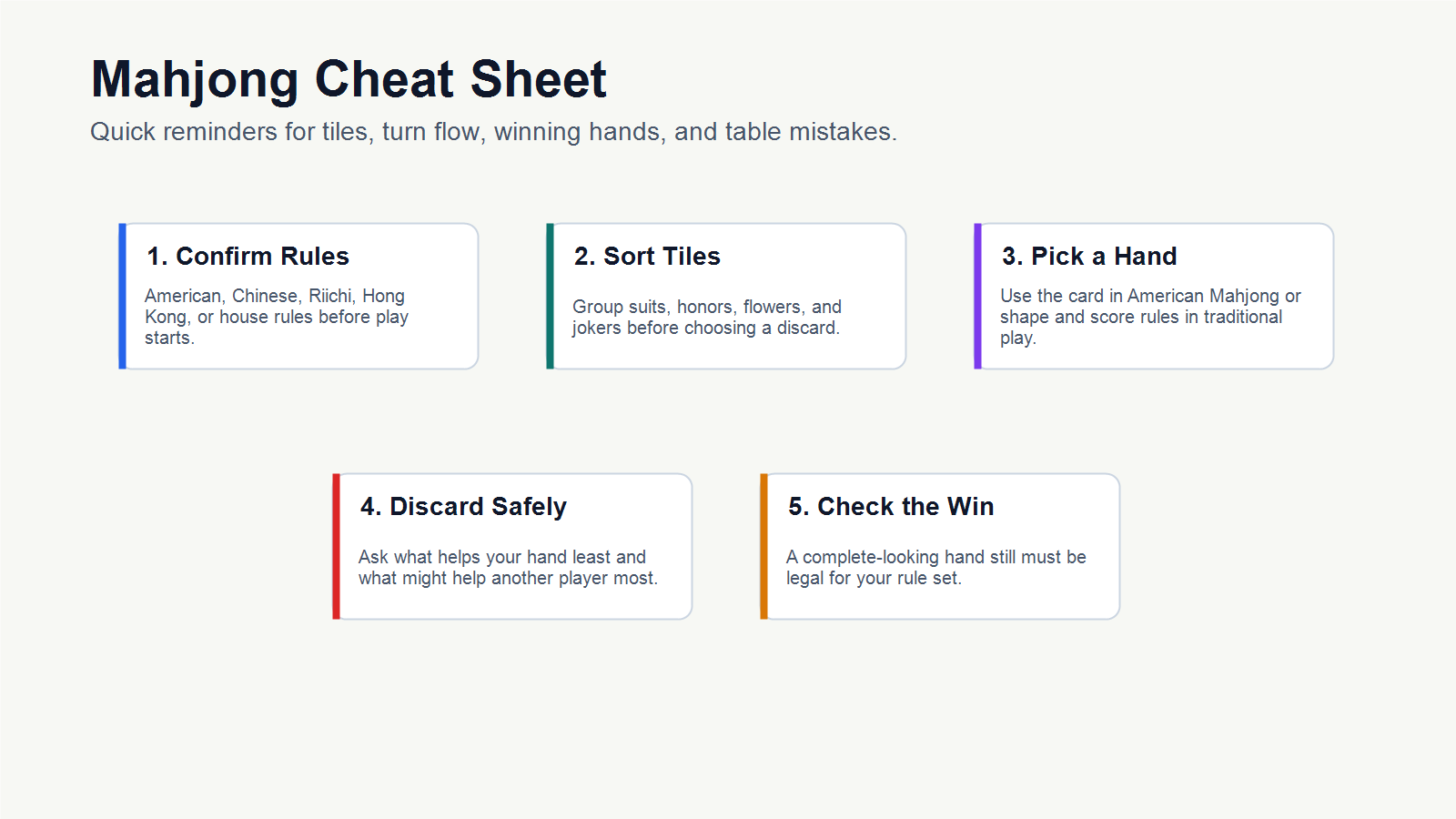
If your group wants a table-side reference, publish or print the Mahjong cheat sheet before guests arrive.
Plan the Time
Mahjong can stretch longer than new hosts expect. A casual American Mahjong night with explanations, snacks, and conversation may need two to three hours. A learning night may move slower.
| Part of Night | Suggested Time | What to Do |
|---|---|---|
| Arrival and setup | 15 minutes | Show the table, cards, tiles, and snacks. |
| Rule reminder | 10 minutes | Explain the version, goal, and table etiquette. |
| Teaching round | 30-45 minutes | Allow questions and slow decisions. |
| Regular play | 60-120 minutes | Play at a normal pace with light reminders. |
| Wrap-up | 10 minutes | Finish the hand, note scores, and plan the next game. |
Food, Drinks, and Table Etiquette
Serve food that does not leave grease or crumbs on the tiles. Small plates on a side table are better than bowls in the center of play. Drinks should have lids or stay away from the main table.
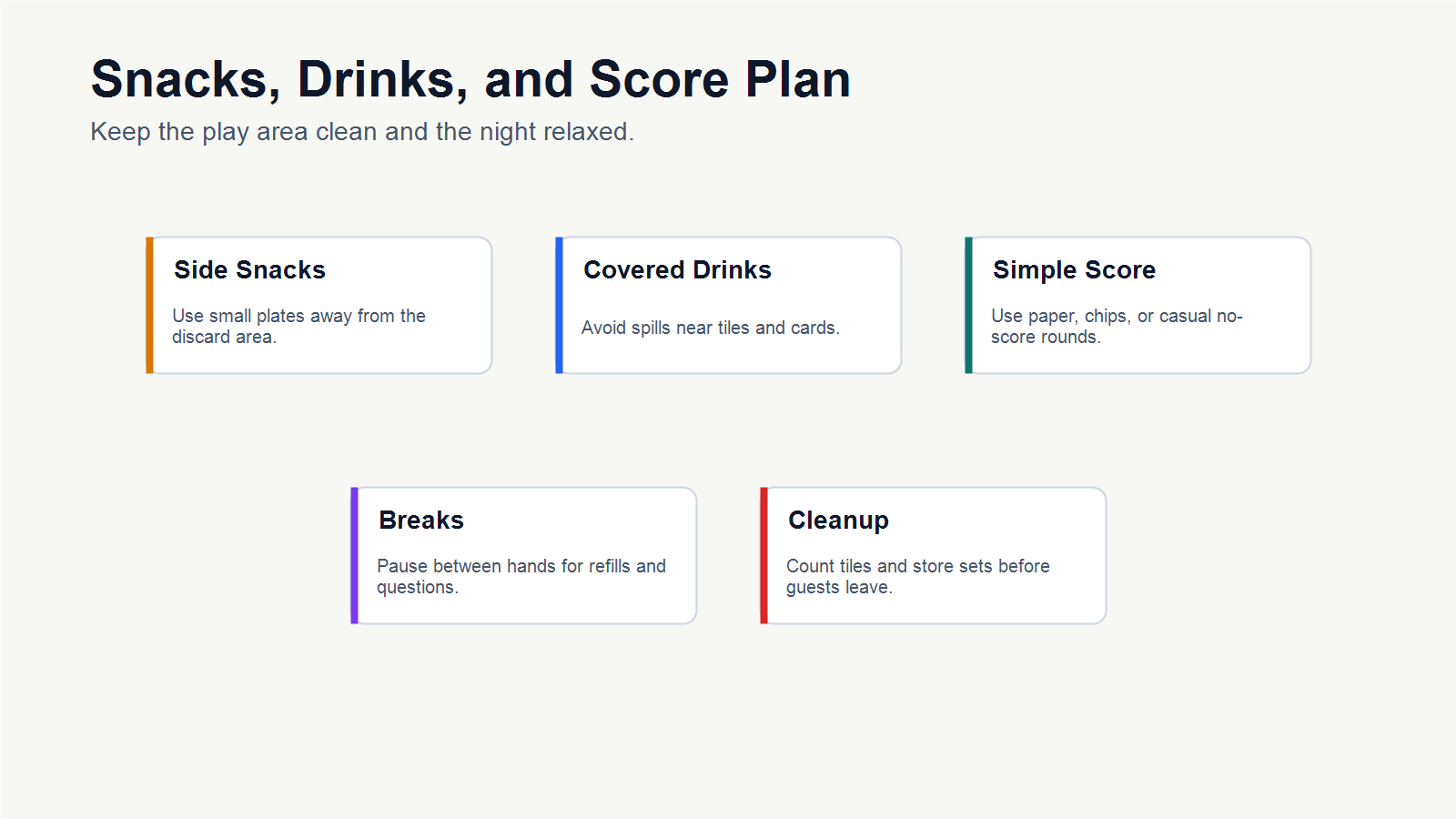
- Choose finger foods that are not sticky.
- Use napkins and a side table.
- Keep strong-smelling foods away from the play area.
- Pause between hands for refills.
- Agree on phone use before play starts.
House Rules to Announce Before Play
House rules are fine, but surprise house rules are not. Say them before the first tile is drawn. This matters most when your group includes people who learned from different teachers.
- Are reminders allowed during play?
- Can players take back an accidental discard?
- How strict is the table about missed calls?
- Will you keep score or play casually?
- How do you handle a dead hand?
- Will the table use official rules or simplified teaching rules?
If your group is ready to discuss hand structure, share Mahjong winning hands before the next game.
Hosting Checklist
| Before Guests Arrive | At the Table | After the Game |
|---|---|---|
| Confirm the rule set. | Explain the goal and turn flow. | Store tiles in the right trays. |
| Set out tiles, cards, racks, and score sheet. | Allow a teaching round. | Check for missing tiles. |
| Prepare lighting and seating. | Keep discards visible. | Note who wants to play again. |
| Put snacks on a side table. | Pause for questions between hands. | Share a learning link or next practice topic. |
FAQ
How many people do you need for Mahjong?
Four players is standard for most Mahjong games. Some groups use three-player house rules, but beginners usually learn best with four.
Do I need a special Mahjong table?
No. A regular square or round table can work if it gives everyone enough room. Good lighting and stable seating matter more than a special table.
Can beginners play at a Mahjong night?
Yes, as long as the host sets expectations. Use a teaching round, allow questions, and avoid heavy scoring pressure at first.
Should I host American Mahjong or Chinese Mahjong?
Host the version your group wants to learn. American Mahjong is common in many U.S. social groups, while Chinese-style play is a good choice for players interested in traditional hand shapes and scoring.
How long does a Mahjong game night last?
Plan for two to three hours for a relaxed beginner-friendly night. Experienced groups may play longer.
Final Takeaway
The best Mahjong host makes the game feel clear, comfortable, and welcoming. Choose the rule set, prepare the table, give beginners a friendly first round, and keep the night moving at a pace people can enjoy.