How to Read Opponents’ Hands in Mahjong
Learning how to read opponents’ hands in Mahjong does not mean guessing every hidden tile. It means using visible clues, such as discards, exposures, pauses, and joker exchanges, to make better decisions.
This guide is useful for American Mahjong players and casual Mahjong groups in the United States. Different variants reveal different information, so focus on the thinking process rather than a single universal rule.
Quick Answer: What Should You Watch?
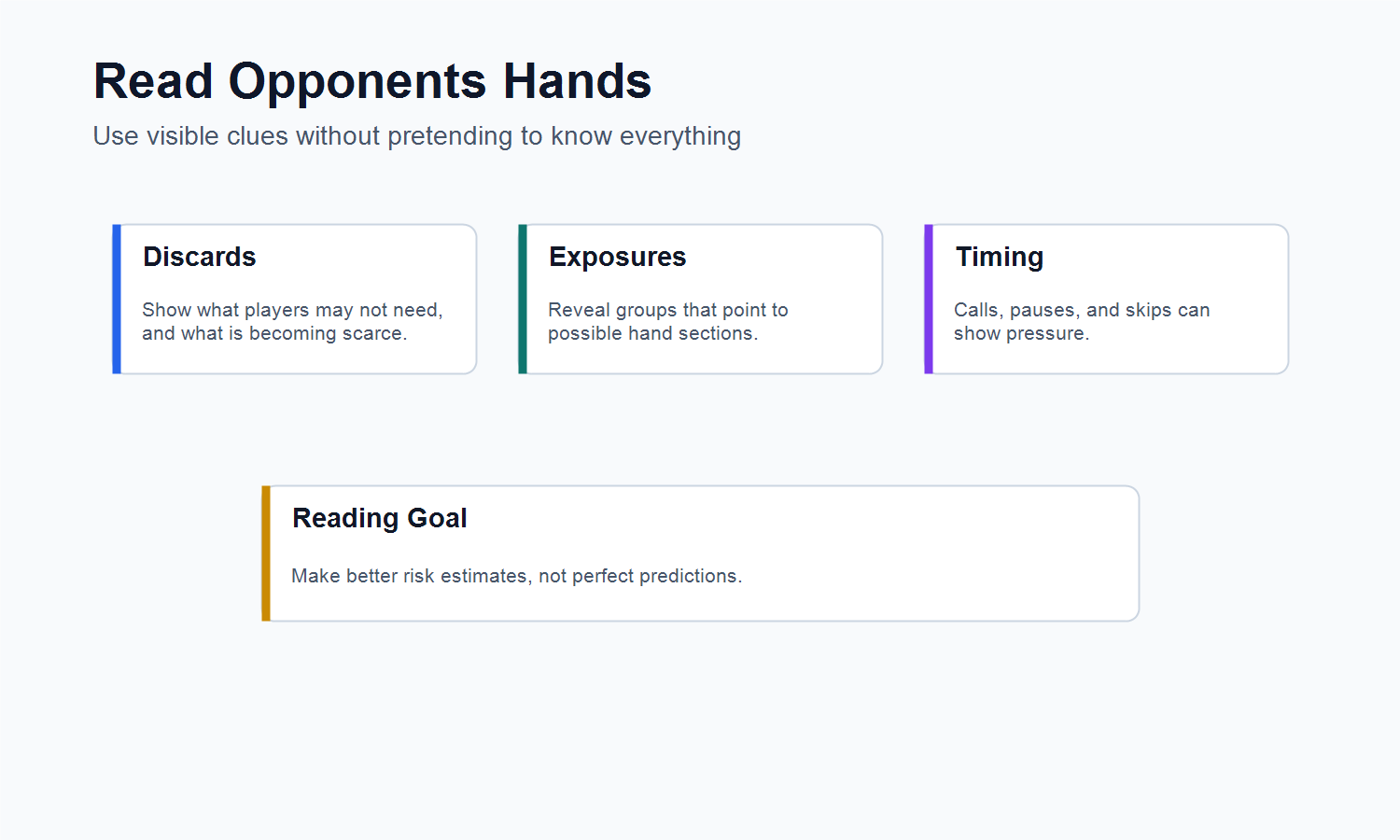
Watch what players discard, what they expose, what they hesitate over, and which tiles they seem eager to call. In American Mahjong, also watch how exposures match possible card sections.
The point is not to know the exact hand. The point is to decide which discards are safer, which opponents are close, and when your own hand needs to speed up or slow down.
Start With Exposures
Exposures are the strongest clues because they are public and intentional. A player who exposes a kong, pung, or joker-heavy group has narrowed their hand direction.
In American Mahjong, compare the exposed tiles to card sections. You may not find the exact line, but you can often identify numbers, suits, flowers, winds, dragons, or special sections that now matter.
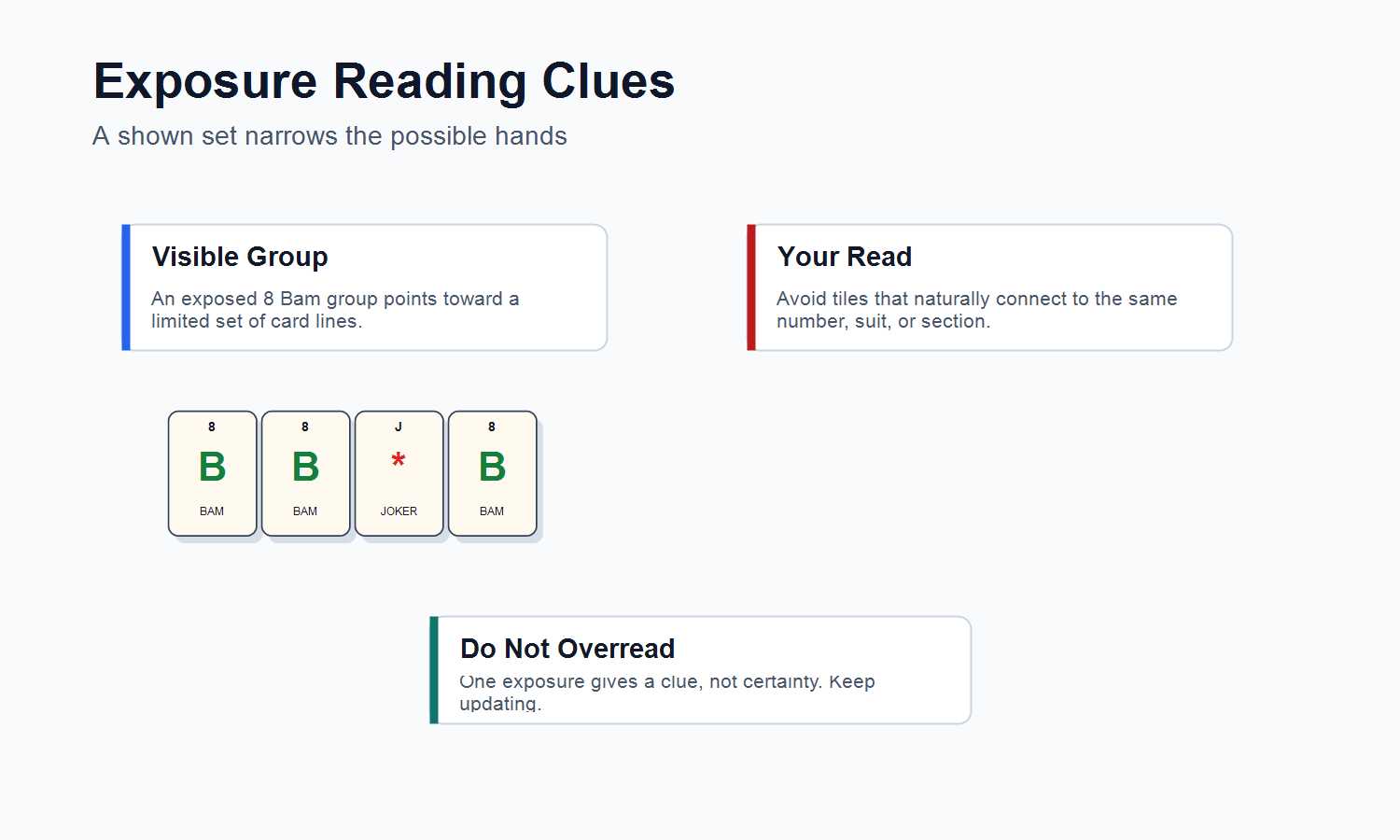
For more on exposure timing and table reading, see American Mahjong strategy for intermediate players.
Read Discard Patterns
Discards show what a player may not need, but a single discard is not proof. Look for patterns across several turns.
If a player keeps discarding one suit, that suit may be weak for them. If multiple copies of a number are visible, hands needing that number may be harder. If someone avoids discarding flowers, flowers may matter.
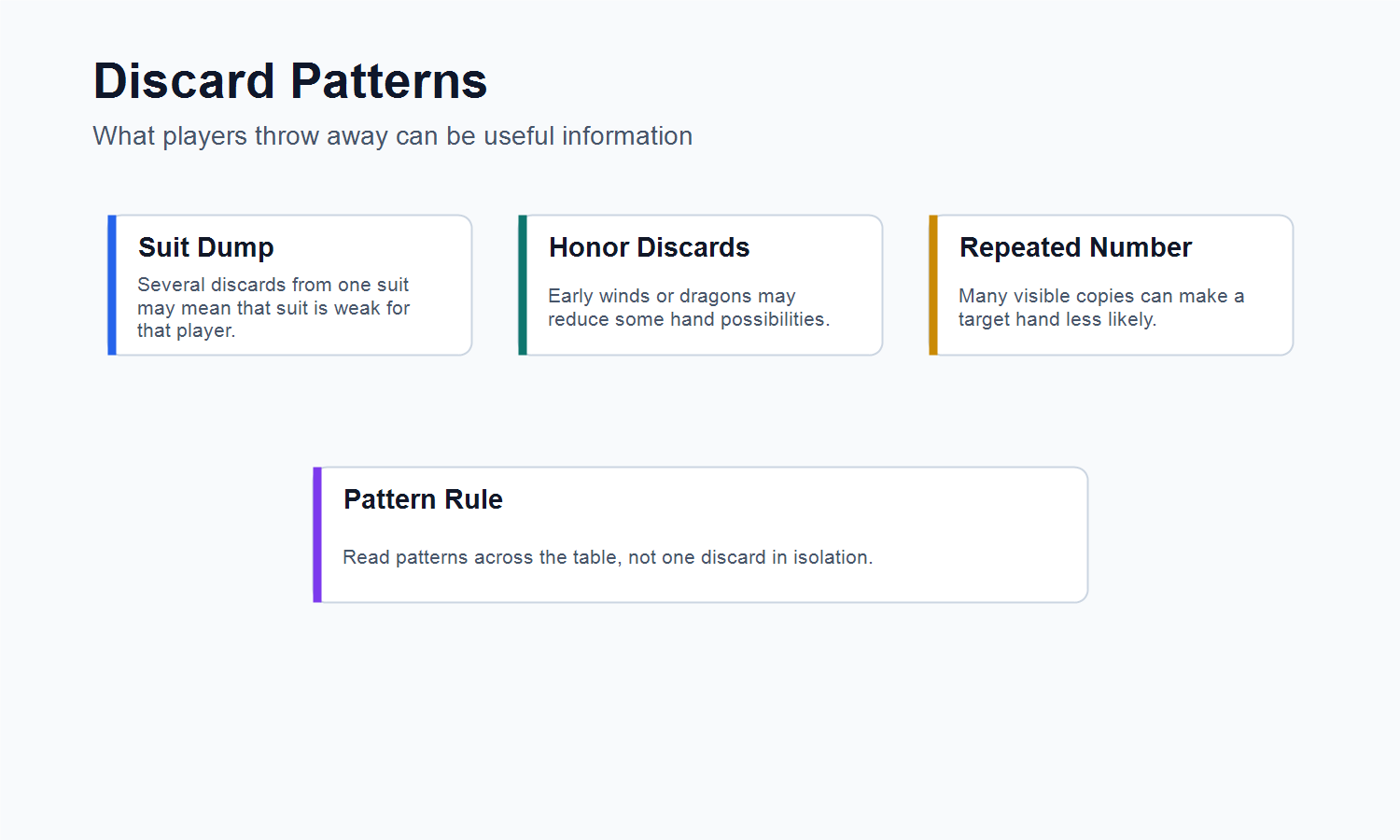
| Clue | Possible Meaning | Be Careful |
|---|---|---|
| Several discards in one suit | That suit may not fit the player’s hand. | Another player may still need it. |
| Early honor discards | Winds or dragons may be less important to that player. | Some hands change after new draws. |
| Repeated numbers visible | That number may be harder to complete. | Jokers can still support groups in American Mahjong. |
| Late safe repeat | A tile already ignored may be safer. | Timing still matters if hands have changed. |
Watch Timing and Calls
Timing is a softer clue, but it can help. A quick call shows eagerness. A long pause before discarding may mean the player is choosing between useful tiles. A sudden change in pace late in the hand can signal pressure.
Do not overread personality. Some players always pause. Some are naturally fast. Use timing only with tile evidence.
Turn Clues Into Risk Levels
Reading opponents should lead to a practical decision: what can I discard safely? Rank tiles as lower, medium, or higher risk instead of pretending you know the exact hand.
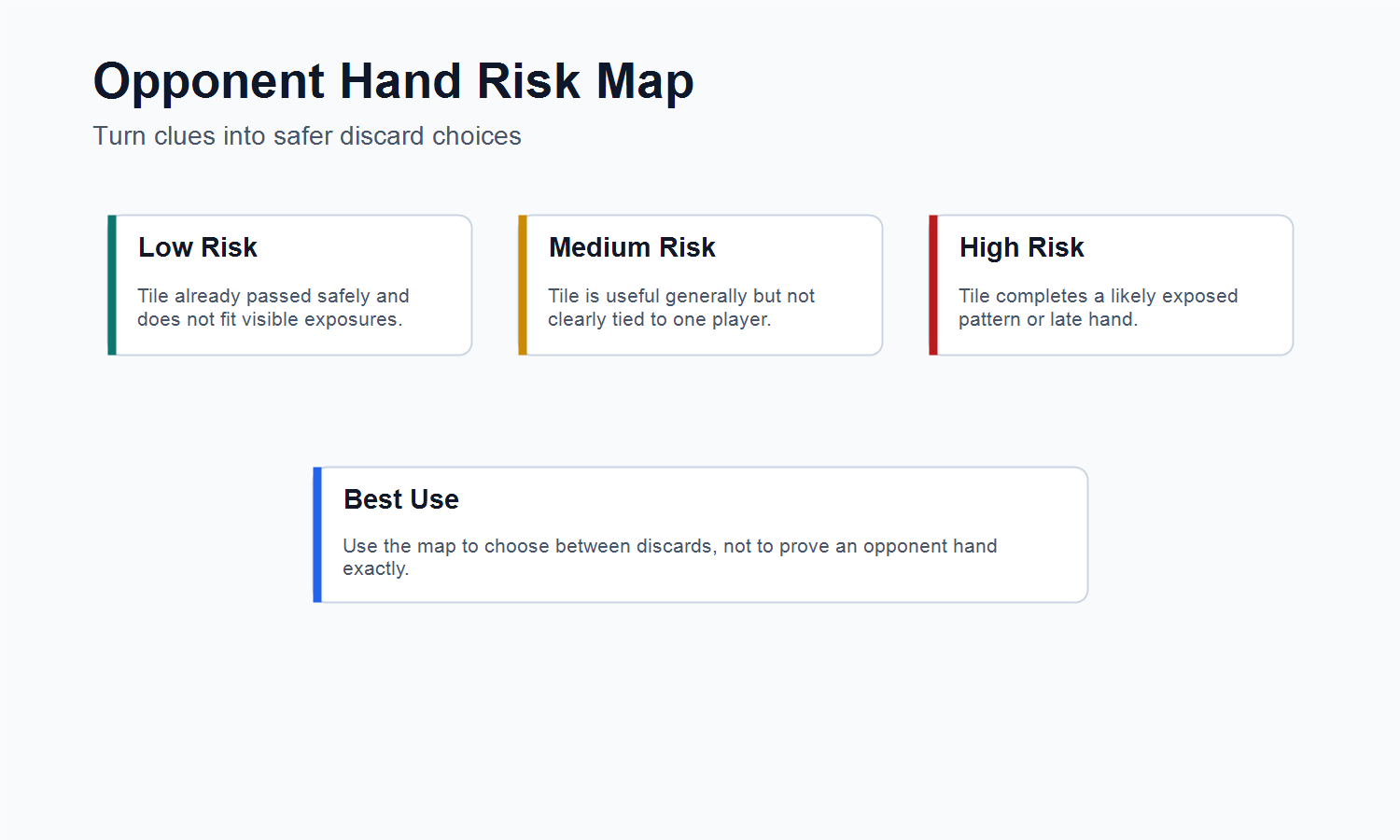
American Mahjong Reading Tips
American Mahjong gives you extra reading tools because players are aiming at lines on the card. Exposures can point toward a category, and joker use can tell you whether the hand needs larger groups.
- Compare exposed groups to the current card sections.
- Watch whether exposed jokers can be exchanged.
- Notice flowers, same numbers, and repeated suits.
- Track whether a player seems committed after an exposure.
- Remember that concealed hands may limit what a player can expose.
If card reading still feels hard, review how to choose a hand in American Mahjong. Understanding your own hand choices makes opponent reading much easier.
Use Reading for Defense
Opponent reading matters most when it changes a discard. If two tiles are equally useless to your hand, choose the one less likely to help a visible threat.
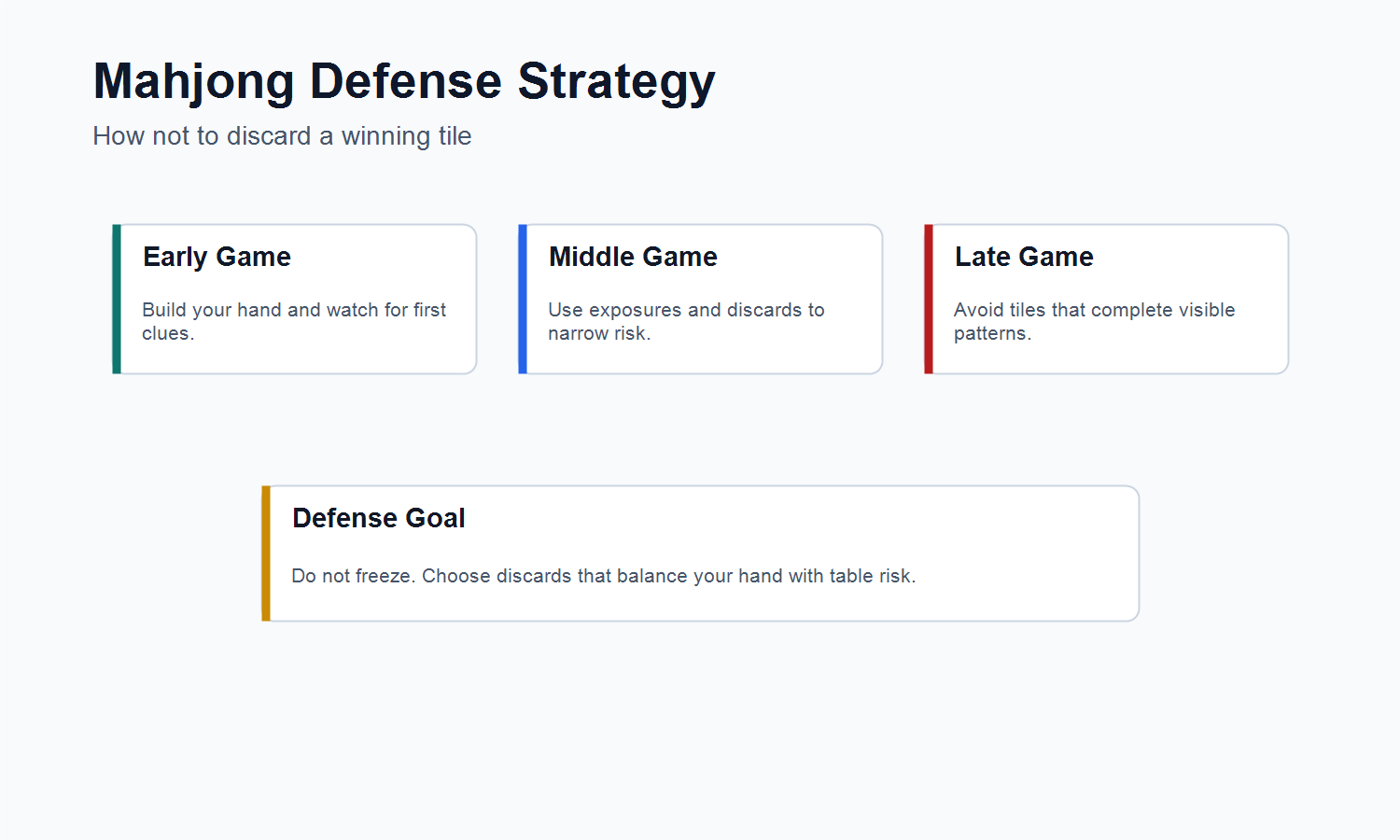
This connects directly to Mahjong defense strategy, where the main goal is avoiding the tile that gives someone Mahjong.
Do Not Overread
One exposure does not reveal the whole hand. One discard does not prove a suit is safe. Reading opponents is useful only when you keep updating the picture as new information appears.
Overreading can be just as costly as ignoring the table. If you throw away your own strong hand because of one weak clue, you may defend yourself out of the game.
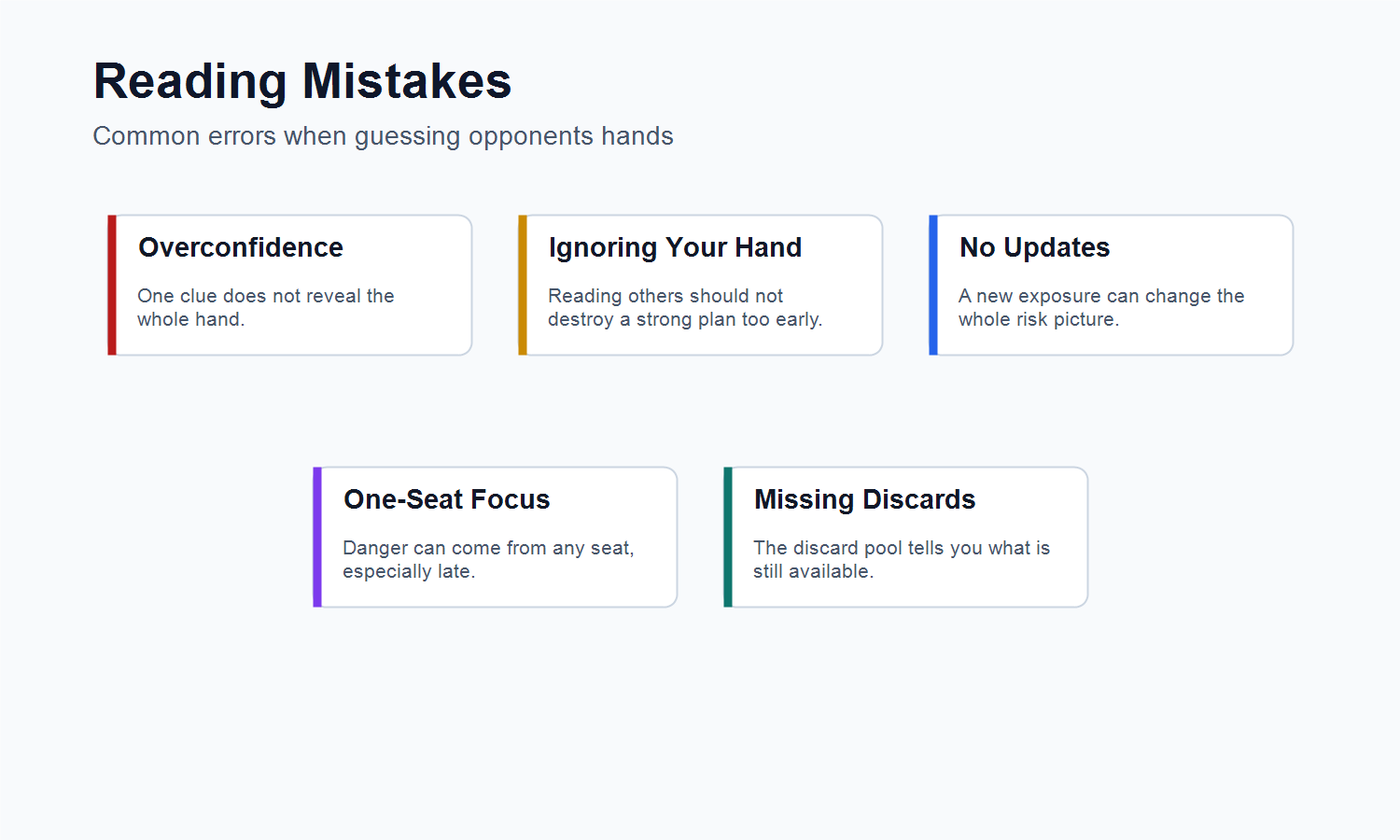
| Mistake | Why It Hurts | Better Habit |
|---|---|---|
| Assuming one clue proves the hand | You may defend against the wrong threat. | Treat each clue as a probability, not a fact. |
| Ignoring your own rack | You stop making progress. | Balance reading with your own hand strength. |
| Reading only one opponent | Danger can come from any seat. | Scan all exposures before late discards. |
| Missing new information | The table changes after every call and discard. | Update your read after each exposure. |
Practice Drill
During a practice hand, choose one opponent and write down three visible clues: one discard pattern, one exposure clue, and one risk tile. After the hand, compare your read to what they were actually building if the group is comfortable sharing.
This is a friendly learning exercise, not a way to criticize anyone’s play. It trains attention without making the table tense.
FAQ
Can you really read opponents’ hands in Mahjong?
You can read clues, not hidden tiles. Good players estimate risk from discards, exposures, and timing.
What is the strongest clue?
Exposures are usually the strongest clue because they reveal tiles the player has committed to using.
Should I track every discard?
You do not need perfect tracking as a beginner. Start by noticing repeated suits, repeated numbers, honors, flowers, and late fresh tiles.
Is opponent reading different in American Mahjong?
Yes. The annual card and joker rules make exposures especially useful because they point toward limited hand lines.
Can reading opponents make me too defensive?
Yes, if you overdo it. Reading should improve decisions, not stop you from building a strong hand.
Final Takeaway
Reading opponents’ hands in Mahjong is a practical habit. Watch exposures, patterns, timing, and late-game risk. Keep updating your read, avoid overconfidence, and use the clues to choose safer discards while still building your own hand.
For broader beginner mistakes to avoid, read common Mahjong mistakes new players make.