Mahjong Defense Strategy: How Not to Discard a Winning Tile
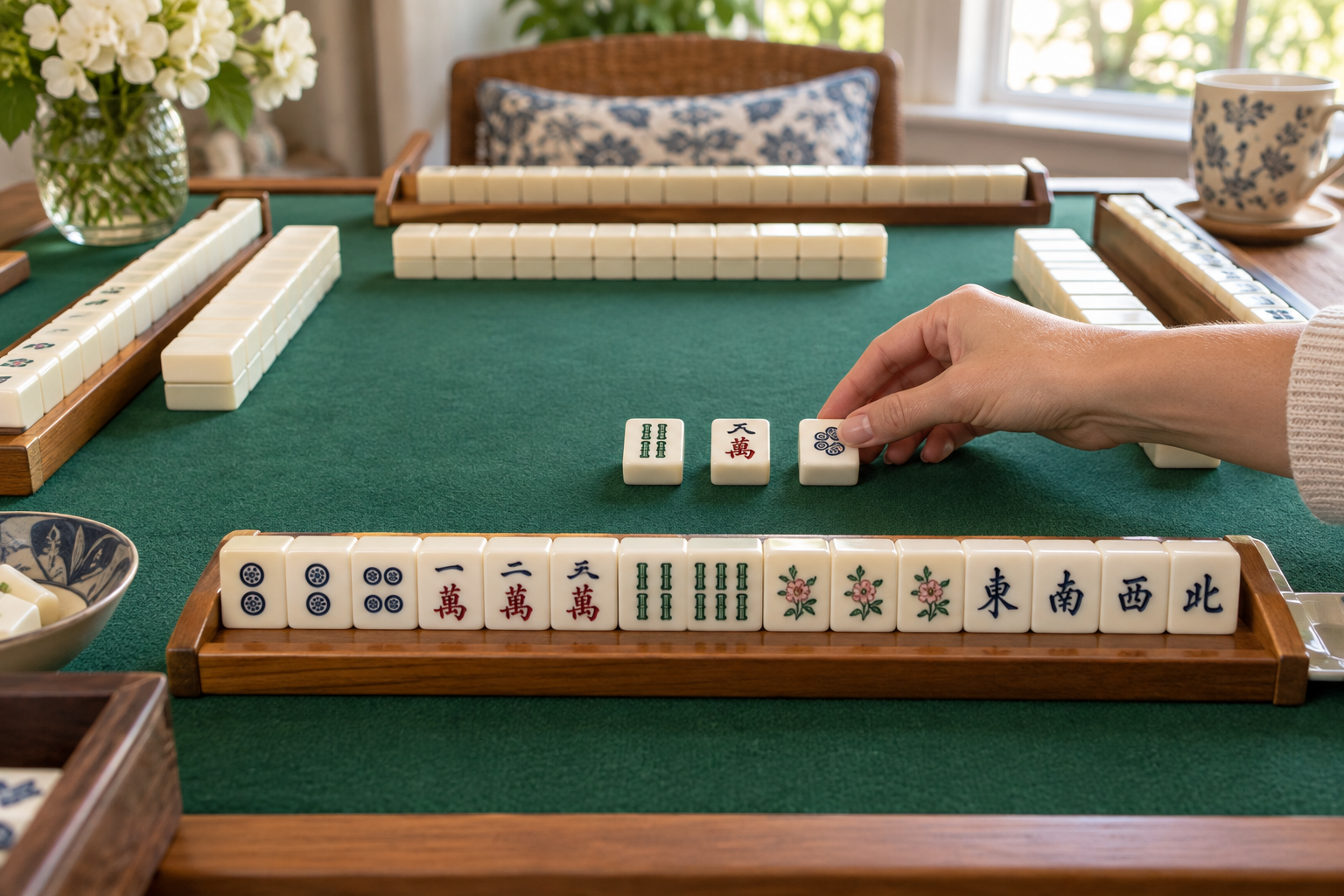
Mahjong defense strategy is the skill of choosing discards that do not accidentally complete another player’s hand. You still want to build your own hand, but you also need to notice when the table is getting dangerous.
This guide is written for American Mahjong and casual U.S. players, with notes that apply broadly to many Mahjong styles. Defense rules and table habits vary, so always follow the rule set your table agreed to use.
Quick Answer: How Do You Avoid Discarding a Win?
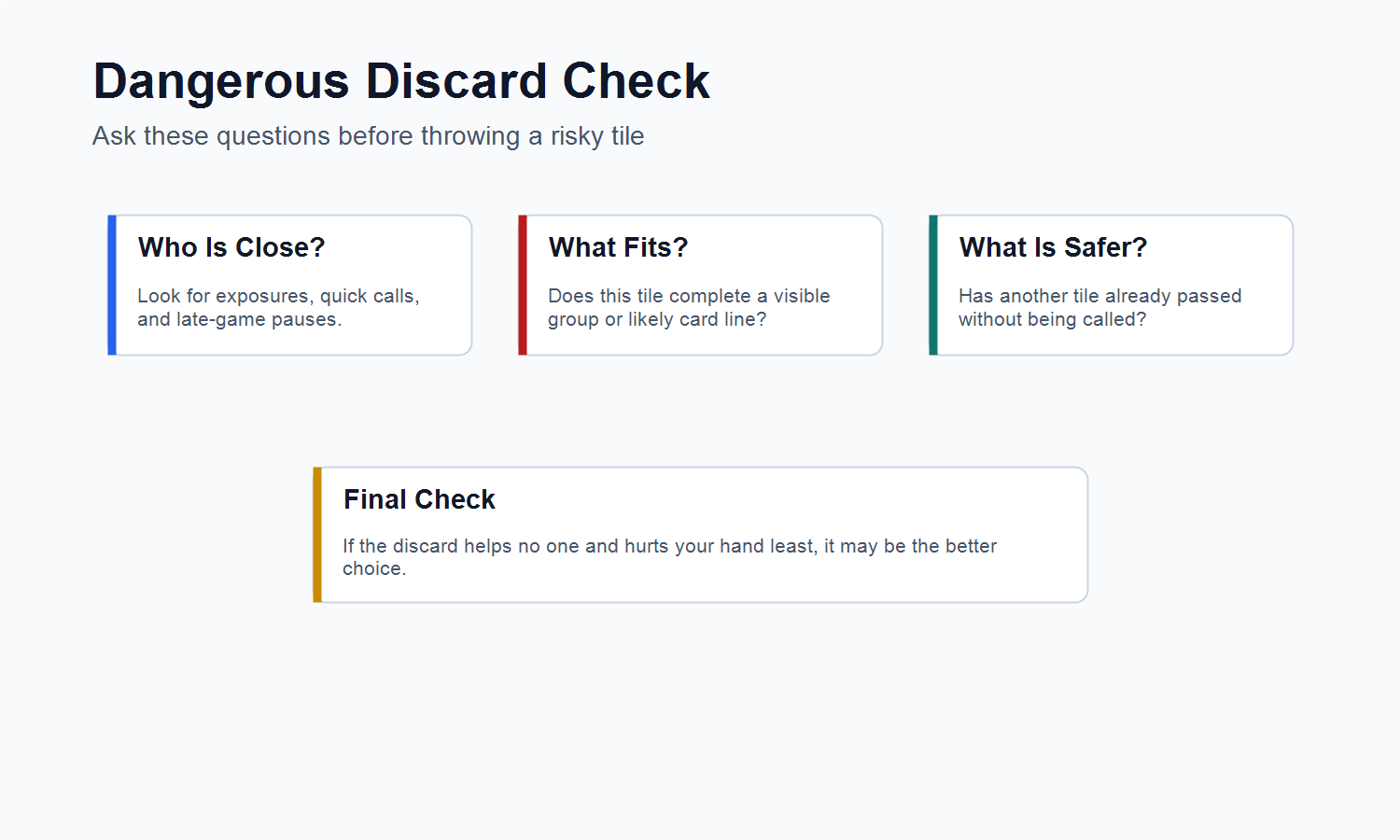
Before discarding, look at exposed sets, recent discards, the stage of the hand, and which tiles could complete visible patterns. A safer discard is often a tile that has already passed without being called or a tile that does not connect to any exposed hand.
You cannot make every discard perfectly safe. The goal is to reduce avoidable risk while still keeping your own hand alive.
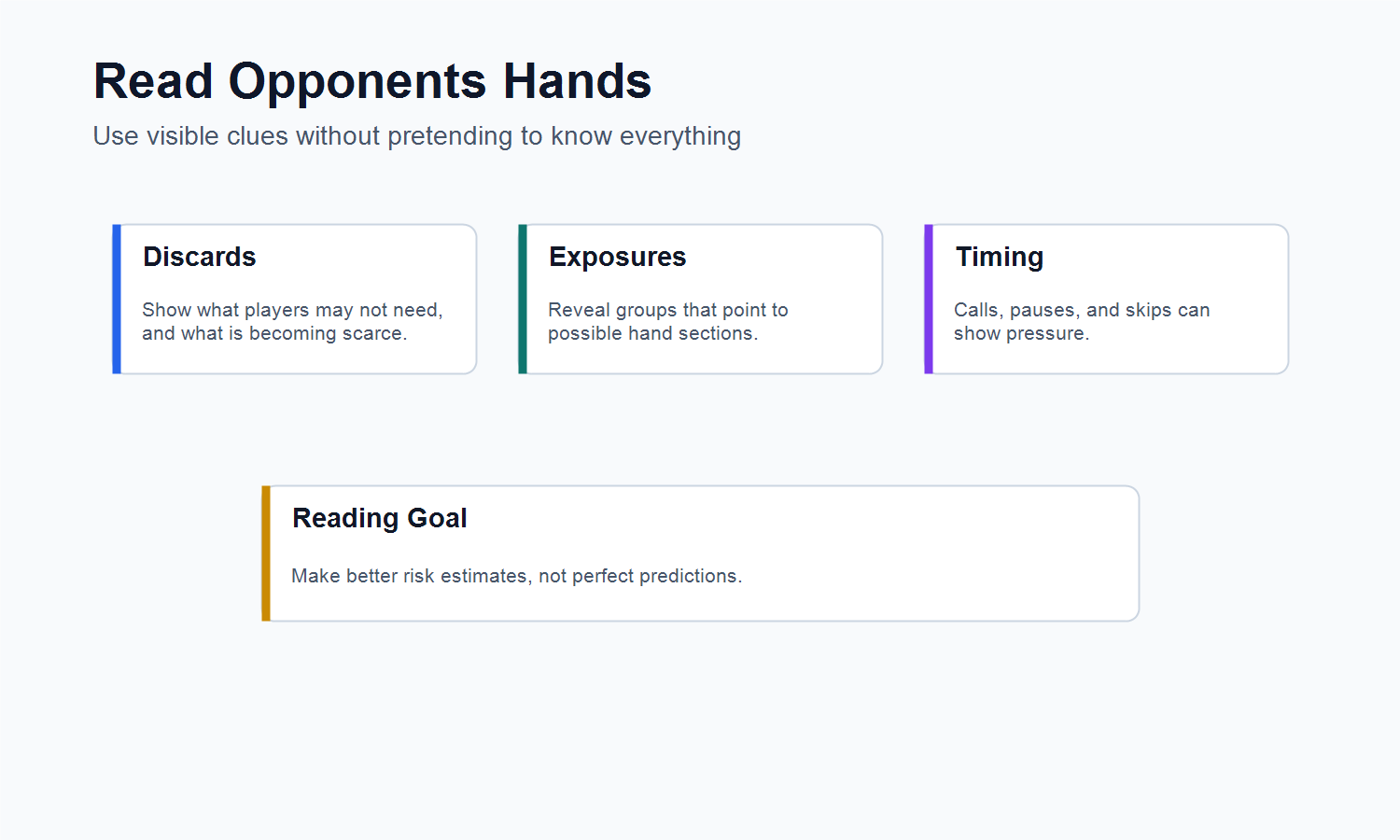
If you are not yet comfortable reading table clues, start with how to read opponents’ hands in Mahjong.
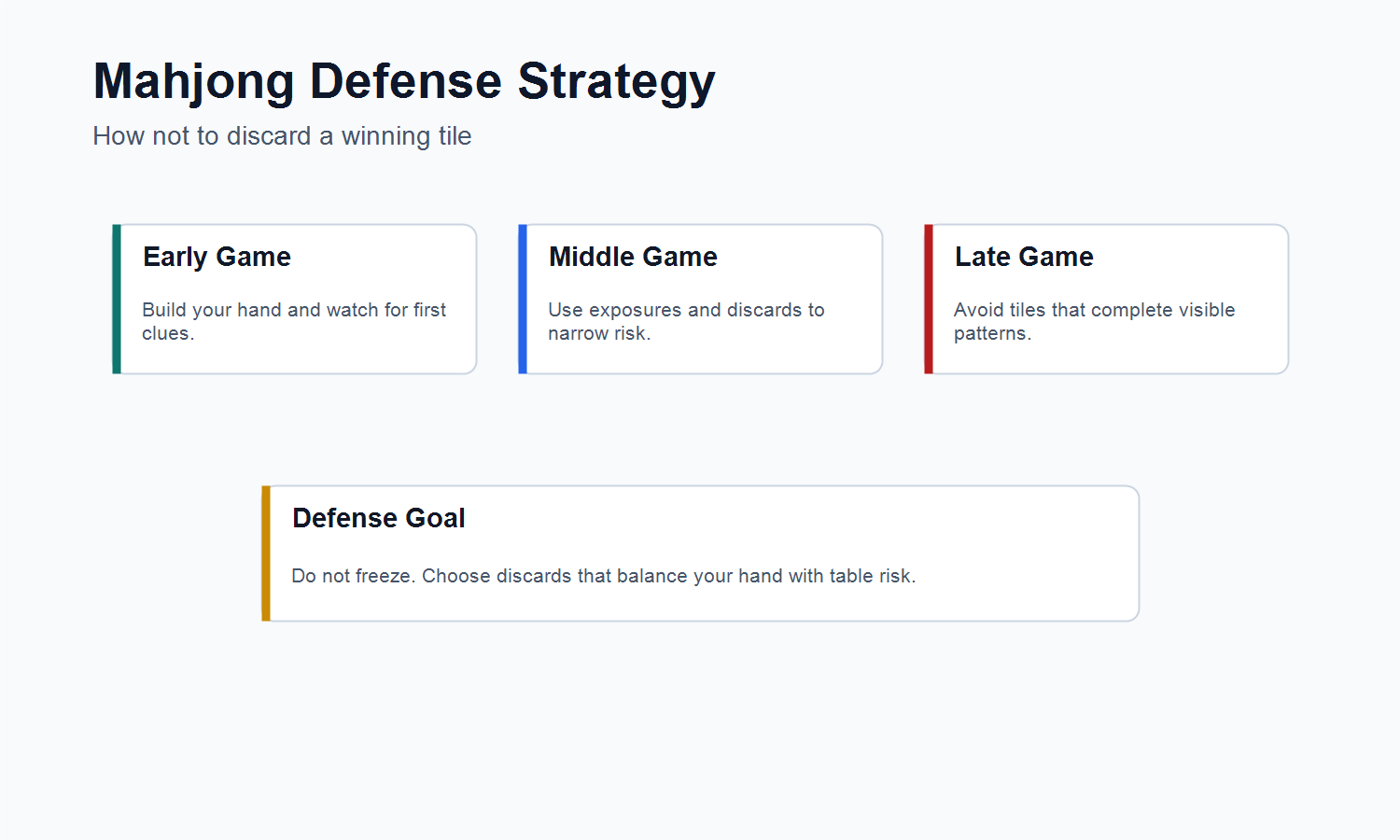
Early, Middle, and Late Defense
Defense is not the same throughout the hand. Early in the hand, most players are still shaping their racks. In the middle, exposures and discard patterns begin to matter. Late in the hand, one careless tile can end the game.
| Stage | Main Goal | Defensive Habit |
|---|---|---|
| Early game | Build a realistic hand. | Notice first discards, but do not freeze. |
| Middle game | Balance hand progress and table clues. | Check exposures before discarding. |
| Late game | Avoid obvious winning tiles. | Prefer tiles already seen safely when possible. |
Check Exposures First
An exposed group is the clearest warning sign on the table. If a player exposes 6 Craks with a joker, that tells you something about their hand direction. You may not know the exact line, but you can avoid tiles that obviously connect.
In American Mahjong, exposures may point toward specific card sections. In other Mahjong variants, they may point toward suit, honor, or set-based hands.
Use the Discard Pool
The discard pool is a safety record. If a tile was discarded recently and no one called it, another copy of that tile may be safer than a fresh tile that has not appeared yet.
This is not guaranteed. A player may not have been ready earlier, or the rules may limit calls in that moment. Still, visible discards are useful evidence.
Be Extra Careful Late in the Hand
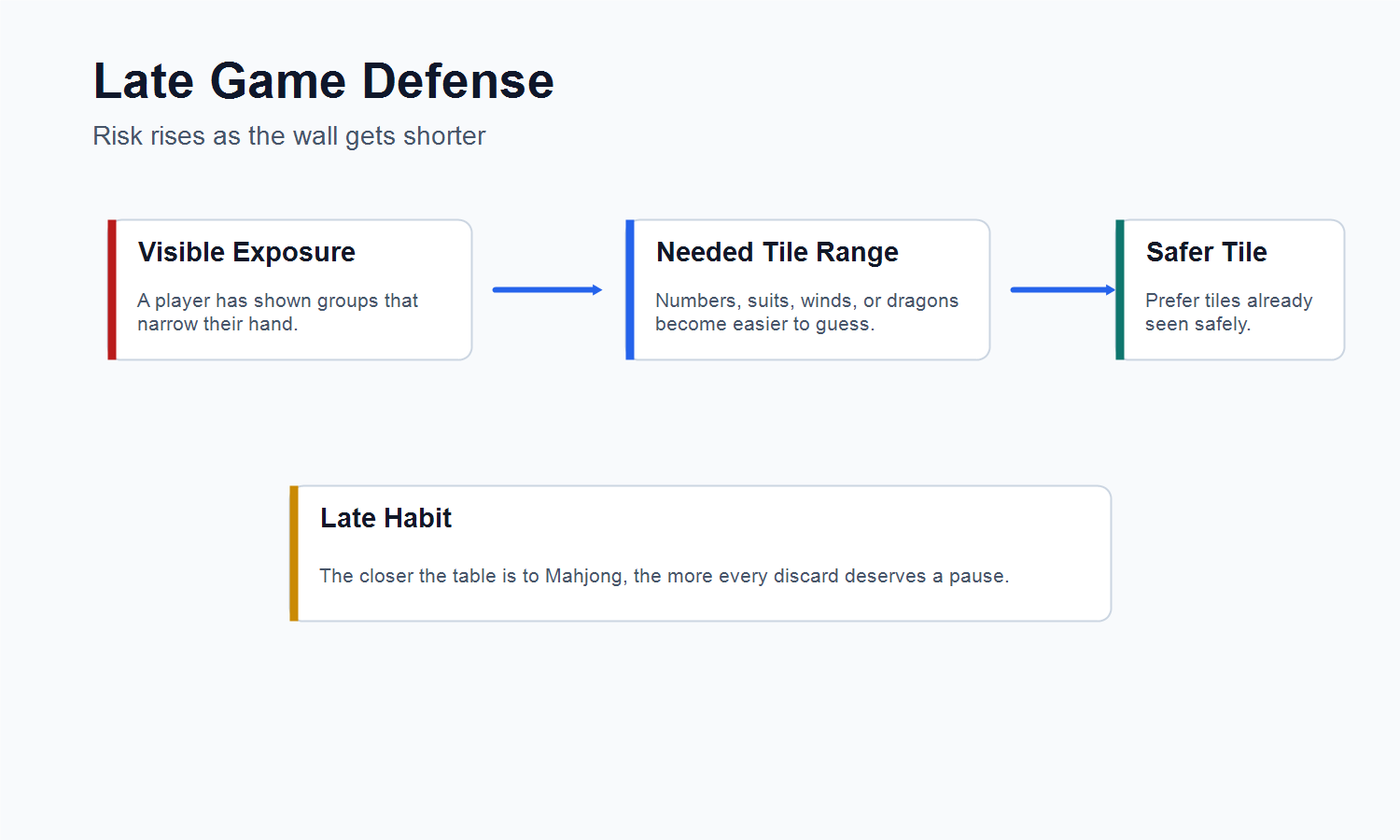
Late-game defense is where many players accidentally discard a winning tile. As the wall gets shorter and exposures grow, more players may be one tile away.
At that stage, avoid fresh tiles that match visible patterns. If you have a safer tile that has already passed, it may be worth using even if it slightly slows your hand.
Rank Your Discard Options
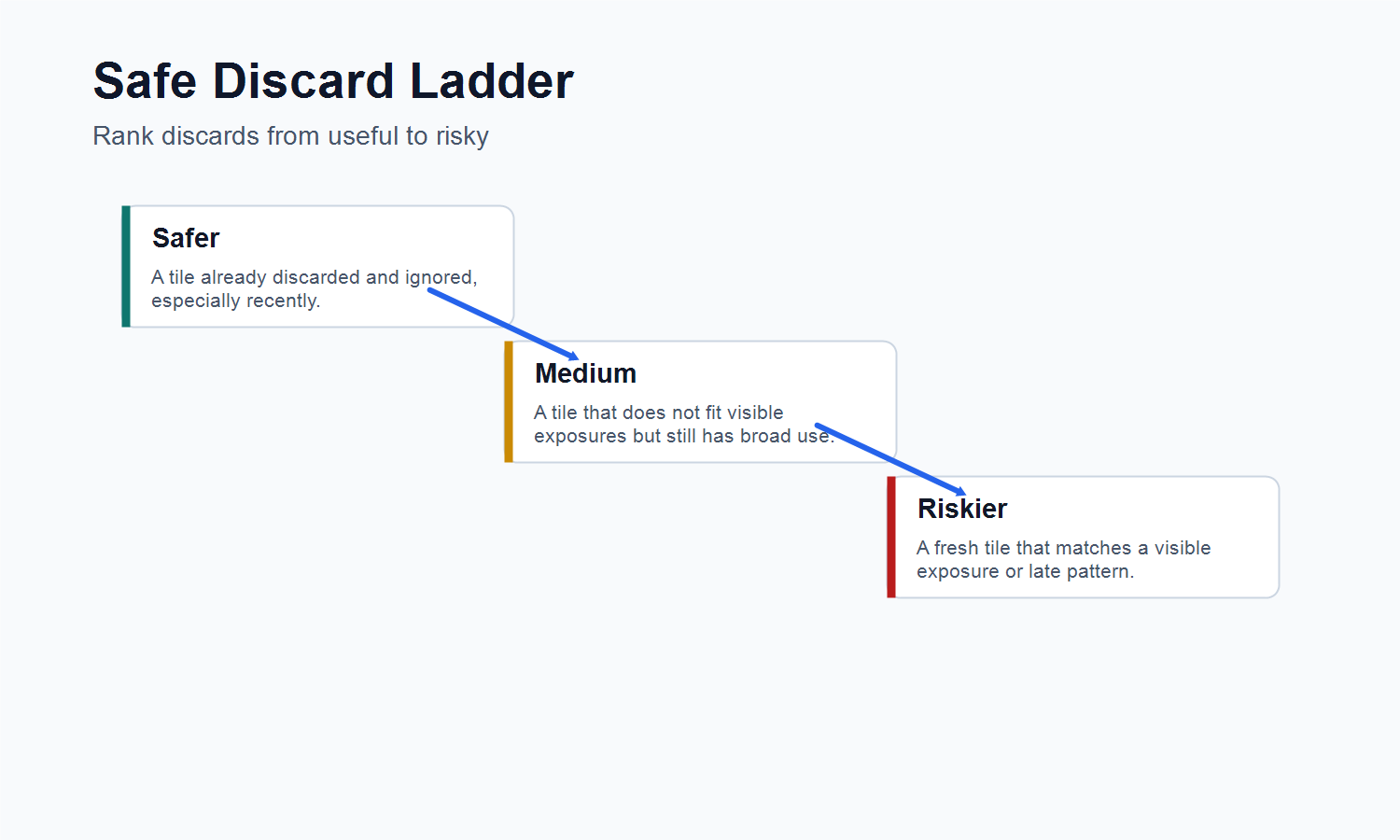
When you are unsure, rank your discards instead of searching for a perfect answer. Ask which tile helps your hand least and which tile helps opponents least.
| Discard Type | Risk Level | Why |
|---|---|---|
| Recently discarded and ignored | Often lower | It has already passed one table test. |
| Unconnected tile | Medium | It may be generally useful but not tied to visible clues. |
| Fresh tile matching exposure | Higher | It may complete or strengthen a visible hand. |
| Tile needed by your own hand | Strategic choice | Sometimes keeping your hand alive is worth the risk. |
Do Not Overdefend Too Early
A common mistake is folding too soon. If you stop building your hand every time someone discards confidently, you may never give yourself a chance to win.
Good defense is not fear. It is timing. Play your hand early, read the table in the middle, and tighten discards late.
American Mahjong Defense Notes
American Mahjong has special defensive clues because the card limits possible hands. Exposures, jokers, flowers, and numbers can narrow what an opponent is building.
Joker exposures matter too. If you can legally exchange for a joker, that may improve your own hand. If an opponent has exposed a joker-heavy group, avoid giving them natural tiles that make their hand easier unless you understand the risk.
For broader American strategy, see American Mahjong strategy for intermediate players.
Defense Mistakes to Avoid
Most defensive mistakes come from playing too automatically. You either ignore the table, or you become so cautious that your own hand collapses.
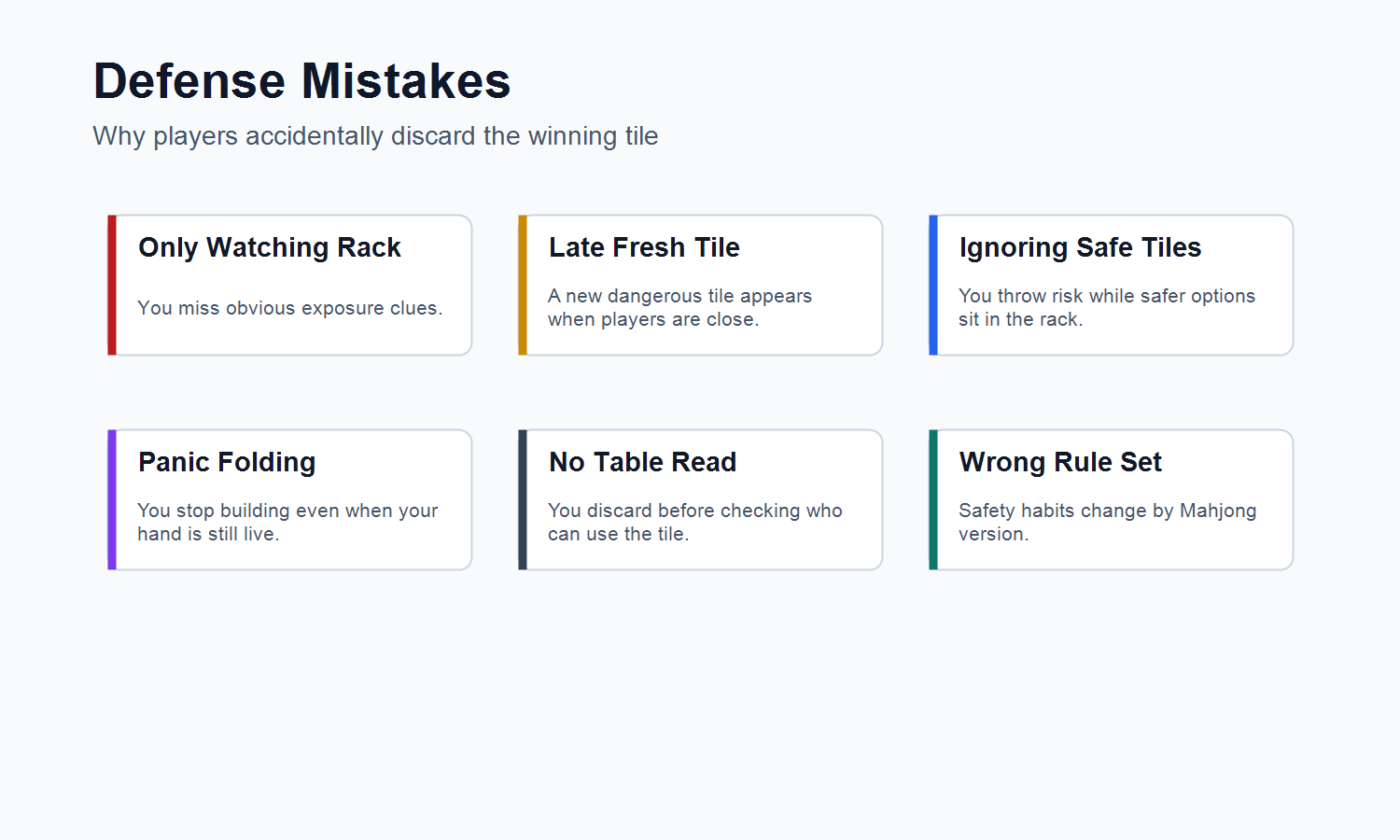
- Do not discard before checking exposed hands.
- Do not assume a tile is safe just because you do not need it.
- Do not ignore recently safe discards.
- Do not treat every opponent as equally dangerous all the time.
- Do not abandon a strong hand too early without a clear reason.
Practice Drill
Deal a practice rack and place two mock exposures on the table. For each discard choice, say out loud whether the tile is low, medium, or high risk. This trains the habit of checking the table before throwing.
For table-side reminders, keep the Mahjong cheat sheet nearby.
FAQ
Can you always avoid discarding a winning tile?
No. Mahjong has hidden information. Good defense reduces avoidable risk, but it cannot remove uncertainty.
What is the safest discard in Mahjong?
Often, a tile that has already been discarded and ignored is safer than a fresh tile. Context still matters.
Should I stop trying to win when another player has exposures?
Not automatically. Keep building if your hand is strong, but choose discards with the exposure in mind.
Is defense different in American Mahjong?
Yes. The American card, jokers, Charleston, and exposure rules create different clues from many traditional variants.
How do I know if a tile is dangerous?
A tile becomes more dangerous if it matches exposed groups, appears late, has not been safely discarded, or fits a likely hand pattern.
Final Takeaway
Mahjong defense strategy is not about playing scared. It is about using visible information before each discard. Read exposures, respect late-game risk, use safe tiles when possible, and keep your own hand alive when the risk is reasonable.